Enhancing Malaysia’s Islamic Capital Market Leadership


The ICM remained a key pillar of Malaysia’s capital market in 2025, reflecting the SC’s long-standing commitment to market integrity, ethical stewardship, and sustainable development. Anchored by Maqasid al-Shariah principles – including the promotion of justice, the protection of wealth and the advancement of societal of well-being – and supported by strong governance, robust regulatory framework, and an evolving ecosystem of Shariah-compliant products and services, the ICM plays a central role in supporting inclusive economic growth and strengthening investor confidence.

During the year, the SC advanced initiatives aimed at reinforcing transparency, accountability, and resilience across the ICM ecosystem.

Domestically, the introduction of an enhanced disclosure regime for Shariah screening reviews represented a decisive step towards strengthening accountability, improving data transparency, and reinforcing market discipline among PLCs. At the international level, the SC deepened engagement with global partners across academia, multilateral institutions, and the financial industry to advance thought leadership, facilitate knowledge exchange, and institutional capacity in Islamic finance. Collectively, these efforts support the continued evolution of the ICM and reinforce Malaysia’s position as a credible and values-driven Islamic finance ecosystem.

In 2025, Malaysia’s international profile and visibility is further bolstered through strategic dialogues, highlevel engagements, and collaborations with global counterparts, positioning Malaysia as a capital market that supports long-term national priorities including sustainability, environmental stewardship, social equity, and inclusive economic development.
STRENGTHENING GLOBAL COLLABORATION AND THOUGHT LEADERSHIP IN ISLAMIC FINANCE
Beyond rules and supervision, a credible ICM is sustained by the quality of leadership and the institutions that shape how the market behaves. Anchored by the objectives of Shariah (Maqasid al-Shariah), the SC approaches market development with an emphasis on the substance of its market, ensuring that financial activity remains connected to real economic purpose, social well-being, and long-term resilience.

In this context, selected global collaborations play a vital role. They provide a platform to test ideas, develop talent, and strengthen institutional thinking, helping to ensure that Maqasid-based principles are not treated as abstractions, but are continually interpreted and applied in response to evolving economic and social challenges.
Academic and Thought Leadership Partnerships
Collaborations with Oxford Centre for Islamic Studies (OCIS)
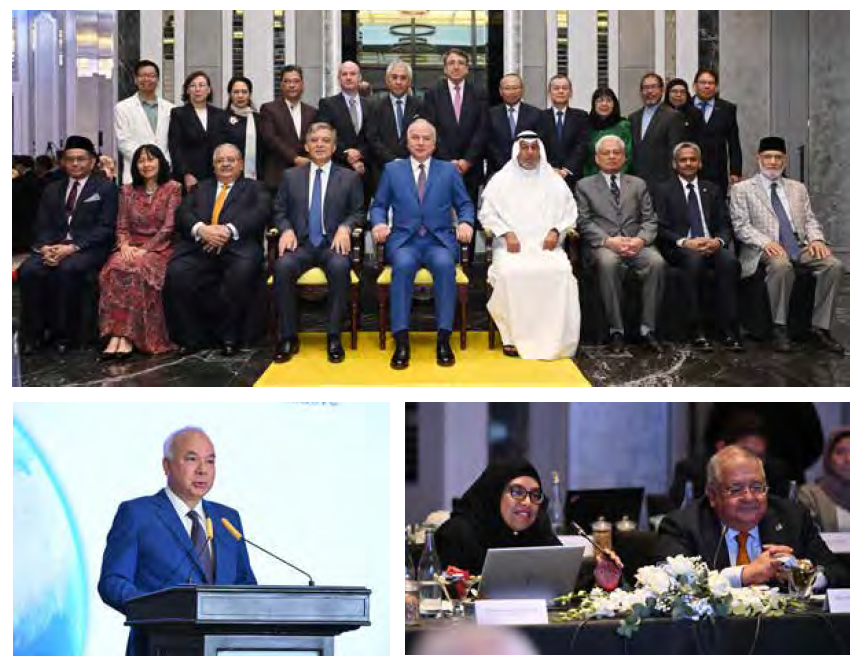
The long-standing relationship between the SC and OCIS reflects a sustained effort to ground Islamic finance discourse, in both intellectual rigour and contemporary relevance. In 2025, the SC-OCIS 16th Roundtable was held on 30 September in Kuala Lumpur and focused on the theme ’Guardians of the Earth: Climate Action through the Lens of Maqasid al-Shariah’. Rather than treating sustainability as an external overlay, discussions during the Roundtable centered on how environmental stewardship naturally follows from Islamic conceptions of responsibility, trust, and intergenerational justice. The Roundtable brought together scholars, policymakers, and practitioners to examine how these principles can meaningfully inform investment decisions, governance standards, and market conduct, particularly as climate risks become more financially material.
Additionally, the SC-OCIS Scholar-in-Residence Programme and the Sultan Nazrin Shah Fellowship continued to drive research, innovation, and thought leadership in Islamic finance.

The 2025 SC-OCIS Scholar-in-Residence Programme attracted 28 applications from Southeast Asia, the Middle East, Europe, and the Americas, with the selected scholars taking residence at OCIS from October 2025 for the 2025/2026 academic year. Meanwhile, the Sultan Nazrin Shah Fellowship Programme, jointly organised by the SC and OCIS, will consist of extensive activities encompassing research and development, thought leadership and branding and profiling, focusing on key areas within the ICM.
Talent Development and Capacity Building
SC–Durham Islamic Capital Market Summer School
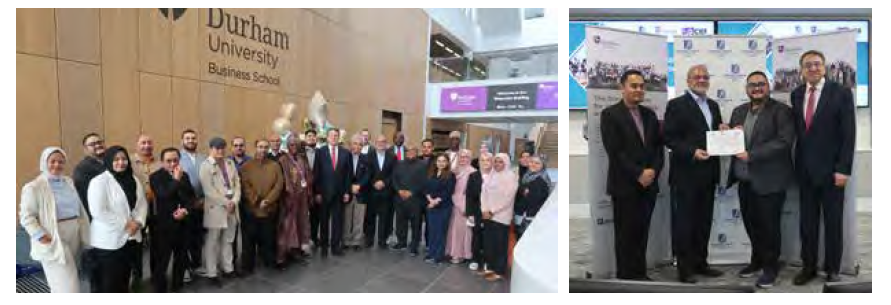
A values-based market ultimately depends on people who are able to exercise sound judgment, not just technical competence. With this in mind, the SC launched the inaugural SC–Durham Islamic Capital Market Summer School following the signing of a memorandum of understanding with Durham University in 2025. The programme was designed to provide participants with exposure to both academic perspectives and regulatory realities, with a focus on how ethical considerations, risk awareness, and long-term thinking are applied in practice, and ultimately, shape a new generation of ’Maqasid ambassadors’.
Jointly developed with the Durham Centre for Islamic Economics and Finance and the Durham University Business School, the one-month blended programme combined three weeks of online learning with an intensive in-person masterclass at Durham University from 8 to 12 September 2025. The inaugural cohort of 15 participants from diverse backgrounds, underscores the SC’s commitment to building a future-ready talent pipeline anchored in the principles of Maqasid al-Shariah for the Islamic finance ecosystem.
Multilateral and Development Partnerships
Islamic Development Bank (IsDB)
The SC’s collaboration with the IsDB focuses on exploring opportunities to support productive economic activity and social development through the ICM. Following the MOU signed in 2024, the SC embarked on numerous initiatives to catalyse partnerships across the 57 IsDB member countries, promoting the use of ICM instruments to support private sector growth.

A key milestone was the SC–IsDB Reverse Linkages Programme, held on 29 April 2025 in Kuala Lumpur. It focused on mobilising ICM instruments such as sukuk, ECF, and P2P financing, while exploring crossborder opportunities, particularly within the halal economy and mid-tier corporate segments. The event resulted in two companies pledging over RM175 million in prospective cross-border initiatives, signalling tangible outcomes for future ICM-driven fundraising.

In addition, the SC and IsDB jointly organised the Awareness Programme on the IsDB Awqaf Properties Investment Fund (APIF) on 2 December 2025. The session brought together over 40 participants from State Islamic Religious Councils (SIRCs), waqf corporations, Islamic financial institutions, and ecosystem partners under the theme Funding Economic Development through Waqf. The discussions moved beyond conceptual models, focusing on practical considerations such as project structuring, governance, and eligibility. The level of engagement reflected a growing willingness among institutions to adopt market-based approaches in advancing social objectives, consistent with the broader aims of Islamic finance.

In practice, market outcomes are shaped by both decision-making behaviour and the regulatory frameworks within which they operate. By engaging selectively with global partners, the SC seeks to ensure that the objectives of Shariah remain embedded in market practice, informing judgement, strengthening capability, and anchoring the ICM to real economic and social purpose as it continues to evolve.

Mitigating Systemic Risks And Promoting Financial Stability

Enhanced Risk Governance Framework

In 2021, the SC-wide risk governance framework was enhanced as part of an overall initiative to have an effective integrated and predictive risk surveillance to maintain regulatory agility.

The structured risk governance framework integrated the wider spectrum of risks such as technology, cyber and conduct risk at the SC’s Systemic Risk Oversight Committee (SROC) and Accounting, Market and Corporate Surveillance Committee (ACMS).


Intensified surveillance

The SC continued to intensify its surveillance of systemic risk to maintain market resilience and stability. Regular SROC engagements were held to deliberate concerns emanating from various segments across the capital market. Domestic equity and bond market, foreign fund flows and trade participation continued to be monitored closely for potential stress points. 

In addition, measures and economic stimulus packages introduced by the government to weather the impact of COVID-19, market trading conduct and the financial position of listed companies were among the focus areas for discussion.


Thematic assessments

The SC also conducted thematic assessments covering investors’ fund flows, the position of firms, and policy decisions to ascertain the possible impact on the capital market. In 2021, the SC reviewed and enhanced its crisis indicators on potential emerging risks in the
capital market. 

The enhanced crisis indicators provided a reference point for escalation to SROC when the identified indicators and triggers materialised and ensured prompt response to manage and prevent any issues of concern that might lead to a systemic crisis.


Joint regulatory discussions

In 2021, the SC conducted frequent joint regulatory discussions with other authorities such as Bank Negara Malaysia (BNM) and Labuan Financial Services Authority (Labuan FSA) to identify systemic risk concern areas within the financial and capital markets in Malaysia.


Monitoring of various components of the capital market

The SC continued its efforts to undertake a methodological and integrated approach to ensure any potential systemic risk was being monitored, mitigated, or managed. Figure 1 highlights the findings from the following risk assessments on the various components of the capital market.

Related Links
© Copyright Securities Commission Malaysia | Contact UsDisclaimer | The site is best viewed with minimum resolution of 1280x1024
Follow us on:
Ooops!
Generic Popup