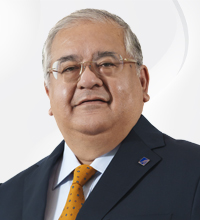
Speaker: Dato’ Mohammad Faiz Azmi, Chairman, Securities Commission Malaysia Location: Grand Hyatt Muscat, Oman
Delivered: 8 September 2025
His Excellency Ahmed bin Jaafar bin Salim Al-Musalmi, Governor, Central Bank of Oman,
Distinguished guests, ladies and gentlemen.
Assalamualaikum and a very good morning.
Let me begin by thanking the organiser, Islamic Finance News (IFN) for the invitation and warm hospitality here in Muscat. I am also honoured by the presence of representatives from the Central Bank of Oman and the Financial Services Authority.
This year’s Forum is particularly meaningful for us Malaysians. For the first time, we will be holding a Securities Commission Malaysia (SC)-IFN Business Forum to showcase Malaysia and what we are doing. This format signals that Islamic finance is not only about national growth stories, but creating shared value across borders.
We meet at a time when the global economy is once again being reshaped by policy shocks. The recent geopolitical tensions from wars to tariffs, remind us how quickly trade flows can be disrupted and how fragile supply chains remain in an interdependent world.
Yet, in every disruption lies an opportunity. For investors and businesses seeking to diversify, Malaysia and the wider ASEAN region offer credible options as areas to invest and diversify portfolios.
ASEAN today is home to 650 million people, with a combined GDP exceeding US$ 4 trillion1. It is among the fastest-growing regions in the world, a consumption hub and production base rolled into one. For investors, it represents both growth and resilience.
Within this region, Malaysia has built one of the most developed Islamic capital markets in the world. Today, 60% of our US$1 trillion capital market is based on Islamic principles. Our sukuk market represents about a third of global outstanding sukuk. About 80% of companies listed on Bursa Malaysia are Shariah-compliant, spanning energy, healthcare, technology, and manufacturing, among others. Our Islamic fund management industry now manages US$60 billion, offering diverse products from Islamic ETFs to REITs and wholesale funds2.
This is not just about size. It is about what these markets finance. In recent years, sukuk from Malaysia have funded projects for renewable energy, sustainable transport, healthcare, and education. They represent a pipeline of investable projects aligned with real economic outcomes.
We are also seeing the rise of single family offices and private wealth platforms. To attract regional wealth, Malaysia has introduced incentives such as zero tax on eligible investments in the Forest City Special Financial Zone, in Johor, Malaysia. That area is next to the border with Singapore.
By 2030, Asia is expected to host over 3,200 family offices, with an estimated of US$5.8 trillion in intergenerational wealth transitioning to younger, values-driven decision makers3. This is a pool of capital looking for authenticity and impact.
The SC’s role is to ensure that as these opportunities grow, our market remains efficient, well-governed, and trusted. That is why internationalisation is a central pillar of our strategy, including in the SC’s upcoming Capital Market Masterplan 4 (CMP4). In our Masterplan which will be ready by the end of the year, we intend to articulate to the market why we need to seek out new investors around the world and not just from the traditional markets we have now. We need to find new friends and rekindle old relationships. And that is why we are here in Oman.
I hope you will join us for the afternoon session, which is structured as a platform to unlock synergies and areas of mutual benefit for Malaysia and Oman, in particular Islamic finance and private sector collaborations.
Potential Drivers for Islamic Finance
Ladies and Gentlemen,
Islamic finance is navigating a rapidly changing world. We meet at a time of profound changes impacting geopolitics, climate, technology, and demographics. Nevertheless, global Islamic finance assets are projected to rise to US$7.5 trillion by 20284 after expanding close to US$5 trillion in 2023.
This sounds impressive but is still a small fraction of global markets. Additionally, we still have some reticence in some markets to say openly that we use Shariah principles in how we invest. There are concerns, for example, that Islamophobia might dampen interest in these products because of the labelling.
I personally do not subscribe to that form of thinking. In my mind, there are many options we have to invest in but when I do, I would still like the highest returns but done in a way that reflects my values. In other words, it is not just about making a profit but how you made that profit. And in my part of the world, my investors want to know which investments would meet our common shariah principles from those that do not.
This is why strategic approaches such as the SC’s Maqasid Al-Shariah Guidance Islamic Capital Market Malaysia released in 2023 and Oman’s Vision 2040 are crucial. They remind us that finance must serve a higher purpose other than just making profit.
But we need to first leverage three key drivers, not just for Oman and Malaysia, but for the world.
The first is climate action. Climate resilience and adaptation is no longer optional. Oman’s Blue Carbon5 initiative, with its 100 million mangroves, and the Wadi Dayqah Dam6, which safeguards water supply and flood control for Muscat and Qurayyat, are inspiring examples.
Malaysia too has made strides. Earlier this year, a EUR2.8 million grant was secured from the Green Climate Fund to develop our National Adaptation Plan (MyNAP)7. It will create a pipeline of bankable adaptation projects. After Malaysia’s devastating floods in 2021, which caused RM6.1 billion (US$1.3 billion) in losses8, this has become a national priority.
For non-bankable adaptation projects, we have launched an initiative called Mitigation Co-Benefit and Adaptation for Resilience, or mARs, both at home and in ASEAN and it is to help use blended finance to fund non-commercial but critical adaptation projects.
It is crucial for sustainability to be embedded within Malaysia’s capital market, be it in our market players’ actions as well as the products and services they offer. This has been the SC’s objective, starting with the introduction of the SRI Sukuk Framework in 2014. Subsequent efforts have resulted in the SRI-linked Sukuk Framework in 2022, and the release of the Maqasid Al-Shariah Guidance. Also, we are the first country in ASEAN to adopt IFRS’s sustainability standards, S1 and S2. Taken altogether, the intention is to encourage mobilisation of capital towards sustainable projects, ensuring tangible outcomes for the people and planet.
The second area is digital inclusion. Technology is reshaping capital markets. In Malaysia, Islamic fintech is thriving. The industry is valued at US$13 billion in 2024, and projected to almost double by 20289.
The underlying objective is for these digital tools and solutions to deliver inclusion, not exclusion - through fractional access for retail investors, and for underserved communities and MSMEs. Globally, tokenisation could unlock around US$2 trillion in liquidity by 203010. Islamic finance must ensure this liquidity is channelled with purpose, not speculation. As part of our Masterplan, we will start to consider how digital native tokens may be offered by our Digital Asset market players to help widen access to funding in a cheaper way.
The third driver is true Islamic innovation. For much of its history, Islamic finance thrived by offering alternatives: sukuk instead of bonds, Islamic funds instead of conventional funds and even Takaful instead of insurance. This phase was important to build credibility and investor choice by allowing Islamic mirrors of conventional products.
But the next phase must go further. The challenge now is to create original, value-driven solutions that conventional finance cannot deliver. As an example, all my cars at home are insured using Takaful as there is a small upside or refund on my premiums if the Takaful operator runs their business well. There is no such equivalence in insurance.
Potential next steps involve pioneering impact-linked sukuk that reward social outcomes; structuring tokenised Islamic social funds that democratise access to higher returns and lower costs of transactions; and embedding Maqasid-based disclosures that tie growth to justice, dignity, and stewardship.
Building Talent and Capacity
However, successful execution requires human capital and specialised skill sets. The SC’s upcoming Capital Market Masterplan 4 will emphasise developing pathways for Shariah advisers, fintech specialists, and sustainability professionals.
From a strategic perspective, joint talent ecosystems could be effective, with co-branded certifications, regulator-to-regulator fellowships, and case-based learning. After all, competitive advantage for Islamic finance is not found within products or platforms, but in the people entrusted to design, promote and supervise offerings.
Last month, we launched the Young Regulators Development Programme and the Islamic Capital Market Summer School Programme in collaboration with Durham University, UK. I am happy to say that Oman FSA sent a representative to attend the YRDP in Malaysia. Looking ahead, we can explore similar initiatives with the GCC, nurturing the next generation of leaders who will carry our industry forward.
Islamic finance aspires to serve not only the world’s 2 billion Muslims11, but also a global community of investors who believe in the values of fairness, transparency, and stewardship. By investing in future skills, we can ensure the industry has the capacity to grow and serve, both in terms of quality and impact.
Closing
Ladies and Gentlemen,
Islamic finance is ultimately an Amanah - a responsibility entrusted to us. The real question is whether its growth will be meaningful: that it is strongly associated with trust, inclusivity, and resilience. This Forum, and the SC–IFN Business Forum later today, provide a window into Malaysia’s journey – but more importantly, a platform for Oman and Malaysia to explore how we can co-invest and co-innovate.
Together, Oman and Malaysia, as well as the wider community, have the opportunity to build an Islamic market ecosystem that not only progresses, but simultaneously uplifts societies, protects the planet and generations to come.
Thank you.
Source: ASEAN Annual Report 2024
SC published data
Source: Deloitte Private Family Office Insights Series – Global Edition titled “Defining the Family Office landscape”, (4 Sep 2024).
Source: ICD-LSEG Islamic Finance Development Report 2024
An effort led by Oman Environment Authority, the Oman Blue Carbon Project is in line with Oman’s National Zero Carbon Strategy 2050. Oman's efforts have seen the planting of over 3.5 million mangrove seeds, with a record-breaking 2 million trees in 2023. Source: DGB Group
Wadi Dayqah dam is the tallest in Oman, located close to village Mazara. It was completed in October 2009.
Source: NAP Global Network, “Malaysia Sets the Course to Enhance Resilience with the Formulation of an Inclusive NAP”, (30 Jan 2025).
Source: Department of Statistics Malaysia, “Special Report on Impact of Floods in Malaysia 2021”.
Source: DinarStandard, Global Islamic Fintech Report 2024/2025
Source: McKinsey & Company. Total tokenised market capitalisation could reach around US$2 trillion by 2030 (excluding cryptocurrencies like Bitcoin and stablecoins like Tether), driven by adoption in mutual funds, bonds and exchange-traded notes (ETN), loans and securitisation, and alternative funds
The Securities Commission Malaysia (SC) was established on 1 March 1993 under the Securities Commission Act 1993 (SCA). We are a self-funded statutory body entrusted with the responsibility to regulate and develop the Malaysian capital market.