Keynote Address at the FIMM Annual Conference 2025: Navigating the Future
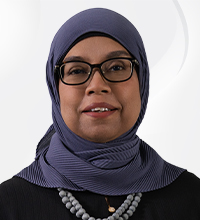
Speaker: Puan Sharifatul Hanizah Said Ali, Executive Director, Islamic Capital Market, Securities Commission Malaysia
Location: Grand Summit, Level M1, The Vertical, Bangsar South, Kuala Lumpur
Delivered: 9 October 2025

Yang Berusaha Mr Mohd Ridzal Mohd Sheriff, Chairman of Federation of Investment Managers Malaysia (F-I-M-M),
Yang Berusaha Mr Kaleon Leong, Chief Executive Officer, F-I-M-M
Board of Directors and the Management of F-I-M-M,
Distinguished speakers,
and participants of FIMMAC.
  1. Good morning. Let me begin by recording my appreciation to the organisers, the Federation of Investment Managers Malaysia (F-I-M-M), for once again inviting the Securities Commission Malaysia to deliver the keynote address at this year’s annual conference. This year’s theme, “Navigating the Future” resonates strongly with global developments, as it brings together practitioners, thought leaders, and policymakers to discuss emerging trends and explore how our industry can continue to meet the evolving needs of investors.
  2. This morning, I would like to bring to the conversation, key rising themes and topics such as broadening retail participation to reinforcing governance and investor protection. As stakeholders in this ecosystem, we are now constantly faced with growing realisation that Malaysia is evolving into a more knowledge-based and ageing society. It is with this awareness that the fund management industry must work towards building on this foundation outcomes and initiatives that can mobilise household savings, drive long-term wealth creation, and in turn advance the nation’s economic and sustainability. 

    State of play
    Ladies and gentlemen,
  3. As we look to the future, it is important to understand the landscape we are building upon.
  4. There is no denying the strategic importance of the fund management industry. It is anchored by a sizeable pool of professionally managed assets, supports a wide spectrum of investor segments, and provides diverse channels for Malaysians to participate in the capital market. From institutional investors to retailers, and from first-time investors to retirees, the industry has become deeply interwoven into the nation’s financial fabric.
  5. Within the overall assets under management that has grown by more than 1.5 times reaching RM1.1 trillion as at July 2025, it is also interesting to note that in underscoring Malaysia’s global leadership in Shariah-compliant fund management and its role as a key international Islamic finance hub, the Islamic or Shariah compliant segment continue to rise in tandem. Notably, Islamic assets under management have reached RM 261.25 billion accounting for nearly a 24% of total AUM.
  6. But let me add that the steady growth, however, has not been measured in size alone. The industry has evolved to become markedly more sophisticated offering a broader suite of products, from conventional and Islamic CIS to wholesale funds with alternative strategies, REITs, ETFs, and Private Retirement Schemes. This evolution also underscores its growing strategic relevance. Today, more than 18 million unique individuals are invested in Malaysia’s fund management industry, the majority of whom, around 14 million, are unit holders of ASNB funds, making it one of the most direct and inclusive avenues for household wealth accumulation.
  7. Within this broader landscape, sustainable and Islamic based product propositions continues to be a key growth engine and differentiator for Malaysia. The introduction of the SRI fund category and Waqf Fund Framework has further expanded the industry’s value proposition, enabling the integration of ESG and social finance into investment offerings. Since the launch of both, the frameworks have gained encouraging traction, with 74 SRI funds and 7 Waqf funds including one Waqf ETF now available in the market — underscoring growing interest in products that combine financial returns with positive social impact.

    Reinforcing Trust Through Conduct
    Ladies and gentlemen,
  8. In Malaysia, for many, especially first-time investors, their entry into the capital market is through a unit trust consultant. From a regulators perspective therefore, it is non-negotiable for the industry to uphold trust, prioritise investor interests, and support fair outcomes for all.
  9. As the industry evolves, growth must now be measured not only by scale but by quality - the quality of service, the suitability of products, and the clarity of advice. The focus should be on building enduring relationships grounded in trust, rather than merely expanding reach or accumulating assets and product pushing.
  10. With this shift comes a higher standard of responsibility. Upholding professionalism and ethics is not optional; it is fundamental to sustaining investor confidence. This duty rests not only with fund managers and distributors such as IUTAs and CUTAs, but also with the consultants who engage investors daily and guide their decisions.
  11. Where responsibility is entrusted, accountability must follow. The Securities Commission maintains a firm stance that there can be no compromise when it comes to protecting investors. Instances of misrepresentation or misconduct erode public confidence and undermine the credibility of the entire ecosystem. Where trust has been breached, the SC has acted decisively and will continue to do so to uphold market integrity and safeguard investor interests.
  12. Nevertheless, lasting trust cannot be merely legislated or enforced. It must be earned and embedded. Regulation sets the floor, but culture sets the tone. Industry must collectively foster an environment where doing the right thing is instinctive, embedded in ones DNA, and where every investor interaction reflects the highest ethical standards.
  13. In this endeavour, leadership is the compass. Boards, CEOs, and senior management must cultivate the culture of high integrity by modelling integrity, rewarding responsible conduct, and embedding ethics into day-to-day practice. True professionalism is sustained not by penalties, but by purpose, a shared belief that trust is our industry’s most valuable asset.

    Driving Better Outcomes for Investors
    Ladies and gentlemen,
  14. As you may be aware, a key tenet of investor empowerment is transparency particularly in relation to fees and charges. As this remains critical, our focus and conversations must revolve and extend to how investors are actually performing and whether they are on track to achieve their goals. True transparency is not only about what investors pay, but also what they gain in outcomes and desired objectives through the process of investing their hard-earned capital.
  15. To truly serve investors, industry must also work to provide clear, personalised insights into how their portfolios are performing and not just train their attention to fund level reports or benchmark comparisons. Performance statements should tell a meaningful story of each investor’s journey, reflecting their own contribution patterns, timing, and net results after fees. When investors can see how their choices translate into outcomes, they are better equipped to make informed adjustments and stay on track towards their goals.
  16. Findings from a 2025 closed SC survey of unlisted unit trust schemes and discretionary mandates across the Malaysian fund management industry revealed that while a majority of investors have achieved positive returns over time, a meaningful segment continues to experience weaker or negative outcomes. This highlights the importance of providing investor-specific performance insights enabling consultants to identify underperformance early, address its root causes, and guide clients toward corrective action where needed.
  17. Consultants therefore have a pivotal role to play in active performance monitoring. This means regularly engaging with clients to review outcomes, interpret drivers of return, and recalibrate strategies when necessary, all while ensuring alignment with the investor’s risk profile and long-term objectives. Proactive engagement turns data into dialogue and reinforces the consultant’s value as a trusted partner in the investment journey.
  18. For this purpose, it is essential that all consultants are committed to meaningful professional development, continually upgrading their knowledge and skills to ensure they are equipped to meet the evolving needs and expectations of their clients.

    Creating Pathways to Participation
    Ladies and gentlemen
  19. As we continue to strengthen Malaysia’s capital market, inclusivity must remain a priority, ensuring that every Malaysian, regardless of background, location, or financial means, has the opportunity to participate meaningfully in long-term wealth creation.
  20. For inclusivity to be meaningful, we must recognise the diverse realities of investors. Many are held back not by interest, but by barriers such as cost, complexity, or lack of guidance. Addressing these gaps is essential to help more Malaysians are able to take part in long-term wealth creation.
  21. To achieve this, we must design pathways that are simpler, fairer, and more responsive with transparent information, fit-for-purpose products, and supportive advice that help investors build confidence and stay invested over time.

    Launch of the Guide for Assessing Investors’ Sustainability Preferences
    Ladies and gentlemen,
  22. One of the key pathways to demonstration of meaningful participation is ensuring that investors are not only able to access opportunities, but also to make informed and purposeful choices. This is especially evident among younger investors, who increasingly want their investments to reflect not only their financial goals, but also able to manifest what will mirror their values. Insights from the Institute for Capital Market Research (ICMR) show that over 70% of millennials and Gen Z investors are more likely to invest in products that promote sustainability and good causes. This marks a fundamental shift in expectations — where returns are measured not only by performance, but also by impact and purpose.
  23. In 2017, as some may recall, the SC introduced the Guidelines on Sustainable and Responsible Investment (SRI) Funds to facilitate access to qualified SRI funds by licensed fund managers, making Malaysia one of the first in the region to establish national standards for sustainable funds. Building on this leadership, the SC was subsequently entrusted by the ASEAN Capital Markets Forum (ACMF) to spearhead the development of the ASEAN Sustainable and Responsible Fund Standards.
  24. Following that transformative shift to catalyse the sustainability agenda, Malaysia’s SRI fund segment has grown significantly, expanding nearly tenfold between 2020 and 2024, from RM1.46 billion to RM14.44 billion in net asset value (NAV). As at 31 December 2024, there were 75 funds qualified as SRI Funds, comprising 45 unit trust funds and 30 wholesale funds with a total NAV of RM14.44 billion.
  25. Notably, 40% of these funds as at end 2024 were Islamic SRI Funds, underscoring the strong synergy and commonalities between Islamic finance principles and sustainable investing. This momentum has continued into 2025, with total SRI fund NAV surpassing RM15 billion as at end-August.
  26. Against this backdrop, consultants play a transformative role acting as the bridge between investor intent and action. By helping your clients navigate the growing range of sustainable and responsible investment options you can ensure their portfolios reflect both their financial aspirations and their personal values. In doing so, you strengthen your own value proposition as knowing how to serve your clients better will give you a distinct competitive edge.
  27. It is against this backdrop and continued efforts to support this important role, the Securities Commission Malaysia, with support from FIMM, have developed the Guide for Assessing Investors’ Sustainability Preferences for Sustainable and Responsible Investment Funds. The Guide provides a clear and practical framework to help consultants integrate sustainability preferences into advisory conversations from understanding what clients value, to documenting their priorities, and identifying suitable SRI fund options.
  28. We recognise that as interest in sustainable investing grows, so too does the complexity of navigating its many dimensions. Rather than leaving you to piece together insights from multiple sources, this Guide is placed well to clarity and cohesion distilling key principles, and best practices into one trusted reference. It is designed to build confidence and capability, helping consultants translate investor aspirations into actionable strategies.
  29. Hence, I am pleased to launch today the Guide for Assessing Investors’ Sustainability Preferences - a key step towards empowering consultants to incorporate SRI considerations as a routine component of advice, and to deliver recommendations that are both values-aligned and investor-centric.
  30. I would like to take this opportunity to encourage all consultants to use this Guide as a practical tool to facilitate meaningful conversations with your clients. By doing so, you not only help investors align their portfolios with their values but also strengthen the role of the advisory community in shaping a more sustainable and resilient capital market.

    Conclusion
  31. Let me close by reminding you to stay anchored on three enduring pillars - trust, inclusivity, and future readiness. Trust builds confidence, inclusivity broadens participation, and future readiness ensures we continue to evolve with the changing needs of investors and the ecosystem. . Together, these principles will guide us in shaping a resilient and investor-centric industry.
  32. These themes will be further explored in the sessions ahead, which will examine how we can harness innovation, technology, and new strategies to strengthen value and outcomes for investors, ensuring they remain at the heart of everything we do. I encourage you to engage actively, share insights, and take forward ideas that can drive meaningful progress across the industry.
  33. With that, I wish you a productive and enriching conference, and look forward to your continued leadership in building a trusted, inclusive, and future-ready fund management industry.

Thank you.

SC AFFILIATES
RELATED SITES
about the SC
The Securities Commission Malaysia (SC) was established on 1 March 1993 under the Securities Commission Act 1993 (SCA). We are a self-funded statutory body entrusted with the responsibility to regulate and develop the Malaysian capital market.

General Line: +603-6204 8000
General Email: [email protected]
© Copyright Securities Commission Malaysia.  Contact Us   |    Disclaimer   |   The site is best viewed using Microsoft Edge and Google Chrome with minimum resolution of 1280x1024
Ooops!
Generic Popup