Keynote Address at the Road to Belém: Accelerating Climate Action in Sarawak
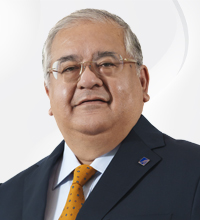
Speaker: Dato’ Mohammad Faiz Azmi, Chairman, Securities Commission Malaysia
Location: Sheraton, Kuching, Sarawak
Delivered: 7 October 2025

Yang Berhormat Datuk Dr. Haji Hazland bin Abang Haji Hipni,
Deputy Minister of Energy and Environmental Sustainability Sarawak;
Her Excellency Daniella Ortega de Menezes, Ambassador of Brazil to Malaysia and Brunei;
The Honorable Dato’ Mr. Adam Htoon, Honorary Consul of Bhutan in Australia;
Yang Berbahagia Datuk Dr. Ching Thoo, Secretary-General, Ministry of Natural Resources and Environmental Sustainability.

Tan Sri Tan Sri, Datuk Datuk,

Distinguished guests, ladies and gentlemen.

Assalamualaikum warahmatullahi wabarakatuh, and a very good morning.
  1. First of all, I would like to thank the Ministry of Energy and Environmental Sustainability Sarawak (MEESty) for the invitation to deliver the keynote at this important event – Road to Belém: Accelerating Climate Action in Sarawak. It is always a pleasure to be here as we chart the path towards a more sustainable future.
  2. Sarawak is a special place in my eyes. It is a multi-cultural state with immense natural resources. You were the first state in the federation that adopted modernisation and it has a rather unique history with an English family called the Brookes.
  3. Sarawak is also home to the one of the oldest rainforests in the world, some 140 million years old. Prior to joining the SC, I had also done work in Sarawak which showed me how professional and close to the land Sarawakians are, and how immensely proud you are of your state. So I was happy to accept the invitation to come speak on accelerating climate action in Sarawak.
  4. Sadly though, I have to start with the bad news.
    • 7 of the 9 planetary boundaries has been breached, as of today. Planetary boundaries are the framework to describe limits to the impact of human activities on the Earth. These cover CO2 concentration, loss of biological diversity, ocean acidification and so on. And what it means is when all 9 boundaries are reached, the Earth is no longer stable for humans to live in.
    • The average temperature rise since the Industrial Revolution is now about 1.1 Degrees Celsius. However the UN warned us a year ago that even if we do all the things we promised, they still expect temperature to rise more than 1.5 Degrees Celsius, even as high as 3.1 Degrees Celsius as we haven’t controlled the rate of GHG emissions and can now expect a lot more impact to our environment.
    • And at a recent conference in Kuala Lumpur, HRH Sultan Nazrin of Perak was quoted as saying that “We are currently on course for nearly double that amount; and even 1.5 degrees is only a mitigation measure, and not a good or safe amount of global heating. It is simply that 2 degrees or above would be even worse. The situation is dire. Time has almost run out. And this is all the more frustrating because we know that when we do act boldly, when we act rapidly, when we act together, we can effect positive change.”

  5. And so, it is with that context, that I come to Sarawak. Since the establishment of the Sarawak Corridor Renewable Energy (SCORE) in 2008, the state has been steadfast in its commitment to build a low-carbon and climate-resilient economy. Sarawak has also led the way in providing forward-looking policies and frameworks for energy transition and sustainability.
  6. This year alone has witnessed the launch of the Sarawak Sustainability Blueprint 2030, the Sarawak Hydrogen Economy Roadmap (SHER), and the Sarawak Energy Transition Policy (SET-P). Building on these releases, today’s unveiling of Sarawak’s Net Zero Strategy and Carbon Plan (NZCP) completes a comprehensive set of frameworks to guide the state towards its goal of achieving net zero emissions by 2050.
  7. As Malaysia’s largest state, Sarawak plays a pivotal role in driving national economic growth, contributing nearly 10% of national GDP in 20241. It already holds a strategic advantage in decarbonising its power sector, with 70% of its electricity generated from renewable sources. I have also read recently that Sarawak Energy is considering listing its shares and we very much welcome this new addition to the Capital Markets. In addition, the state will be home to the world’s largest offshore Carbon Capture and Storage (CCS) facility, which is expected to reduce CO2 by 3.3 million tonnes annually2.
  8. Recognised in the National Energy Transition Roadmap (NETR) as the regional green hydrogen hub, Sarawak is already advancing two flagship projects – H2ornbill and H2biscus – which combined, will position the state among the largest producers of clean energy globally3.

Role of the capital market

Ladies and gentlemen,

  1. The Securities Commission Malaysia (SC) believes that the capital market will be a crucial enabler in supporting states such as Sarawak on their journey to Net Zero. To this end, the SC is developing the Capital Market Master Plan 4 (CMP4), which will shape the strategic direction for the Malaysian capital market over the next 20 years.
  2. This plan will be aligned with key national priorities, including the 13th Malaysia Plan (RMK13) and NETR. Sustainable finance will also be a central pillar, as we aspire to position Malaysia as a global hub for green, social and Islamic finance.
  3. To achieve this, ESG and Shariah-compliant investments will be scaled up, alongside efforts to enhance the mobilisation of capital to support the nation’s sustainability agenda. This includes financing transition efforts, adaptation and climate resilience. The ambitions of NETR alone is estimated to be around RM1.2 trillion to RM1.3 trillion in financing, to support Malaysia’s energy transition. And there are also ambitious plans for the Asian Power Grid that will need investment.
  4. With various climate-related initiatives proposed by Sarawak, I am confident that more investment opportunities will emerge. The capital market can be a key financing avenue – either through the listing of Sarawak-based companies on Bursa Malaysia, issuance of sustainability-linked instruments, or blended finance models to crowd in private capital alongside public funds. We are also looking at adopting the ASEAN taxonomy into Malaysia to encourage more investment.
  5. It is worth noting that Sarawak has already successfully provided funding across the risk spectrum, from the issuance of sukuk by the Bakun Dam operator to the use of peer-to-peer (P2P) financing instruments by Sarawak-based MSMEs.

Supporting Sarawak-based corporates


  1. In tandem with Sarawak’s efforts, there are some initiatives that the SC is undertaking which may be of assistance. The National Sustainability Reporting Framework (NSRF) - launched last year in September - will ensure consistent and comparable corporate sustainability reporting in line with the IFRS Sustainability Disclosure Standards issued by the International Sustainability Standards Board (ISSB).
  2. In January this year, the ACSR released ‘Navigating the Transition: A Guide for Boards’, which provides directors with simplified and actionable steps on governance, sustainability data boundaries, financial impact assessments, and integration with enterprise risk management systems. This is in addition to the range of support being provided to preparers such as Illustrative financial statements and masterclasses on how to apply these standards.

Advancing Regional Climate-related Initiatives

  1. Looking ahead, Sarawak’s vast natural assets give it a unique advantage in developing quality carbon credits. Coupled with supportive policies, Sarawak is well-placed to play a key role in the supply and trading of carbon credits.
  2. At the national level, the RMK13 has outlined plans for developing the National Carbon Market Policy and the Emissions Trading Scheme, which will facilitate both compliance-based and voluntary carbon trading. Complementing this, the SC - as chair of the ASEAN Capital Markets Forum (ACMF) in conjunction with Malaysia’s ASEAN chairmanship – is also leading regional climate-related initiatives.
  3. One of ACMF’s key thrusts this year is to develop the ACMF Voluntary Carbon Market Development Plan. It will assess the current carbon market landscape in ASEAN and the role of carbon credits in accelerating decarbonisation across the region. Central to this work is the development of clear and consistent Voluntary Carbon Market (VCM) Guidance to support the generation and trading of high-integrity carbon credits.
  4. As such, ASEAN regulators are drawing up common principles and expectations that will better govern such products and promote interoperability in ASEAN. Ultimately, this provides better value to those seeking funds from offsets and carbon credit programmes. The principle is, polluters must pay, and they must pay with fairness and transparency.
  5. Beyond decarbonisation, Malaysia and ASEAN must also strengthen its focus on climate adaptation and mitigation. To address this, the ACMF is spearheading the development of the mitigation co-benefit, Adaptation for Resilience Guide, or “mARs” Guide. It aims to provide a framework for identifying adaptation projects and financing options in the region, particularly those that are not commercial or bankable. mARs will also complement and expand on the ASEAN Taxonomy; to guide companies and funders in assessing adaptation technologies and solutions, with the aim of facilitating funding towards climate-related projects.

Closing

  1. I am personally very excited to see how the capital market can support climate transition, adaptation and mitigation efforts – not only regionally, but nationally as well as in individual states like Sarawak.
  2. I look forward to the discussions and dialogues in the next two days. I believe they will provide greater insights into how Sarawak can leverage its strengths to achieve a successful transition, and possibly, even serve as a model for other states.
  3. Let me end with another quotation from his royal highness Sultan Nazrin of Perak at the conference I mentioned earlier:

    “And as the famous Hadith says, “The earth is green and beautiful, and God has appointed you his guardian over it”.
  4. We have a God-given responsibility to protect the planet and everything on it, for now and for the future: a duty to keep the earth “green and beautiful” for generations to come. It is a call to action which I believe resonates, regardless of faith or creed: since if climate change concern is beyond political partisanship, then it must be beyond religious differences as well.
  5. And that ladies and gentlemen, is a strong reason as to why we need to accelerate faster climate action particularly in Sarawak.


Thank you.


  1. Source: Department of Statistics Malaysia
  2. The Petronas Kasawari Field. Source: InvestSarawak website
  3. Source: The Edge news; Sarawak to finalise green hydrogen foray worth US$4.2b (26 February 2024)
SC AFFILIATES
RELATED SITES
about the SC
The Securities Commission Malaysia (SC) was established on 1 March 1993 under the Securities Commission Act 1993 (SCA). We are a self-funded statutory body entrusted with the responsibility to regulate and develop the Malaysian capital market.

General Line: +603-6204 8000
General Email: [email protected]
© Copyright Securities Commission Malaysia.  Contact Us   |    Disclaimer   |   The site is best viewed using Microsoft Edge and Google Chrome with minimum resolution of 1280x1024
Ooops!
Generic Popup