Keynote Speech at Asia Asset Management 14th Annual Malaysia Roundtable
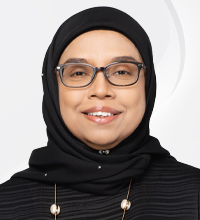
Speaker: Sharifatul Hanizah Said Ali, Executive Director, Islamic Capital Market, Securities Commission Malaysia
Location: Mandarin Oriental, Kuala Lumpur Delivered: 5 May 2026
Mr Tan Lee Hock, Founder and Publisher of Asia Asset Management,
Datuk Wan Razly Abdullah bin Wan Ali, President & Group Chief Executive Officer, Affin Bank Berhad
Distinguished Speakers,
Ladies and gentlemen.
Assalamualaikum and a very good morning.
Allow me to begin by expressing my appreciation to the organisers, Asia Asset Management, for the invitation to deliver the keynote at this year’s Malaysia Roundtable. It is a privilege to share the Securities Commission Malaysia’s (SC) perspectives on this important and timely theme, ‘Pensions and Investments: Growth Drivers in Transition Era’.
Congratulations also to Asia Asset Management on their well-deserved recognition at the State Street Institutional Press Awards Asia Pacific 2025 for Best Editorial Comment. The SC as well as the industry look forward to benefitting from your continued insights and contributions to the asset management segment.
Capital Market Masterplan 2026-2030
This year, Malaysia’s policy and market direction was significantly reframed, a development many of you would have closely followed. In March, the SC launched the Capital Market Masterplan 2026-2030 (CMP) - to set the desired outcomes to be achieved for the domestic capital market. The CMP sets a 20-year vision, to be implemented through successive five-year detailed action plans. It takes a deliberately different posture to previous Masterplans, which can be summarised in two words: Reshape and Recalibrate. Among its objectives, CMP seeks to energise market growth, strengthen the market’s effectiveness in serving the real economy and direct capital to enable Malaysia's long-term prosperity.
The CMP is built around four strategic themes - vibrancy, inclusivity, sustainability and regional opportunities. These themes are complemented by Malaysia’s global leadership in Islamic finance, guided by the principles of Maqasid al-Shariah (objectives of Shariah), alongside regulatory and governance excellence. These are not aspirational ambitions - they are supported by clear initiatives and measurable targets, laying the foundation forward.
Therefore, today's roundtable which will highlight growth drivers in a period of transition, lands at a prescient moment. Transition lies at the heart of CMP. It requires action and calls upon the industry to invest in new capabilities, products and asset segments in line with investor demand.
Ladies and gentlemen,
I wish to highlight several focus areas within the CMP that are most relevant to the asset management industry, and where collaboration between industry participants and the SC will be crucial. Before that, let me share where the capital market currently stands.
Last year, the Malaysian capital market grew to a record RM4.3 trillion, a 3.2% year-on-year growth, with the Islamic capital market (ICM) comprising RM2.7 trillion or 64% of the overall size. This was achieved amid heightened global volatility and geopolitical uncertainty. We also had a record 60 IPOs, surpassing the 55 in 2024. This contributed to total funds raised of RM187.7 billion.1
The fund management industry also exhibited strong growth, with assets under management (AUM) rising 6.9% to a record RM1.14 trillion. This was driven by improved valuations and demand for fixed income assets. Notably, the unit trust segment, accounting for over half of total AUM, recorded net sales of RM2.27 billion - its first after four consecutive years of net redemptions.
Islamic fund management has also been a bright spot. Islamic AUM grew 11.35% to RM274 billion, outpacing the broader fund management industry. The Islamic collective investment scheme landscape now encompasses 433 funds spanning unit trusts, wholesale funds, PRS, REITs and ETFs. This includes 29 Islamic SRI funds.
Reaching the Next Generation of Investors
Ladies and gentlemen,
While risks and headwinds remain elevated in the near term, we should not lose sight of the structural opportunities emerging.
One of the most significant shifts in our market is its changing demographic composition. Younger investors are poised to reshape the investing landscape. Over the past five years, they accounted for more than 50% of new retail accounts opened annually in the stock market2. Today, those under-35 make up about 20% of active retail investors, approximately 490,000 out of 2.4 million active accounts.
This generation is already investing in equities and alternative assets including digital assets - primarily through digital platforms, with high expectations of product range, cost and the user experience. The question is not whether they will invest, but whether the industry will be able to meet their expectations.
Take for example ETFs, which have gained strong traction. This is a key focus area under CMP. Their appeal is clear - low cost, simple and accessible. Despite this, many Malaysians continue to seek ETF exposure offshore. Expanding our domestic ETF offerings is therefore, critical to anchor investment activity at home and in doing so, widen the capital market’s depth and liquidity.
It is with this objective in mind that the SC is taking steps to broaden the ETF landscape – to expand the framework to facilitate new asset classes including digital assets, encourage greater cross-listings and widen product offerings to meet diverse risk-return profiles.
The SC remains committed to working with the industry to further develop the ETF framework across structures and cross-border arrangements. The frameworks we build must reflect the market we aspire to create and also meet the needs of investors and industry stakeholders.
In fact, I am particularly intrigued by the final sessions today which speaks directly to such efforts, “The Global ETF Revolution and the New Opportunity Set” and ”ETF and the 4th CMP: Dawn of New Era”.
Reflecting on some of the works currently underway, the SC, alongside representatives from Bank Negara Malaysia and Bursa Malaysia, conducted a working visit to China with the focus in accelerating linkages between our capital markets unlocking new investment flows, strengthening institutional partnerships, and expanding avenues for cross-border capital raising. This is part of a coordinated effort under the CMP to deepen regional connectivity and position Malaysia as a preferred investment destination for global investors. Therefore, I look forward to the insights and ideas that will emerge from the sessions.
Providing better value through PRS
Ladies and gentlemen,
Turning to our ambitions closer to home, the Private Retirement Scheme (PRS), a voluntary private scheme under the regulatory purview of the SC, serves as a critical third pillar of our retirement system, complementing mandatory savings under the EPF. It enables Malaysians to strengthen their long-term financial resilience for retirement. Unfortunately, the emerging generation entering the capital market which I highlighted earlier is also the least engaged when it comes to retirement savings. While the benefits of early investing are well documented, only 6% of PRS members today are below the age 303.
In spite of that, overall participation tells a different story. Annual PRS contributions exceeded RM1 billion in both 2024 and 2025, the highest levels in the post-pandemic period. This sustained momentum reflects strong confidence among informed members; the priority now is to extend that confidence to a broader base of Malaysians, particularly younger investors.
To address this, several initiatives have been drawn up under CMP to ensure this focus segment grows in both scale and relevance. This includes expanding the investment universe to allow direct access to Bursa-listed ETFs, equities and bonds – aligning PRS offerings with products investors are already familiar with.
At the same time, we must ensure products that are fit for purpose. This means modernising the product landscape to attract younger savers and introducing structures that are better aligned with long-term savings behaviour. Importantly, we must also ensure that the cost of investing does not erode returns.
Strong performance and sound methodology are the foundation, but they are not sufficient on their own. For fund managers that are PRS Providers, the message is: let us deliver better value for members. A thriving PRS segment is good for individuals, ecosystem participants and Malaysia's long-term retirement security. Let us continue to work closely to make this a reality.
Broadening financing options for MSMEs
The investment management community in this room is not just a conduit for individual savings but also a key source of capital for the real economy.
Yet, a persistent gap remains where micro, small and medium enterprises (MSMEs) continue to have limited access to capital, in particular capital market funding. Corporate bonds and sukuk serve larger issuers well, but it remains structurally costly and prohibitive for smaller enterprises caught between the startup stage and public market readiness. This gap sits squarely in the middle of the MSME funding escalator, and it is where many promising businesses have historically had to rely on bank financing.
To address this, another focus area for the CMP is to introduce a new private debt framework. This will enable private companies to issue conventional and Islamic private debt notes to registered VC and PE firms, as well as licensed fund management companies with wholesale funds or investment mandates for sophisticated investors.
Importantly, it removes the requirement to appoint a principal adviser in privately negotiated transactions involving sophisticated investors – ensuring a more proportionate regulatory approach. For fund managers in this room, this opens up another pathway to invest in private Malaysian companies via a debt structure backed by a clear regulatory framework.
However, even as we expand, we must be clear about what we stand for. In this regard, Malaysia's Islamic finance leadership stands as an example and also a testament to true integrity.
For the SC, the Maqasid al-Shariah Guidance forms the bedrock of this proposition. By providing clarity of principles and anchoring our Islamic capital market to sustainability, it affirms that ethical finance is not a constraint on growth but its foundation. I would urge you all to heed these principles to build an industry that radiates confidence and integrity.
Closing
In closing, these key areas I have outlined – ETFs, PRS, private markets and not forgetting, our ICM - reflect a unified and interconnected goal: to build a capital market that is vibrant, inclusive and aligned to our nation's long-term economic needs. That is what the CMP strives to achieve.
It states where we seek to go. Now comes the what and the how.
In this regard, this roundtable is exactly the kind of forum where practitioners, asset allocators and policymakers can sit together and speak honestly about what is working, what needs to change and how do we get there. I look forward to the discussions ahead and the outcomes it will shape.
Thank you
Source: SC Annual Report 2025
Source: The Edge, Rise of the young investors (January 2026)
The Securities Commission Malaysia (SC) was established on 1 March 1993 under the Securities Commission Act 1993 (SCA). We are a self-funded statutory body entrusted with the responsibility to regulate and develop the Malaysian capital market.