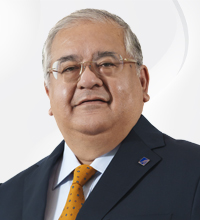
Keynote Speech at JC3 Journey to Zero (J20) Conference
Building Climate and Nature Resilience for People and Business
Speaker: Dato’ Mohammad Faiz Azmi, Chairman, Securities Commission Malaysia
Location: Sasana Kijang, Kuala Lumpur Delivered: 28 September 2026
Yang Berbahagia Dato’ Sri Abdul Rasheed Ghaffour, Governor, Bank Negara Malaysia, Members of the Joint Committee on Climate Change (JC3), Distinguished speakers and guests, Excellencies, ladies and gentlemen.
Assalamualaikum warahmatullahi wabarakatuh, and a very good morning.
On behalf of Bank Negara Malaysia and the Securities Commission Malaysia (SC), I would like to welcome you all to the JC3 Journey to Zero Conference 2026 edition.
This is an important event that brings leaders and practitioners from across the financial sector, business, government and wider ecosystem to advance practical solutions for climate and nature actions.
The last conference in 2023 was well attended which encouraged us to repeat this event again this year, focusing on resilience and a move to a low carbon, nature positive economy.
What we have planned for you over the next two days are panel sessions, fireside chats and masterclasses together with some demos and exhibitions on a variety of topics including transition, adaptation, voluntary carbon markets and ecosystem matters. So I hope you will be able to attend all the different activities.
Building Resilience in a Non-Linear World
Ladies and gentlemen,
Over the next few days, I am sure that scientific data and views will be presented to show that the planet is warming faster than we predicted with GHG emissions still increasing. We are now facing a scenario that the planet will warm by more than 1.5 degrees Celsius1 in the future.
Earlier this month, I attended the inaugural ASEAN Regulatory Sustainability Summit and the JusTN0W2 climate conference where a central theme of discussions was building resilience in a non-linear world.
What I learnt was alarming. Climate science tells us that risk does not always gradually accumulate, it can happen suddenly, when critical thresholds are crossed. These climate tipping points are when a natural system shifts abruptly and irreversibly into a new state, impacting supply chains, commodities, insurance, credit, as well as asset pricing across markets.
The Global Tipping Points Report tracks 25 vulnerable Earth systems, and coral reefs are the first confirmed breach. Rising water temperature has affected 84 percent of reefs across 82 countries with potentially up to a billion livelihoods impacted . Other critical systems are all approaching dangerous thresholds.
As ASEAN prepares for a potential 'Super El Niño,' the implications are beyond drought and the worsening haze that we are going through now. It strikes directly at labour productivity. Protecting our workers from this heat is as much a resilience imperative as it is a duty of care.
A recent report by Climate Impact Labs has quoted that global land temperatures will be 1.2 degrees Celsius above normal in the coming months due in large part to the Super El Niño that began in June.
These warm conditions will resemble the higher temperatures that climate change is projected to deliver 20 years in the future and will lead to 44 percent more “extremely hot days” than we would expect in a normal year.
CIL estimates an additional 451,000 heat-related deaths will happen this Super El Niño event. In ASEAN alone, estimates are at least 38,000 deaths. While these are estimates, it is still of concern.
The super El Niño is effectively pushing us into the future, exposing us to temperatures that will not be the norm for another two decades. And more importantly, before we have had time to adapt and protect ourselves.
Equally of concern, a recently released UK Joint Intelligence Committee report highlighted that global ecosystem collapse arising from the climate crisis and this year's super El Niño, could pose direct threats to a country’s national security and economy.
All this reinforces the message, that climate risk is not just an environmental issue but also a national and economic one. For government, regulators and market participants, it will need a considered response to the material threat this poses to our economic and financial stability.
What Regulators in Malaysia are doing
The first thing to note is that climate change is a ‘whole of society’ problem. From government and its ministries, to its agencies and GLCs, to regulators like Bank Negara and the SC as well as corporates, private sector, NGOs and the public, we all have a part to play.
I will not attempt to summarise all the efforts the government has made but will mention some of the areas regulators are focusing on. I must commend Bank Negara for setting up a number of initiatives over the years on climate change. Indeed, the creation of the Joint Committee on Climate Change or JC3 was launched by Bank Negara in 2019, with its inaugural meeting held on 27 September 2019.
The JC3 was initially co-chaired by Deputy Governor Datuk Jessica Chew and Datuk Zainal Izlan Zainal Abidin the Deputy Chief Executive of the SC. It is now currently chaired by Assistant Governor Madelena Mohamed and the Chief Sustainability Officer of SC, Neetasha Rauf.
Over the seven years, JC3 has driven several key initiatives in building Malaysia's climate finance ecosystem. Its achievements span from mobilising capital for projects to establishing relevant frameworks for sustainable finance. A key initiative worth noting is the Climate Finance Innovation Lab (CFIL).
Launched in June 2025, the CFIL is JC3's flagship initiative to connect climate and nature-related projects with funding. It has onboarded 30 projects with total funding needs exceeding RM4 billion as of January 2026. A second cohort of 22 projects seeking RM1.73 billion4 is undergoing a structured accelerator programme with the UN Global Compact Network Malaysia.
JC3 supported the National Sustainability Reporting Framework by issuing Guidance Documents for Banks, Insurers, and Takaful Operators to make sustainability disclosures more robust and comparable. The Guidance documents complement the Illustrated Sustainability Reports or ISRs issued by ACSR for the plantation and construction sectors.
The biggest achievement to me however, was the effort to focus on the availability of data. The JC3 Climate Data Catalogue expanded the data available to 186 unique data items with the overall data availability rising to 82 percent in 2025. This increasing availability of data helps with the adoption and disclosure of sustainability reporting in Malaysia.
There are other initiatives that JC3 are focusing on as well such as capacity building, the creation of guidance documents and the adoption of the ASEAN Taxonomy through the Malaysian Taxonomy.
We also note Bank Negara’s continued focus on the role of financed emissions in our economy and the monitoring of the resilience of banks and their customers to be able to deal with what is ahead in the future.
The Role of the Securities Commission
Ladies and gentlemen,
The SC believes we have an important role to play in helping to evolve the capital market players to be more resilient and to continue to grow the economy despite the challenges ahead.
Under the SC’s Capital Market Masterplan 2026–2030 (CMP) launched in March this year, Sustainability is one of the four strategic pillars. The others are Market Vibrancy, Inclusivity and Regional Opportunities.
The aim of the Sustainability pillar is to mobilise between RM90 billion and RM100 billion in total financing over the next five years in support of climate and other sustainability-related goals.
The SC is utilising a two-prong approach towards embedding sustainable practices and looking at funding needs.
The first priority is to increase the resilience of the corporate sector. This will allow us to keep growing our economy, keep businesses funded and ultimately pay for climate adaptation and mitigation needs.
The key initiative we are using is the adopting of international standards, the ISSB S1 and S2 standards, to better explain what we do in a globally recognised way. We are launching our NSRF Kembara programme to visit all states outside the Klang Valley, starting with Sarawak and Sabah. This is to ensure we hear from all companies across Malaysia to understand their challenges and see how we, as regulators can support them in their sustainability journey.
Robust disclosures provide the evidence that companies are doing their part to be resilient. Disclosures also allow allocators of capital to make informed decisions on investment choices. However, with more information does come additional risks. It could potentially be used by aggrieved parties to support litigation and so companies need to ensure there is a proper basis and process behind the forward-looking statements they make.
The point to leave you with is that if financial statements are considered the ‘quarterly check-ups’ on the health of a company, then the sustainability disclosures are the stress tests that shows the company’s resilience and robustness in the future. The rigour and credibility of this is also dependent on skilled sustainability professionals at the helm, which is why the SC is supporting the setting up of an Association of Sustainability Professionals, ASP. More details on ASP will be announced soon.
We are also looking at how to better demonstrate our own country’s resilience as with more climate events, comes the need to demonstrate to foreign investors that we can cope. In the competition for FDI, a country’s climate resilience will become a bigger factor. We need to identify data that asset owners want to see to reassure them that investing in Malaysia is safe. The good news is that in international rankings, we are generally perceived as being quite resilient, ranking second after Singapore in ASEAN5. However, we need more data to prove it.
The SC’s second sustainability imperative is to mobilise capital for climate adaptation and resilience efforts. Estimates put Malaysia’s climate adaptation needs by 2050 at between US$852 billion and US$1.1 trillion6. To put it in context, the entire Malaysian capital market size is just over US$1 trillion.
However, there are issues as currently, adaptation projects often have limited commercial viability and marginal bankability. This makes getting in private investment to support public works, challenging.
I have already mentioned some efforts that Bank Negara are putting in on this front, such as the CFIL initiative but would like to share some potential structures which we at the SC are looking at.
One proposal is the new Sukuk Prisma framework. The idea is to have a new purpose-driven framework that will be aligned with Maqasid Al-Shariah or the objectives of Shariah, as well as the ASEAN Taxonomy and international green bond principles. Such sukuk may be in non-ringgit currencies and follow other fatwas not used in Malaysia. The aim is to connect foreign capital with our national priorities on areas relating to adaptation and resilience.
Another interesting potential funding instrument for climate, is tokenisation. Its primary advantage lies not only in its cost effectiveness but also its ability to improve process and increase efficiencies as well as to widen access to capital from new investors.
This year, the capital market has facilitated a few important digital innovations in this area. In April, Khazanah Nasional Berhad, in collaboration with the SC, successfully launched Malaysia’s first tokenised sukuk. Subsequently, CIMB Group managed to pilot the settlement of their tokenised sukuk using tokens based on cash deposits. These are the types of responsible innovation that we are encouraging.
In addition, we are engaging with the global investment community to explore these new ideas. This includes a series of engagements hosted by HSBC in London, to seek the views of asset owners, pension funds, insurers and philanthropists on how to better structure Sukuk Prisma as well as with the Oxford Centre for Islamic Studies to see whether a case can be made for repurposing Zakat towards climate resilience projects.
So the commitment is that between Bank Negara and the SC, we will both work together to help us all weather this climate crisis. Pun intended.
Views of Three Stakeholders
Ladies and gentlemen,
I have spelt out the challenges we face and some of the areas that regulators are looking into. The future does seem bleak but I have faith in humanity sorting things out as we humans are by our nature, loving and willing to help each other out. We are also very creative and innovative. Also, there are examples in the past where we have all come together to deal with planetary issues such as the depleting ozone layer and more recently dealing with COVID.
So let me end, by sharing a different point of view to consider as a possible way out of the current problems. The first point of view, expressed at the inaugural ASEAN Regulatory Sustainability Summit earlier this month, by Tan Sri Andrew Sheng our SC Capital Market Advisory Committee member, who made an interesting observation about the dominance of the GDP growth driven world over the Holistic Growth driven world. The former measures success of increasing GDP while the latter has different measures like Gross National Happiness Index or the Planetary Health Index as measures.
This GDP focus looks at return as a principal outcome which in a way, may explain why the planet is in such a poor state now as the rush to grow economically is not balanced by the need to manage the impact to the planet, from the overuse of resources or within agreed guardrails.
We had a similar conversation at the SC OCIS Roundtable a few days later when one of the British participants suggested a need for a Hippocratic oath for finance professionals, which apparently had been suggested some years ago in the UK, after a series of financial scandals. The oath was supposed to set a moral code for finance professionals.
The third point of view was expressed by His Royal Highness Sultan Nazrin Muizzuddin Shah, the Sultan of Perak. Tuanku delivered a thought-provoking royal address entitled ‘Building Resilience: The Intersection Between Capital, Climate and Innovation’. Tuanku’s central argument was that capital, climate, and innovation can no longer be seen as separate conversations. Tuanku emphasised that our future depends on uniting these three priorities, as the world is already suffering the consequences of treating capital and the climate as separate conversations.
Drawing on Islamic tradition and the work of the late Dr. Umer Chapra, Tuanku framed wealth as a trust from God and the environment as a trust that must be protected. He warned that pursuing economic growth while neglecting social objectives could lead to inequality, family breakdown, and social unrest. Crucially, he stated that no generation has the right to consume the inheritance of the next.
So what is being suggested by these three commentators? My takeaway is that we all need to grow as all economies needs to grow. However, growth has to be measured. You cannot have growth for growth’s sake or at all costs, as you all have an obligation to the next generation, your children. Also, you must take into account the ESG factors as well to grow responsibly.
Closing
In closing, I would like to, on behalf of Bank Negara and the SC, thank the organising team, the planning team, the contributors and speakers and of course all of you attending today and tomorrow.
These events are very enriching but there is a lot of work and long hours needed to get everything to work seamlessly. A special thanks to Bank Negara for allowing us to use this impressive venue and finally I want to leave you with a quote which was attributed to a Native American Indian by the name of Chief Seattle in 1854.
The quote is this: “We do not inherit the Earth from our ancestors; we instead borrow it from our children.”
So hopefully when you leave this conference you do so with a little hope and will take on the challenge to grow, responsibly.
Thank you.
Source: UN Environment Programme (UNEP)
JusTN0W stands for “Just Transitions to a Net Zero World”.
Source: Global Coral Bleaching hits Record Levels as Global Warming Exceeds 1.2◦C, Firstpost (October 2025)
Source: JC3 Statement on its 17th Meeting (August 2026)
Source: The Notre Dame Global Adaptation Initiative
Source: Malaysia Country Climate and Development Report 2026, World Bank
The Securities Commission Malaysia (SC) was established on 1 March 1993 under the Securities Commission Act 1993 (SCA). We are a self-funded statutory body entrusted with the responsibility to regulate and develop the Malaysian capital market.