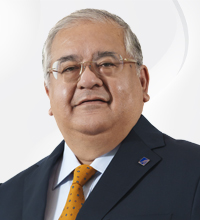
Keynote Speech at the 3rd Global Islamic Economy Summit, Istanbul
Speaker: Dato’ Mohammad Faiz Azmi, Chairman, Securities Commission Malaysia
Location: Istanbul Financial Center, Türkiye
Delivered: 5 June 2026

His Excellency the Secretary-General of the AlBaraka Forum,
Distinguished guests, ladies and gentlemen.

Assalamualaikum Warahmatullahi Wabarakatuh and good morning.

  1. It is always a challenge to reduce a vision into a few minutes, so please permit me to start with a short video to communicate visually what the fourth Capital Market Masterplan 2026 to 2030 means to Malaysia and the use of two slides to emphasise certain points.
  2. I hope the video gives you a sense of Malaysia’s ambition. Our recently launched Masterplan is a bold undertaking to increase our market size by about US$ 500 million or RM 2 trillion in 5 years.
  3. It consists of four main pillars, and two foundational pillars which are Islamic Finance and Regulatory & Governance.
  4. We acknowledge no regulator can succeed in isolation. This Masterplan builds on the excellent work our Malaysian government has done recently to reduce our budget deficit, reduce public subsidies and at the same time reducing leakages and promoting both FDI and DDI to fund new economic activity. We have also a stable currency in the ringgit.
  5. This Masterplan deliberately treads a less orthodox path. Rather than a traditional blueprint for the Capital Markets, the Masterplan is designed as an unconventional strategic document – to envision the market and our country’s needs in the next 20 years and the steps required over the next five years to get us towards meeting these challenges or objectives.
  6. It means we need to adopt a multi-disciplinary, cross-sectorial view, that incorporates developments beyond the capital market and involves the whole of society in Malaysia.
  7. The Masterplan acknowledges that reshaping and recalibrating the Malaysian capital market is fundamental for the country’s resilience and future-readiness. One outcome is to position ourselves to raise the economic ceiling and the floor as well, and to continue serving business needs and the real economy.
  8. Let me first share an overview of the interconnected pillars and focus areas that underpin the Masterplan. Thereafter, I will elaborate on the value of Islamic principles and practices, including Maqasid al-Shariah, in achieving the outcomes we seek.

The SC’s Capital Market Masterplan: Key Themes

Ladies and gentlemen,

  1. With the global order fracturing and geoeconomic competition rising, a major concern is the ability to continue attracting global capital flows and not just trade flows. This is why we have two pillars, the first pillar on Market Vibrancy, and the fourth pillar on Regional Opportunities.
  2. Under Pillar One, Market Vibrancy, the push is for better long-term corporate market valuations and enhancing the value proposition of bonds and sukuk. One of the areas we want to address is that while our GDP growth has averaged 5 percent over the last decade, the growth in market capitalisation has not kept pace. Like Japan and Korea, we are focusing on the large cap stocks to see how we can encourage better valuations by getting them to articulate their stories better. We also are looking at the product mix in our market to bring in ETFs for example, and to encourage investors coming into the region, not just for opportunities in the Malaysian market but ASEAN as well.
  3. Malaysia is blessed with a good pool of savings which has helped with fundraising and investments. This serves to not only enhance economic prosperity but also to attract investors and project owners. Interestingly, only about 30 percent of our market activity is by retail players. Funds and institutions are the bulk of our market players. This makes our market more stable and less volatile.
  4. Similarly, Pillar Four on Regional Opportunities aims to attract more long-term and “sticky” capital including a focus on attracting regional pension and sovereign wealth funds. We appreciate the use of indices like the MSCI Emerging Markets Index to attract passive global funds into our market but by their nature, its focus on liquidity and free float tends to encourage short term plays and exits. For example, recent re-ratings by MSCI of selective stocks on their Emerging Market Index has encouraged negative flows in some emerging countries like Indonesia.
  5. Much like Türkiye sitting at the confluence of Europe and attracting cross-border investments, we hope to replicate this in Malaysia to see how we can position ourselves to channel global monies into our ASEAN region. One area where we do have a competitive advantage is in Islamic Finance.
  6. Our Masterplan also looks at vulnerabilities. We need to look after the vulnerable and those less fortunate. This is why Pillar Two on Inclusivity seeks to ensure that no retail investor – young or old - is left behind. We will also focus on retirees and the returns they will have as we become a more aged society. Concurrently it also focuses on building a sustainable pipeline of companies requiring capital market funding, in particular startups and smaller businesses.
  7. Another critical theme is climate change. ASEAN is in a climate vulnerable part of the world. Malaysia is rated second after Singapore in terms of resilience. That said we need to prepare and be able to fund our transition and climate-based needs over the next two decades.
  8. So a major objective of the third pillar on Sustainability is to mobilise private and concessional capital, particularly for transition and adaptation projects that are critical for long-term resilience but may not be fully bankable. We have an ASEAN project called ‘mARs’, or mitigation co-benefit and Adaptation for Resilience, that seeks to develop methodologies and frameworks to fund non bankable climate adaptation projects.
  9. One source of funds for future Adaptation projects may include Zakat and Waqf monies. We have also launched a Social Exchange to serve as a platform to fund smaller ticket societal needs for example, the needs of charities, social impact companies and communities who are suffering climate-related losses.
     

Islamic Principles as an Ethical Guide

Ladies and gentlemen,

  1. Let me now turn to Islamic Finance. The outlook is promising as mentioned by the Finance Minister yesterday. Global Islamic finance assets are estimated to reach US$9.7 trillion in three years (2029), representing a CAGR of 10 percent1. This is a significant increase from close to US$6 trillion in 20242.
  2. Importantly, we must ensure our efforts are properly guided by Islamic principles and reinforced by regulatory and governance excellence as we grow. This brings me to the importance of Maqasid al-Shariah as a compass to move ahead.
  3. In the words of our Prime Minister, Dato’ Seri Anwar Ibrahim, “the ethos of Islamic finance must be rooted in Maqasid Shariah, which emphasises fairness, risk-sharing and social well-being. Its true measure of success will never be the size of assets alone, but the lives transformed and the future secured”.3
  4. This thinking is already embedded in our regulatory architecture. The SC introduced the Maqasid Al-Shariah Guidance for the Malaysian Islamic Capital Market in 2023. From a finance perspective, the framework is built on six aspirations: Humanity; Justice and Benevolence; Clarity and Transparency; Flexibility and Innovation; Fiduciary and Accountability; and Accessibility and Inclusivity.
  5. The six aspirations are not philosophical abstractions. They can be translated into operational principles that guide how we develop regulations, governance, structure products and deliver outcomes anchored on fairness, transparency and an ethical mindset. Already a number of recent Sukuk issuances have declared they follow these principles.
  6. One outcome of this framework is that we are revisiting and reassessing our current range of product offerings. Increasingly we believe that the products should be more than a mirror of conventional products. It must also demonstrate Halal Toyyib, that is wholesomeness and purpose throughout, in line with Maqasid. I recall yesterday that the Finance Minister made a similar call, for more innovative products.
  7. This proposition to rethink our product offerings and many other developing areas of Islamic finance must be strengthened together, not only domestically in Malaysia but also across like-minded nations. That is why the Securities Commission Malaysia (SC) signed an MOU yesterday with the Ibn Haldun University and with the Durham Centre for Islamic Economics and Finance Centre last year to continue our discourse on how to apply Maqasid Al-Shariah to the capital markets. If any of you are around in the UK in September, we are also conducting a roundtable with The Oxford Centre of Islamic Studies as well as one in London with the AlBaraka Forum for Islamic Economy.
  8. Another example on how we can further the agenda, is with our host country Türkiye. As the permanent host of COMCEC, the Organisation of Islamic Cooperation’s (OIC) principal body for economic and commercial cooperation, Türkiye occupies a uniquely strategic position to influence the broader Islamic economic system and should be looking at what the Maqasid Al-Shariah means to the OIC countries in the future.
  9. Beyond this institutional role, our host has demonstrated steadfast commitment to participation finance4 supported by regulatory reforms led by the Capital Markets Board and some of the ideas the Finance Minister mentioned yesterday. These are developments that we in Malaysia will follow with great interest. There are areas of mutual benefit where we can learn from each other and that the SC is keen to explore.
  10. After all, as my Prime Minister mentioned, scale alone will not be enough. The depth of our belief, experiences and quality of our regulatory environment will be decisive. Only by collectively strengthening the capacity of our ecosystem, can we ensure finance is truly serving its underlying as well as higher purpose.
  11. To conclude, let me share a simple idea for consideration. Given the impact of climate change and the need to build large infrastructure projects be it for consistent water supplies, river flooding control, coastal erosion or even sea walls, these will need significant sums of money for both climate adaptation and mitigation.
  12. What if OIC member nations and ASEAN economies were to contribute to a shared regional pool of patient, principled capital - structured as a Takaful facility designed to absorb first-loss risk for climate and development projects across jurisdictions? It could be based in Singapore, the funds in US dollars be managed by the member countries who contributed and it be applied to reduce the funding costs of large climate related infrastructure projects in the region. After all, why can’t countries in less climate vulnerable areas help countries in climate stressed regions like ASEAN?
  13. I will leave you with that thought.  

Closing

Ladies and gentlemen,

  1. Before I conclude, I would like to thank the organiser, the AlBaraka Forum for Islamic Economy, and its partners for this opportunity to share my thoughts on our Malaysian Capital Market Masterplan and also how we could collectively help each other to improve the Islamic Finance ecosystem. To borrow from our Masterplan’s tagline, let us reshape and recalibrate together.

Thank you.


Source: ICD – LSEG Islamic Finance Development Report 2025
ICD–LSEG Islamic Finance Development Indicator (IFDI) Report 2025
Anwar: Success of Islamic finance lies in lives transformed, not just asset size
Participation finance in Turkey, officially known as Participation Banking is a system of interest-free banking and finance based on Islamic principles.


SC AFFILIATES
RELATED SITES
about the SC
The Securities Commission Malaysia (SC) was established on 1 March 1993 under the Securities Commission Act 1993 (SCA). We are a self-funded statutory body entrusted with the responsibility to regulate and develop the Malaysian capital market.

General Line: +603-6204 8000
General Email: [email protected]
© Copyright Securities Commission Malaysia.  Contact Us   |    Disclaimer   |   The site is best viewed using Microsoft Edge and Google Chrome with minimum resolution of 1280x1024
Ooops!
Generic Popup