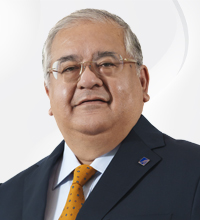
Opening Address at ASEAN Corporate Governance Conference 2025
Speaker: Dato’ Mohammad Faiz Azmi, Chairman, Securities Commission Malaysia
Location: Kuala Lumpur
Delivered: 24 July 2025

Chairman Francis Lim, Chairperson of the Philippines Securities and Exchange Commission and Chair of the ACMF Working Group on Corporate Governance,

YBhg. Tan Sri Abdul Farid Alias, Chairman, Bursa Malaysia,

YBhg. Dato' Fad'l Mohamed, Chief Executive Officer, Bursa Malaysia,

YBhg. Datuk Mohd Nasir Ali, Chairman, Minority Shareholders Watch Group (MSWG),

Dr. Ismet Yusoff, Chief Executive Officer, MSWG,

Excellencies, distinguished guests, ladies and gentlemen,

Assalamualaikum warahmatullahi wabarakatuh and a very good morning.
  1. I would like to start by welcoming all our guests from abroad who made the time to attend this conference.
  2. I would especially like to thank Chairman Francis as this is his first official trip abroad since his appointment as Chairman of the Philippines SEC. We compared notes last night on where the ASEAN Capital Markets Forum (ACMF) is and I realised talking to him, that there is no such thing as retirement in the Philippines, as he has had many roles, before being appointed as Chairman, and still continues to perform national service.
  3. This conference looks at Corporate Governance or CG as a topic, and reminds us that at the heart of a corporate’s success, are its people. And how those people behave are critical to not just the company’s performance but they also impact the country and the public at large too. Corporate governance is about being clear on what is the country’s and people expectations of corporate behaviour.
  4. This is relevant to us in ASEAN as our rising economic potential has long been known globally since the end of the Second World War. What has underpinned our success are strong banking sectors, facilitative capital markets and enterprising people driving our corporate sector.
  5. Across the region, corporates operate in a myriad of sectors - from financial services, energy, to technology, real estate, and telecommunications.
  6. In fact, ASEAN is home to close to 4,500 public-listed companies, with a combined market capitalisation of around US$3 trillion1.
  7. Increasingly, it is the growth of the services sector that reflects the region’s modernisation as member states shift from resource-based and low-skill industries to higher value, knowledge-based output. In 2023, services’ share of regional GDP increased to 53.9%, while manufacturing, utilities and construction combined made up 30.3%2.
  8. Many of these businesses are not just serving their domestic markets - they are scaling regionally and globally. They are raising capital across borders, expanding supply chains, and increasingly attracting global institutional investors.
  9. Concurrently, investors are no longer prioritising just growth – the spotlight is turning towards the quality of those earnings and transparency and accountability to stakeholders.
  10. Today’s local and global investors are asking deeper questions: How are companies managing environmental, social, and governance risks? Are boards equipped to navigate geopolitical tension and technological disruption? Are their businesses being disrupted and are they going to be around in the years to come?
  11. In such a dynamic environment, how does one stand out? Well, we believe good corporate governance and conduct can be a competitive differentiator for ASEAN companies.
  12. So, CG is no longer just about compliance. It should be a strategic advantage.
  13. Better governed companies exhibit greater resilience. The presence of well-established processes and governance structures engender better decision-making and promotes long-term value creation. It also enables the company to respond promptly and readjust their direction in the face of uncertainties.
  14. Certainly, such firms are in a good position to command the trust and confidence of shareholders as well as potential investors.

Corporate governance and conduct is the responsibility of all

Ladies and gentlemen,

  1. Cultivating a strong and purposeful corporate governance ecosystem requires hard work and dedication.
  2. First, policy makers and regulatory bodies should spend time understanding how success in other parts of the world, can be replicated in ASEAN when building the necessary regulatory framework for corporate governance to thrive.
  3. However, we must be mindful that we do have different cultural issues and customs to contend with but if something makes sense, we should adopt those good concepts here.
  4. One example is the participation of women on Boards and Management. While it may seem to some like an alien concept, we must not forget we have a rich history to support the view that it has worked before and been successfully applied in parts of our societies.
  5. My wife for example hails from a state that is matriarchal where many women there run businesses and many of us here in Malaysia know not to tangle with businesswomen from the east coast of Malaysia. We also have very successful women in business, some of whom I can recognise in the audience today.
  6. Second, it also requires the support and commitment of all stakeholders, from the management and employees to third parties such as auditors and company secretaries. As I said, if it makes sense, we should all embrace it.
  7. Crucially, it is incumbent on shareholders to exercise their rights as owners and communicate their expectations to boards and management.
  8. In this regard, shareholder groups such as the Minority Shareholders Watch Group (MSWG) – today’s conference host – and their regional counterparts have an important responsibility; to not only foster transparency and accountability but to provide a loud voice and tone to raise awareness of CG issues. They should be the voice of conscience to call out bad behaviour and to shine light on practices that destroy value.
  9. Board members also have the responsibility to do more and know more.
  10. This includes keeping abreast of the latest conversations – on governance standards, leadership, risk, and sustainable finance, amongst others – and picking up new skills and knowledge - from climate transition strategies to the use of artificial intelligence or AI. All these areas, if not monitored, could affect the value of your companies.
  11. I sometimes hear from Board members that there is too much to learn. Too many things to be an expert on and too much responsibility and not having enough time.
  12. I do empathise with that, as I too have to keep up with a lot of things as SC chairman. However, that is the expectation of a Board member and that is why you are there, to help guide management in providing value to your stakeholders. And you cannot do that if you are not up to date. You would not be fit for purpose.
  13. The path to a better and healthier corporate culture and better long term value starts with board members, and particularly the chairman, leading by example.

Corporate governance codes continue to evolve

Ladies and gentlemen,

  1. In Malaysia, the Malaysian Code on Corporate Governance, or MCCG, has long served as a key tool to drive good corporate conduct. As with any tool, it must be continuously updated to ensure it fits current international standards and practices, as well as local needs. The current iteration is MCCG21 which had for the first time included best practices for board diversity and ESG. The next one will be issued in 2026.
  2. This year, the Securities Commission Malaysia (SC) is undertaking a review of the MCCG as part of our Capital Market Masterplan review. We will be engaging stakeholders later this year through targeted discussions and consultations on where we are and what we can do better. This consultative approach ensures any revisions to the Code remain relevant and impactful.
  3. That said, I am prepared to make some of what matters in the upcoming MCCG mandatory, if we believe it will help corporates to demonstrate better governance and better results.
  4. Looking ahead, the focus of the MCCG 2026 will be to revisit matters that help with board quality and effectiveness, as well as strengthening the board’s role in long-term value creation.
  5. I also understand that my peers from the ASEAN countries - including Singapore - are embarking on similar exercises this year. This highlights a shared recognition: regulatory frameworks must continue to evolve to meet new challenges.
  6. While alignment with global standards and investor expectations remain important, each ASEAN jurisdiction is unique. Therefore, codes must be tailored to reflect each jurisdiction’s unique context, market maturity, and strategic priorities.
  7. There is no one-size-fits-all approach in governance. Local relevance ensures the principles we adopt are effective, practical and transformative.

ASEAN’s path to sustainability

  1. Touching briefly on ASEAN, the region has the opportunity to lead in sustainability. Potentially, up to US$1.5 trillion in new value by 2030 can be generated through green investments and collaboration on regional power grids, carbon markets, and clean energy incentives3.
  2. As Malaysia holds the ASEAN Chairmanship this year, the SC concurrently chairs the ACMF, the regional grouping of securities regulators.
  3. In support of these regional collaborations, in particular the carbon markets, the ACMF is undertaking an ASEAN Carbon Market Ecosystem Roadmap study with the aim of developing Voluntary Carbon Market Guidelines that can be used regionally and to help get better value for our carbon credits.
  4. Another initiative we are closely involved in is the ASEAN Taxonomy for Sustainable Finance, which is developed by the ASEAN Taxonomy Board.
  5. The aim is to provide a useful guide for companies in identifying green or sustainable activities. Technical screening criteria has already been issued for three focused sectors: Energy, Transportation and Storage, and Construction and Real Estate, as well as one enabling sector – Carbon Capture, Storage & Utilisation (CCUS).
  6. Version 4 of the Taxonomy, which is currently in development, will provide for another three focus sectors: Agriculture, Manufacturing, and Water and Waste Management. In addition, it will also include two enabling sectors - Information and Communication, and Professional, Scientific and Technical activities.
  7. I would urge the businesses here today to use the available taxonomies as a reference, particularly for those undertaking sustainable projects or transitioning to green activities.

Closing

Ladies and gentlemen,

  1. In closing, if we are serious about unlocking ASEAN’s full potential, we must continue to encourage and support our corporate sector in all our countries.
  2. Potential alone does not attract investment. What will ultimately define ASEAN’s future is how we sustain that potential, how we create sustainable value – one that will preserve trust in our businesses and societies for generations.
  3. In my view, a healthy and strong economy needs a governance ecosystem that promotes long-term value creation, trust and integrity.
  4. I am confident that together we can make this a reality.

Thank you.


  1. ASEAN Exchanges (as of May 2025)
  2. ASEAN Key Figures 2024, ASEAN Secretariat
  3. Source: Speech by Minister of Investment, Trade and Industry, Malaysia at ASEAN Business Forum 2025 (29 May 2025)
SC AFFILIATES
RELATED SITES
about the SC
The Securities Commission Malaysia (SC) was established on 1 March 1993 under the Securities Commission Act 1993 (SCA). We are a self-funded statutory body entrusted with the responsibility to regulate and develop the Malaysian capital market.

General Line: +603-6204 8000
General Email: [email protected]
© Copyright Securities Commission Malaysia.  Contact Us   |    Disclaimer   |   The site is best viewed using Microsoft Edge and Google Chrome with minimum resolution of 1280x1024
Ooops!
Generic Popup