Opening Address at SIDC–CASI Sustainable and Responsible Investment Conference 2025
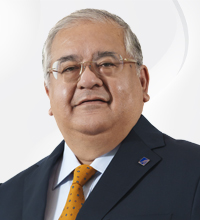
Speaker: Dato’ Mohammad Faiz Azmi, Chairman, Securities Commission Malaysia
Location: Kuala Lumpur
Delivered: 29 July 2025

Yang Berhormat Liew Chin Tong, Deputy Minister of Investment, Trade and Industry, Malaysia,

Dr. Ma Jun, Chairman, Capacity-building Alliance of Sustainable Investment (CASI) and President, Institute of Finance and Sustainability (IFS),

Yang Berbahagia Tan Sri Datuk Dr. Rebecca Sta Maria,

Yang Mulia Tengku Zarina Tengku Chik, Chief Executive Officer, Securities Industry Development Corporation (SIDC),

Board of Directors and Senior Management of the SC and SIDC,

Distinguished speakers, guests, ladies and gentlemen.
Assalamualaikum and a very good morning.

  1. It is a pleasure to deliver the Opening Address for the second year running. Coincidently, last year’s conference was my first official engagement after assuming the role of Chairman of the Securities Commission Malaysia (SC). How quickly time flies.
  2. This year I wear an additional hat in conjunction with Malaysia’s Chairmanship of ASEAN; that of Chair for the ASEAN Capital Markets Forum (ACMF) – a regional grouping of securities regulators.
  3. This sixth edition of SIDC’s flagship Sustainable and Responsible Investment (SRI) Conference takes place amidst the push for a more sustainable and inclusive ASEAN. This is also reflected in the conference theme, ‘Shaping the Future of ASEAN Business in Sustainability’.
  4. For the first time, the conference is co-organised with the Capacity-building Alliance of Sustainable Investment (CASI), which is under the auspices of the Institute of Finance and Sustainability (IFS).
  5. Together, the partnership between CASI and SIDC reinforces this conference as a vital platform in advancing the green and sustainability agenda, both in Malaysia and ASEAN.
  6. I would like to record my appreciation to SIDC and CASI for their commitment and collaboration towards this agenda.
  7. It is also a great privilege to have YB Liew grace this event as the guest-of-honour. Thank you YB. Your presence demonstrates the government’s commitment towards aligning trade and economic development with greater resilience and inclusivity, as highlighted by the New Industrial Master Plan (NIMP) 2030.
  8. At the recent ASEAN Summit in May, MITI played a key role in advancing regional commitments, in particular the ASEAN Economic Community Strategic Plan 2026-2030. With inclusivity and people-centredness at its core, the Plan aspires for a sustainable community; one well-equipped to mitigate risks from climate change.

Investing in sustainable growth

Ladies and gentlemen,

  1. In the medium term, ASEAN is set to be a key driver of global growth, with its contribution estimated to be about 33.7% of GDP1. Despite this bright outlook, it is essential to strengthen long-term resilience against the backdrop of ongoing geopolitical and economic uncertainties.
  2. From a business perspective, sustainable growth goes beyond addressing financial and operational issues. Increasingly, businesses must pay attention to physical risks that arise from environmental degradation or even resource depletion.
  3. The social component of sustainable growth is also important. It cannot be growth at all costs. Companies today are expected to be responsible corporate citizens. This means prioritising the well-being of their employees, customers, as well as the broader community.
  4. Non-compliance with safety, health and environmental protection standards can curtail business prospects, and ultimately impact the bottomline. Mitigating such risks requires investments.
  5. Investments are also badly needed to accelerate ASEAN’s sustainability journey. This includes developing green industries such as renewables and clean energy and regional carbon markets.
  6. It is estimated that we will need green investments of around US$ 3.7 trillion to US$ 6.7 trillion2  to meet the region’s goal of carbon neutrality in 2050.
  7. With Southeast Asia accounting for only 2% of global spending on clean energy in 20233, there are significant gaps.

Supporting the move towards sustainability

  1. So, how does the SC and our regulatory peers ensure that regional capital markets are able to support the goal of a sustainable ASEAN?
  2. Firstly, it is about encouraging greater take-up of sustainable financing. This entails developing taxonomies or criteria for identifying green activities and projects.
  3. The ASEAN Taxonomy for Sustainable Finance provides a template to assess and identify eligible green activities. Six focused sectors which contribute 85% of greenhouse gas emissions in the region were identified – Energy, Transportation and Storage, Construction and Real Estate, Agriculture, Manufacturing, and Water and Waste Management.
  4. The technical screening criteria developed will assist these sectors in attracting sustainable investments and financing.
  5. Decarbonisation efforts are also critical. To guide companies in their transition to net zero, the ACMF released the ASEAN Transition Finance Guidance. The aim is to assist companies create credible transition plans to obtain the requisite financing.
  6. Separately, with carbon markets and mechanisms taking shape in ASEAN member states, the ACMF will assist and assess the feasibility of introducing Voluntary Carbon Market Guidelines.
  7. Another challenge beyond transition finance would be adaptation financing. Currently, most adaptation projects such as construction of seawalls have no discernible commercial returns and are highly reliant on government funding. There may be a role for market-based financing solutions if we can improve the bankability of such projects. This is where blended finance can play a role.
  8. The ACMF is looking at developing adaptation financing guidance under the banner of mitigation co-benefit, adaptation for resilience and sustainable finance, or mARs. The aim is to provide clarity on suitable projects and attract private sector interest.
  9. Moving forward, each jurisdiction has their own schedule for adoption of the IFRS Sustainability Disclosure Standards (ISSB Standards). The implementation of ISSB Standards across the region will lead to greater availability of comparable data on sustainability.

Leveraging tools and building capacity

  1. So, how can businesses take advantage of these opportunities and exemplify sustainability?
  2. Companies should utilise the tools and aids that regulators and stakeholders have made available.
  3. Capital Markets Malaysia (CMM) – an affiliate of the SC - developed the Simplified ESG Disclosure Guide (SEDG) for micro, small and medium enterprises (MSMEs) in 2023. It is a tailored framework designed to reduce the complexity and costs of ESG reporting for smaller firms; allowing them to disclose what matters.
  4. The guide has also been adapted this year for the use of SMEs across ASEAN.
  5. In addition, we have also launched a user-friendly SEDG Greenhouse Gas (GHG) Emissions Calculator last week to further assist SMEs in measuring and reporting their GHG emissions.
  6. For larger companies, Malaysia’s Advisory Committee on Sustainability Reporting (ACSR) released Illustrative Sustainability Reports (ISR) to help companies in applying the ISSB Standards. Currently, there are ISRs with illustrative examples for the plantation and construction sectors, and we will work on examples for other sectors as well.
  7. We are also investing in capacity building.
  8. Therefore, I am delighted that the SIDC is preparing to launch the advanced Certified Capital Market Professional in SRI 2 (CCMP SRI 2). This certificate will focus on developing competencies in structuring sustainability-related products and impactful investment strategies.
  9. We at the SC are also encouraging sustainability practitioners to come together to form an association. This will include preparers, auditors and other related personnel. The aim is to look at current and future training needs, skills, and entry requirements. This is to ensure they are in a position to set professional standards.

Conclusion

Ladies and gentlemen,

  1. In closing, I would like to emphasise that sustainability should not be an afterthought. Rather, it is a strategic imperative to be embedded throughout the business.
  2. To all delegates, speakers and panellists here, I challenge you to create lasting ideas which will benefit every individual and company in this region. Let us make a sustainable and inclusive ASEAN a reality.

Thank you.


  1. Source: ASEAN+3 Macroeconomic Research Office (AMRO) figures, “ASEAN+3 Regional Outlook 2025”
  2. Source: ASEAN Secretariat, “ASEAN Strategy for Carbon Neutrality” (2023)
  3. Source: International Energy Agency (IEA), “World Energy Investment 2024”
SC AFFILIATES
RELATED SITES
about the SC
The Securities Commission Malaysia (SC) was established on 1 March 1993 under the Securities Commission Act 1993 (SCA). We are a self-funded statutory body entrusted with the responsibility to regulate and develop the Malaysian capital market.

General Line: +603-6204 8000
General Email: [email protected]
© Copyright Securities Commission Malaysia.  Contact Us   |    Disclaimer   |   The site is best viewed using Microsoft Edge and Google Chrome with minimum resolution of 1280x1024
Ooops!
Generic Popup