Opening Address at the SC-OCIS 16th Roundtable 2025 Guardians of the Earth: Climate Action Through the Lens of Maqasid Al-Shariah
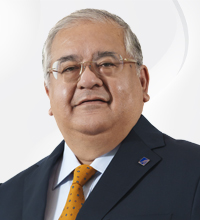
Speaker: Dato’ Mohammad Faiz Azmi, Chairman, Securities Commission Malaysia
Location: St Regis Kuala Lumpur
Delivered: 30 September 2025

His Royal Highness Sultan Nazrin Muizzuddin Shah, Ruler of the state of Perak Darul Ridzuan and Royal Patron of Malaysia’s Islamic Finance Initiative,
His Excellency Dr Abdullah Gul,
His Highness Sheikh Dr Mohammad Al-Sabah,
Dato Sri Abdul Rasheed Ghaffour, Governor of Bank Negara Malaysia,
Dr. Farhan Nizami, Director, Oxford Centre for Islamic Studies,
Excellencies,
Tan Sri Tan Sri, Dato Dato
Distinguished guests and speakers,
Ladies and gentlemen.

Assalamualaikum and good morning.
  1. Welcome to the 16th edition of the SC–OCIS Roundtable. We are delighted and truly grateful to His Royal Highness Sultan Nazrin Muizzuddin Shah for gracing today’s Roundtable. On behalf of all participants here, thank you Tuanku.
  2. I would also like to record my appreciation to our co-host, the Oxford Centre for Islamic Studies (OCIS), who has been a steadfast partner in advancing this platform with the Securities Commission Malaysia (SC). Congratulations on turning 40 and we are proud to have been a part of that journey for 16 years.
  3. As always, our roundtable is enriched by the presence of associates and allies with shared interests. My sincere thanks to all our guests who have travelled from near and far and for making time for this dialogue.
  4. The roundtable theme, this year, is the Guardians of the Earth: Climate Action Through the Lens of Maqasid Al-Shariah. When I heard the title for the first time, I remarked it sounded more like a Marvel movie title than a workshop, echoes of Guardians of the Galaxy.
  5. However, the title and the theme of this roundtable is consistent with the Marvel universe in the sense that we now need people to stand up and be heroes. We should all be standing up and reclaiming the centuries-old moral responsibility to address what we have done collectively to the planet. It is no longer a distant threat. Left unchecked, it risks disrupting economies, destabilising communities and it will test our long-term resilience.
  6. Therefore, beyond investing in transition to low carbon energy and addressing adaptation and mitigation needs, we also need to address climate resilience. Climate resilience enhances the capacity of assets and systems to endure, adapt or transform. They reduce risks, prevent maladaptation, and support sustainable development, generating wide public benefits. And more importantly, it will help us as a society, to bounce back from disasters. As an example, Japan who lives in earthquake zone is a good example of a resilient country. Through their planning, rehearsal and design, they have shown their ability to rise from rubble, time and time again.
  7. However, climate action demands more than investments. That is why this Roundtable shifts the focus to the less glamorous but essential drivers for change: the basics of fiduciary duty, accountability, and embedding sustainability. These are the levers that translate values into mandates, board decisions into outcomes, and ultimately, capital into actions that matter.
  8. For regulators, the challenge is two-fold. Firstly, to preserve market integrity and stability in the face of climate risks. Secondly, to channel capital towards solutions that protect lives, livelihoods, and ecosystems.
  9. On both market integrity and capital mobilisation, the SC has taken proactive steps. In collaboration with Bank Negara, the Joint Committee on Climate Change (JC3) has communicated steps for better climate risk management. Through initiatives like the Climate Finance Innovation Lab (CFIL), we are encouraging blended climate finance solutions to deliver impactful action.
  10. Equally important, Islamic finance has been identified as a strategic enabler. That is why sukuk, rather than conventional bonds, was prioritised under the SC’s Sustainable and Responsible (SRI) framework. The framework has since been extended to include waqf projects, as well as sustainability-linked sukuk to facilitate net zero transition.
  11. This is no coincidence. Islamic finance is inherently asset-linked, risk-sharing, and anchored in justice. Furthermore, the five general objectives of the Shariah – preservation of life, posterity, intellect, dignity and wealth – require us to secure benefits and prevent harm. The objective of Islamic finance, therefore, is not just to intermediate capital flows but to safeguard creation and serve the greater good.
  12. And Malaysia is well-placed to make this possible. Our capital market stands at RM4.2 trillion, or just under USD 1 billion of which around 62% is Islamic. We contribute roughly one-third of all global sukuk issuances, and about 80% of our listed companies are designated as Shariah-compliant. This depth gives us the platform to pilot Maqasid-aligned disclosures, covenants and outcome-linked structures at meaningful scale.

    Advancing Fiduciary Duty, Accountability, and Sustainability

    Ladies and Gentlemen
  13. When we speak of fiduciary duty in the Maqasid sense, it is not a single obligation, but it is layered series of expectations and applied differently across the ecosystem.
  14. Board members for example, must set strategies that safeguard not only shareholder returns, but also look to the intergenerational use of resources. This ensures business models do not create harm in the long term.
  15. Senior management translates these commitments into operating policies and risk management practices, embedding climate and sustainability factors into planning, stress tests, and remuneration.
  16. Investors and fund managers owe a duty to evaluate investments not just for financial returns, but also whether they advance or undermine the objectives of Shariah.
  17. Regulators too must in turn develop rules, incentives, and disclosures that make such accountability visible and enforceable. The aim is for markets to reward long-term stewardship over short-term gains.
  18. Shariah scholars and advisers shoulder the responsibility to certify structure not only in form but in substance. This ensures Islamic finance is distinct from conventional finance in aligning finance more with human welfare and planetary balance.
  19. The next question is, to what extent do these duties apply in practice. Embedding Maqasid cannot be open-ended; it must be guided by materiality, proportionality, and enforceability.
  20. For boards, they should give due consideration to Maqasid outcomes in strategy and capital allocation. It should be an obligation rather than a narrative.
  21. For management, the challenge lies in deciding the extent that Maqasid shapes their risk appetite and KPIs. Investors too must question how far mandates should embed outcome-linked results and how trade-offs are disclosed.
  22. Regulators too must balance between requiring compulsory Maqasid-aligned disclosures, employing a ‘comply-or-explain’ model, or other approaches depending on market readiness, while still leaving space for innovation.
  23. Finally, for Shariah advisers, after determining the substance, how can this be explained to the stakeholders.
  24. Global evidence reinforces this. The United Nations Environment Programme Finance Initiative (UNEP FI) and Principles for Responsible Investment (PRI) highlighted that ignoring long-term ESG drivers is a failure of fiduciary duty. Yet adoption is uneven with many investors still not fully integrating ESG considerations into their decisions. This is why guardrails and practical metrics are essential next steps.
  25. Malaysia has moved from intent to implementation. Under the National Sustainability Reporting Framework (NSRF), Main Market public-listed companies, with market capitalisation above RM2 billion, begin climate-related reporting this year. The rest of the Main Market will follow in 2026, and subsequently, ACE Market PLCs and large unlisted companies in 2027.
  26.  In June this year, the IFRS Foundation recognised Malaysia’s adoption of ISSB Standards with limited transition: the only ASEAN country acknowledged. To assist corporate adoption and readiness, a suite of tools and capacity-building programmes under the PACE initiative – short for Policy, Assumptions, Calculators and Education – have been rolled out.
  27. Alongside efforts to embed sustainability, what is sorely missing domestically is the right de-risking structures, blended finance mechanisms and disclosure guardrails. This can accelerate the mobilisation of capital into adaptation, mitigation and resilience projects.

    Closing
  28. In closing, I am confident that this Roundtable can spark the ideas, solutions, and structures to drive impactful climate action and sustainability. This is where philosophy meets practice.
  29. Over the course of the day, I hope we can focus not just on what should be done, but on what we can be implemented – standards, pilots, and pathways that industry, policy makers and scholars can carry forward.
  30. With that, I would like to once again thank His Royal Highness and those who made the time to be here. I look forward to our discussions today.

    Thank you


SC AFFILIATES
RELATED SITES
about the SC
The Securities Commission Malaysia (SC) was established on 1 March 1993 under the Securities Commission Act 1993 (SCA). We are a self-funded statutory body entrusted with the responsibility to regulate and develop the Malaysian capital market.

General Line: +603-6204 8000
General Email: [email protected]
© Copyright Securities Commission Malaysia.  Contact Us   |    Disclaimer   |   The site is best viewed using Microsoft Edge and Google Chrome with minimum resolution of 1280x1024
Ooops!
Generic Popup