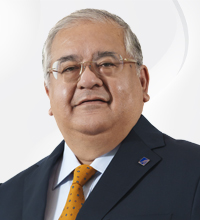
Opening Keynote at Malaysian Student Leaders’ Summit XIX (MSLS XIX)
Speaker: Dato’ Mohammad Faiz Azmi, Chairman, Securities Commission Malaysia Location: Kuala Lumpur
Delivered: 3 August 2025
Mr. Vincent Tang, Chairperson of the United Kingdom and Eire Council for Malaysian Students (UKEC),
Mr. Jaden Woo Kin Yee, Special Operations Officer, UKEC,
Tan Sri Tan Sri, Datuk Datuk,
UKEC Exco,
Ladies and gentlemen.
Assalamualaikum warahmatullahi wabarakatuh, and a very good morning to everyone.
First and foremost, I would like to express my appreciation to the UKEC and in particular, the President Mr. Vincent Tang for the invitation to speak again at the Malaysian Student Leaders’ Summit. It is always great to see how close-knit the overseas Malaysian student community is, and I applaud the students here today for their support of this summit.
I must also commend you for pulling together in the panel after me, a formidable line up of Tan Sri’s to speak of transformation. I have had the privilege of working with all of them as my clients during my earlier career with PwC and they are all well qualified to speak on the subject.
One person I would like to acknowledge is Tan Sri Nor Mohamed Yakcop. We all in the corporate world in Malaysia owe Tan Sri Nor a huge debt for helping to transform and create the professionalism and the value creation that happened in the GLC’s and the country, since the early 2000’s. In fact, many of us are here today because of the opportunities that his vision and dedication created for all of us.
As a former UK graduate, the UKEC has always been close to my heart. I had the honour of delivering the keynote at Projek Amanat Negara in 2017, and, subsequently, moderating the “Think ASEAN” panel at the Malaysian Student Leaders’ Summit in 2018. This year, I am honoured to being the Keynote speaker at the MSLS.
One of the reasons why I have been supportive of UKEC and their events over the years, is how you all look to your purpose as being beyond just studying. Doing these events collectively teaches you teamwork, grit and how to achieve something for the betterment of others. Looking around this hall, I see many bright, inquisitive faces; filled with hope and, I believe, eager to contribute to our nation’s future.
We achieved our independence in 1957. For most of us in the room, me included, we weren’t even born yet. It has been my privilege however, to talk to many people who were around in those times and what always struck me was how determined the Merdeka generation of Malaysians were, in coming home to make Malaysia, their tanah air, as good as any country in the west. One of them said to me that what spurred him on to study and to return home quickly was his desire to improve the plight of the people in his kampung and give them better roads.
It is that spirit that we now need to rekindle. As I travel around the region, dealing with other regulators, I realise what a blessed country we have. We are blessed with good weather, not having major natural disasters like typhoons or earthquakes, food is plentiful and very good, and we are moving from being a developing country to a developed one. And many of you come from middle class families that did not exist at Merdeka. All this happened because the people before us, many from that same Merdeka generation, made the right decisions and carried it out effectively.
So, my ask of you is the same. There will be many opportunities that you will have once you are educated and enter the workforce. Malaysians are known to be clever, hardworking, speak English well, brought up with international standards and like to travel. By all means, see the world and yes, work abroad if you can. But come home. Come home and help improve the country to be better governed, create a better growth path for the economy and help those who have been left behind. Personally, I have worked abroad and to me, there is still no place like home.
Now let me turn to the topic, Stewarding the future: Regulatory Integrity in a shifting Malaysia.
This topic is very relevant today as the Securities Commission is currently undergoing a review process to better understand where the capital market is today and where it needs to be 20 years from now.
Our plans are being developed but it is no secret that there are a number of challenges we need to address, such as improving the vibrancy of the capital market to ensure we can fund economic growth, ensuring the returns from products in the market keep pace and surpass inflation and that when you all retire, there are funds to keep you comfortable and can cover your medical costs. At the same time there are two areas in the medium term that we need to plan for, transition and adaptation financing to cope with climate change and, post Liberation day, how we can be better friends with our neighbours in ASEAN.
The element in the topic that resonates with me is the phrase “regulatory integrity”. So, this needs unpeeling. Let me start by reminding you of some of the words our Prime Minister, YAB Dato’ Seri Anwar Ibrahim has said. I will share three of them:
First, “Corruption is a cancer that must be eradicated… No one, regardless of position or political affiliation, should be above the law."
Second, “A Malaysia that is just, prosperous, and free from corruption is not a dream – it is a necessity."
And finally, "Our economic progress must be built on ethical foundations, not cronyism or rent seeking."
These are all powerful statements and reflects the fact that in growing our country and our economy, some people have taken advantage of weak governance and weak institutions to benefit themselves. And so to me, the phrase Regulatory integrity reminds us at the Securities Commission that our prime directive, is to ensure a fair and orderly market, to ensure that investors are protected from fraud and criminal actions.
We do this in three ways. First, we look to self-discipline. Companies are run by people. People commit crime and cheat. Therefore, the values and morals of people in the capital markets must conform to acceptable norms. We remind them of what good behaviour is by way of our guidelines, we use the Malaysian Code of Corporate Governance, and we prosecute certain criminal behaviour like Insider Trading and Market manipulation.
When the Malaysian Code on Corporate Governance (MCCG) was first introduced in 2000, a soft touch approach was employed to encourage adoption. Over the years, subsequent updates to the MCCG continued to raise corporate standards across the board. We are now revising the code for 2026 and will reflect on whether it has achieved all its objectives.
Recently, we introduced a guideline called the Maqasid Al Shariah that also seeks to remind Muslims operating in business, to be mindful of good Islamic Values when running a business or doing economic activity.
The second way is relying on Market Discipline. We do expect people to call out bad behaviour, poor results and poor decisions. We do this by ensuring there is a working ecosystem monitoring what is going on, bodies like the Institutional Investors Council Malaysia (IIC), Institute of Corporate Directors Malaysia (ICDM), the Minority Shareholders Watch Group (MSWG) and also having a free press. This is important as being stupid is not a crime but doing things in a “cin – cai” way that destroys value and causes losses, still needs to be addressed. So, we rely on the Market to call out bad or inefficient behaviour.
Only then, do we look at the third area which is regulatory discipline. That is where the Securities Commission comes in. We are the prime regulator covering the Capital markets. If one looks at shares and bonds, it adds up to 4.1 trillion Ringgits as of 2024 as compared to banking assets of about 3.6 trillion Ringgits. So clearly the capital markets are important.
The SC tends to deal with more serious matters as we do have Bursa Malaysia and FIMM who regulate the less serious matters. We have the powers to jail people and to fine them as well. Our regulatory philosophy is to act on serious matters and those behaviours that breaches the laws of the land.
In other words, we do leave it to the company and its shareholders to regulate their own behaviours that are not criminal in nature. We do not guarantee success or dividends, and we do give a wide latitude for companies to operate.
Let me now address a main issue that is often misunderstood. There is a belief that when companies fail, or losses are incurred, someone must be to blame. That is not always the case. Companies generally fail when their business gets disrupted or make bad business decisions.
As an example of disruption, people of my vintage refer to a vacuum cleaner as a hoover or hoovering. Well Hoover, the company got acquired and disappeared in 1989 despite dominating the vacuum appliance market for years, but it disappeared because of bad decisions and a failure to adapt, not because of fraud. Names like Kodak Blockbusters and BlackBerry are other examples where the failure was primarily due to bad business decisions and not criminal behaviour.
A point to ponder is that only 5 of the original 30 companies that made up the 1930 US Dow Jones Industrial index are still operating today. Most, if not all, have now disappeared as they again had their businesses disrupted and failed to make the right calls.
Another aspect of regulatory discipline is the rule of law. As the PM has said, no one should be above the rule of law. Also, the UN secretary general referred to the rule of law as the “foundation of peace, sustainable development and human rights”
The Rule of Law ensures that everyone, regardless of position, is subject to the same legal standards. It is about justice, consistency and transparency.
This concept has a long history in mankind and was a key concept in the Magna Carta that was signed in 1215 by King John of England and his rebellious Barons. Essentially, it was to get the Ruler to behave responsibly and fairly. Clause 39 for example, says that “No free man shall be imprisoned or stripped of his rights except by lawful judgment of his peers or by the laws of the land.” For those of you still studying in the UK, one of the four remaining copies of the Magna Carta sits in the British Library.
Closer to home, as an ex English colony, we have adopted the concept of the Rule of Law in our legal frameworks. It is still relevant today despite its age as everyone wants their government and the regulators to act fairly and transparently and not be used for political purposes.
It is especially important when we deal with foreign investors as they want to be treated fairly at all times. Our adherence to the rule of law is important to them as it gives confidence to foreign investors that in disputes, they will be treated fairly and that we will not abuse our powers to prosecute or punish them arbitrarily.
Finally, the other aspect of regulatory integrity is to engender Trust or Amanah. To have a fair and orderly market, and for everyone to prosper there must be trust that the regulators treat everyone fairly and that we are also seen to help develop the market and not be so conservative as to hinder development and innovation. Building trust requires strong institutional frameworks and processes.
This is why, like other regulators in the region, we have a dual mandate. In addition to ensuring a fair and orderly market, we also have a mandate to develop the capital markets. One indication of this is that the SC inherited a market which was about 600 billion in size in the 90’s, we have assisted in the capital market to end last year at 4.1 trillion, almost 7 times larger.
Not everything we encouraged over the last 30 years has worked and some areas like digital assets and carbon credits still have some way to go before they become mainstream. But this second mandate of market development is to reassure the market that we too have an interest to grow the market.
So, in conclusion, to be able to create value, to grow the capital markets and address future challenges, it is important to have a regulator that has integrity and is facilitative. This is more so now, given the challenges we see in the future.
Final Words
Finally, I would like to thank UKEC again for inviting me to address you all and to those of you who want to work in the corporate sector but at the same time, want to do something for our society and country, do come join me at the Securities Commision (SC) to make a difference.
The Securities Commission Malaysia (SC) was established on 1 March 1993 under the Securities Commission Act 1993 (SCA). We are a self-funded statutory body entrusted with the responsibility to regulate and develop the Malaysian capital market.