Opening Remarks at 17th SC-OCIS Roundtable 2026 ‘Building Resilience: The Intersection between Capital, Climate and Innovation’
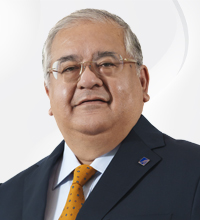
Speaker: Dato’ Mohammad Faiz Azmi, Chairman, Securities Commission Malaysia
Location: Malaysia Auditorium, Oxford Centre for Islamic Studies, United Kingdom
Delivered: 12 September 2026

His Royal Highness Sultan Nazrin Muizzuddin Shah, Ruler of the State of Perak Darul Ridzuan and Royal Patron of Malaysia’s Islamic Finance Initiative,

Dr. Farhan Nizami, Director, Oxford Centre for Islamic Studies (OCIS),

Excellencies, Distinguished guests, speakers,
Ladies and gentlemen.

Assalamualaikum and good morning.

  1. Welcome to the 17th year of our Islamic Finance thought leadership platform, the SC-OCIS Roundtable the Oxford edition.
  2. We are humbled by the presence of His Royal Highness Sultan Nazrin Muizzuddin Shah at today’s Roundtable. Tuanku always inspires us with his presence and his sharing of his reflections serve as an inspiring guiding compass for this dialogue. On behalf of everyone here today, thank you Tuanku for your steadfast support.
  3. Last year, we had the privilege of celebrating the Oxford Centre for Islamic Studies’ 40th anniversary in Kuala Lumpur. A year on from this milestone, we gather here to continue a deep-rooted tradition of collaboration and exchange. As practitioners, economists, scholars and supporters of Islamic finance, we are grateful for OCIS’s generosity in opening its doors to us once again. Thank you to Dr. Farhan and his team for hosting this year’s Roundtable.
  4. Allow me to begin by reflecting on last year’s Roundtable, which called upon us to be "Guardians of the Earth." Like the similar sounding Marvel movie, it conjures up images of individuals guided by a clear sense of duty and moral conscience. However, there is one problem with being a guardian or khalifah protecting the planet - who will pick up the cost of protecting the planet.
  5. So the question before everyone this year, is how should the burden be shared. If the last Roundtable was about accepting this mission of protecting the planet, we can think of this year as the sequel – how to pay for the mission.

The Current State

  1. In this year especially, I am sure all of us in one way or another have experienced the detrimental effects of climate change events. During this summer, England experienced its driest July in almost two centuries with unwanted records set, particularly in the south. I visited Hyde Park in London recently and it looked more like a brown desert in some parts than a green park.
  2. For Malaysia, temperatures are on track to exceed historical records late this year, driven by El Niño. In other words, we have unwanted record temperatures and it will likely get worse.
  3. All these temperatures are not simply statistics or mere projections. They signal a change that will have profound implications for infrastructure, investments and our resilience.
  4. For Malaysia, we unfortunately sit in a climate-vulnerable part of the world. This leaves our economy open to adverse weather in ways that can easily be underestimated. For example, total losses caused by floods across Malaysia, our main climate risk, over the last five years amounted to more than US$2.2 billion. And we are now experiencing higher winds in the monsoons and even landspouts in for example Perak.

Priorities for Climate Action

  1. Against this backdrop, the call for sustainable and responsible finance has never been greater. It is also central to our discussions today. All stakeholders including regulators and market institutions have a critical role to play in translating climate ambition into action. For the Securities Commission Malaysia (SC), the aim is to facilitate the necessary funding to adapt and mitigate the effects of climate change.
  2. It will also be critical for resilience to be embedded across our economies. For a start, this requires enabling market infrastructure as well as clearer adaptation-focused frameworks, such as. National Adaptation Plans, for measuring and verifying outcomes. Without these foundations, scaling private capital towards climate resilience will remain constrained because investors cannot underwrite what they cannot measure.
  3. In addition, we need to question the way we define return expectations and how risk is assessed. Does growth adequately reflect the full consequences of our actions? Is there such a thing as responsible growth?
  4. One point of view quoted at the inaugural ASEAN Sustainable regulatory summit meeting in Durham last Wednesday, by Tan Sri Andrew Sheng our SC capital market advisor, who made an interesting comment about the dominance of the GDP growth driven world over the Holistic Growth driven world, which has different measures like Gross National Happiness Index and Planetary Health. This GDP focus looks at return as a principal outcome which in a way, may explain why the planet is in such a poor state now as the rush to grow is not balanced by managing the impact to the planet from the overuse of resources.
  5. Another point to consider is from our own religion Islam. The Securities Commission Maqasid Al Shariah Guidance issued in 2023, postulates that we humans are not owners but guardians of the earth and there is a responsibility to use resources wisely and not to the detriment of the future generations. Clearly GDP growth does not really have these expectations as a criteria. There is no benefit given to losses avoided or harm deferred, only returns.
  6. Too often, markets have routinely, even silently, asked society to absorb the consequences of economic activity. Sadly, we have at times accepted pollution, displacement and degraded ecosystems as a cost of development.
  7. Some of you were in the Roundtable last year where we spoke about essential drivers of change: fiduciary duty, accountability and embedding sustainability into decisions. All through the lens of Maqasid al-Shariah. These are to us, levers to translate values into mandates, decisions into outcomes and capital into action.
  8. Finally, we must also prioritise new product structures. This includes outcome-linked and resilience-based sukuk, blended finance approaches and other innovative structures to improve the bankability of adaptation investments. Our task today is to identify scalable, investable solutions capable of delivering measurable resilient outcomes.

Looking ahead and Proposal for Sukuk Prism

  1. For the SC, we are not starting from zero. This is an area where Malaysia has the experience and we have also built our own comprehensive ecosystem. Our Sustainable and Responsible Investment (SRI) Sukuk framework has been utilised by the market for issuances and shown commendable growth. Outstanding SRI sukuk has increased from US$1.3 billion in 2020 to US$12.9 billion last year. Today, Malaysia ranks among the region’s top three issuers of green, social, sustainability and sustainability-linked bonds and sukuk. This represents approximately a quarter of total regional issuances.
  2. We have the ambition to grow this further. Under the SC’s Capital Market Masterplan 2026-2030, the aim is to mobilise around US$24.6 billion in five years towards climate transition, adaptation, resilience and social development initiatives. This is not aspirational; it is a committed capital mobilisation target to start to address the World Banks estimate of about USD 500 billion of Adaptation needs by 2050 for Malaysia.

Ladies and gentlemen,

  1. Our task over the next two days is to develop workable proposals for the wider world to use within the ambit of financing climate adaptation and resilience and Islamic Finance.
  2. In that spirit, we will be discussing a Malaysian proposal for a purpose-driven framework built directly upon SC’s existing SRI sukuk framework. It will be known as Sukuk Prisma SDG.
  3. The idea is to focus on non ringgit sukuk issuances that translate national priorities into clear, credible and globally recognisable purposes of the UN Sustainable Development Goals or (SDG). It will be Shariah-based, aligned with Maqasid al-Shariah Guidance by SC Malaysia, adopt the ASEAN Taxonomy and the international green bond principles.
  4. It is of course still a work-in-progress and we welcome feedback during the roundtable for this and other ideas to help fund adaptation and resilience.

Closing

  1. In conclusion, I would like to thank Tuanku Nazrin again for gracing our roundtable and to all the guests, who have come from near and far, giving up their time this weekend, to discuss these important subjects. Insyallah we will leave Oxford with new found purpose and solutions to the problems ahead.

Thank you.


SC AFFILIATES
RELATED SITES
about the SC
The Securities Commission Malaysia (SC) was established on 1 March 1993 under the Securities Commission Act 1993 (SCA). We are a self-funded statutory body entrusted with the responsibility to regulate and develop the Malaysian capital market.

General Line: +603-6204 8000
General Email: [email protected]
© Copyright Securities Commission Malaysia.  Contact Us   |    Disclaimer   |   The site is best viewed using Microsoft Edge and Google Chrome with minimum resolution of 1280x1024
Ooops!
Generic Popup