Opening Remarks at 3rd SC Nadwah of Shariah Advisers in Islamic Capital Market
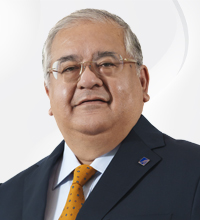
Speaker: Dato’ Mohammad Faiz Azmi, Chairman, Securities Commission Malaysia
Location: Securities Commission Malaysia, Bukit Kiara, Kuala Lumpur
Delivered: 26 May 2025

Sheikh Dr Nizam Yaquby,

Professor Dato’ Dr. Aznan Hasan, Chairman of the Shariah Advisory Council (SAC) of the SC,

Sahibus Samahah Mufti of Pahang, Professor Dato’ Dr Asmadi Mohamed Naim,

Sahibus Samahah Mufti of Selangor, Dato’ Setia Dr Haji Anhar Haji Opir,

Sahibus Samahah Mufti of Penang, Associate Professor Dato' Dr. Mohd Sukki Othman,

Esteemed members of the Shariah Advisory Council of the SC,

Dato’ Fad’l Mohamed, CEO, Bursa Malaysia,

Members of the SC Executive Team,

Shariah Advisers, ladies and gentlemen.
Assalamualaikum warahmatullahi wabarakatuh, and a very good morning to everyone.

  1. Welcome to the 3rd SC Nadwah of Shariah Advisers in the Islamic Capital Market (ICM). I am humbled by the number of attendees before me. From our Shariah Advisers and scholars to practitioners and academics, we have participants that are local as well as from countries such as Thailand, Brunei, Bahrain and Abu Dhabi. And you have also successfully mastered our road closures for the ASEAN GCC meetings today, to be here.
  2. This year, we are especially honoured to have Sheikh Dr Nizam Yaquby, whose contributions and thought leadership in Islamic finance need no introduction. His presence today enriches this Nadwah. We are grateful for his time and look forward to his invaluable insights.
  3. I must confess that I am a big fan of the Sheikh. For most of my previous professional career as an accounting and tax advisor to banks, I have been guided by his views on matters relating to Islamic finance. The sheikh, along with his other colleagues, are seen as the conscience of Islamic finance. Many of us would not be here today were it not for gentlemen like the Sheikh, who has set the expectations and then guided the industry. They brought a degree of professionalism into the industry and at the same time, gave the industry credibility. It is what Muslim investors want to see, that the scholars are comfortable with the products being offered to them as being Shariah-compliant.

What is Nadwah

  1. Let me now spend a bit of time on this event and the word Nadwah. Directly translated, it means an assembly or gathering. But historically, it represents much more. Nadwah seeks the counsel of wise and noble individuals on the way forward for issues affecting the community. In that same spirit, the SC’s Nadwah serves as a formal space to update on key regulatory developments affecting our Shariah advisers and to spark dialogue and encourage bold ideas.
  2. The first SC Nadwah marked the inaugural gathering of Shariah advisers convened by the Securities Commission Malaysia (SC), and focused on shariah and market development. The second edition expanded on this foundation by delving into the implementation of Maqasid al-Shariah from regional and international perspectives, after its issuance in November 2023.
  3. This year’s Nadwah occurs at a juncture where globalisation and free trade may be in retreat while digitalisation and sustainability issues are continuing to be significant challenges to society. This presents both opportunities and challenges to the fraternity of Shariah advisers.
  4. It also raises new questions, from the possibility of walking on ‘ethical tightropes’ to views on ‘grey areas’, such as carbon credits, digital assets and the use of crypto tokens. Based on discussions at the recent International Organization of Securities Commissions (IOSCO) annual meeting in Doha, some of these newer asset classes are also topics of interest and concern to regulators.

Maqasid Al-Shariah

  1. This evolving landscape calls for a step up in the role of our Shariah advisers, particularly as key stewards of the ICM. We also look to you to help us in implementing the SC’s Maqasid Al-Shariah Guidance Islamic Capital Market Malaysia (Maqasid Al-Shariah Guidance).
  2. As you may know, the SC has been speaking about Maqasid al-Shariah from the context of the capital market for a few years now.
  3. Some see this as an important development as it attempts to reduce key elements of Shariah into what is the appropriate conduct for people in the capital market. It also helps to guide, like a taxonomy, for funding of matters relevant to today’s society like addressing climate change. So it begs the question. Why is it important for people in the Malaysian capital market to behave appropriately?
  4. Well for one, the capital market is critical in growing our economy. We are just one of three ASEAN countries where the capital market is bigger than banking and with the banks being more and more risk adverse, it is the capital market that will need to step in to fund future economic growth of small and medium enterprises. In Malaysia alone, we have 18,000 medium sized companies that need funding1.
  5. It is also important for the SC to align its own internal values with the Maqasid. Within the Maqasid al-Shariah are 15 principles, where principles like “Principle 6” talks about Upholding Best Practices, Codes of Conduct, and Ethical Values. And “Principle 7” where we should Adhere to the validity and objectives of Contracts. Another is “Principle 8” Enhancing disclosure and documentation. There is “Principle 11” on Upholding Fiduciary duty with the utmost good faith and finally, “Principle 12” on Promoting accountability in Performances and Activities.
  6. So, in the next version of our SC Capital Market Masterplan, these principles will be at the heart of our enforcement and regulatory approach.
  7. Which brings me to you, the Shariah advisers. Let me first say, I am not a Shariah scholar nor am I your judge. As a practitioner in the Islamic finance area, I have always had the greatest of respect for Shariah Advisers and Scholars. You are all the conscience of the industry and your view matters.
  8. I have to say though, that I am disappointed and somewhat perplexed by certain cases that have been brought to my attention. It would appear that a few of you, whether willingly or inadvertently, have participated or abetted in scams on investors. This is of concern to us as it affects investors perception of Islamic finance and weakens their trust.
  9. So, the SC is now doing an internal review of such examples where losses have been suffered and where they involve Shariah advisers, we will seek the SAC view’s on how to hold people accountable. Remember Principle 12 again, on Promoting accountability in Performances and Activities. The SC will hold people accountable in the capital market if they are part of or are colluding with those who push schemes that defraud investors.

Ladies and Gentlemen,

Expectations for Shariah advisers registered with the SC
  1. Let me now touch on a few other areas affecting scholars locally. There are currently 110 SC-registered Shariah advisers, comprising 92 individuals and 18 corporate Shariah advisers. In 2024, the RM2.6 trillion Malaysian ICM2  was more than twice the size of Islamic banking and takaful industries3. As the market grows, the number of Shariah advisers supporting the capital market must be increased. We believe there is potential for more qualified, principled, and innovative Shariah advisers.
  2. To this end, we have introduced initiatives such as the Shariah Mentorship Programme (SMP), now in its 3rd Cohort. I am pleased to share that three of our newly registered individual Shariah advisers are alumni of this programme; a small but meaningful step towards building the next generation of Islamic scholars and practitioners. We are now working on a programme to develop more internationally focused Shariah scholars.
  3. More important than numbers however, are quality, competence and ingenuity. Great Muslim thinkers such as Al-Farabi and Ibn Sina did not merely adopt the ideas of Aristotle. They challenged, refined, and advanced them to meet the needs of their time. We too, must embody this spirit.
  4. Shariah advisers must go beyond compliance, to actively shape solutions, foster ethical innovation and support agendas like sustainability and digital assets. We need new ideas and products to meet evolving needs. We also need Shariah advisers who are able to see through structures, which on the face of it appear to be legal and Shariah-compliant but may not be ethical or are worse than equivalent conventional products.
Regulatory Developments
  1. This brings me to my second point - sharing some regulatory updates.
  2. In 2022, the SC consolidated the framework for Shariah advisers along with other ICM related regulations into the Guidelines on Islamic Capital Market Products and Services (ICMPS Guidelines).
  3. More recently, the revised Guidelines on Offer of Shares by Unlisted Public Companies (UPCs) was issued on 28 of March 2025. The updated guidelines expand the scope of Shariah advisers’ responsibilities and obligations. Notably, this includes assessing whether Shariah-compliant UPC shares align with the Maqasid Al-Shariah Guidance, with particular emphasis on ensuring ethical conduct and sustainability considerations.
  4. In tandem with these additional scope and responsibilities, there will be fees imposed on Shariah advisers moving forward. The SC is currently reviewing and finalising revisions to the fee structure but, as this work is still ongoing, the SC has decided to extend the fee waiver for Shariah advisers, effective from this year until further notice.
  5. I would like to also touch on the implementation of the Maqasid Al-Shariah Guidance. Since its release more than a year ago, we have seen encouraging early signs. A total of 26 sukuk submissions have incorporated alignment with the Guidance, amounting to RM9.52 billion of issuances.
  6. Among key initiatives this year is to develop a standardised approach to assess sukuk alignment with the Guidance, which we hope will bring greater consistency and clarity to the market.
  7. The SC is also pleased to be releasing two significant publications developed under its Maqasid al-Shariah initiative - 40 Hadith on Sustainability and 40 Hadith on Ethical Sales Transactions.
  8. These publications will serve as key references for Shariah advisers in aligning ICM products with the principles and aspirations of Maqasid al-Shariah, particularly in making Shariah pronouncements. Grounded in hadith and the Quran, they provide a clear ethical compass to navigate challenges, including those related to climate degradation, environmental injustice, and intergenerational equity.
  9. Your feedback and insights will be invaluable and welcomed. The goal is clear: to ensure that Malaysia’s Shariah governance framework is consistent with the Maqasid al-Shariah.
Launch of Maqasid al-Shariah Task Force for ICM
  1. Finally, I am pleased to officially announce the establishment of the Maqasid al-Shariah Task Force for ICM (MaTF). The task force will drive and streamline adoption of the Maqasid Al-Shariah Guidance across the Malaysian ICM. This includes identifying areas for strategic collaboration and innovation between regulatory bodies and industry players.
  2. The MaTF will operate with three key mandates. First, to increase and harmonise the adoption of Maqasid al-Shariah across the industry. Second, to cultivate industry stewards to drive awareness and implementation efforts, and third, to facilitate the development of innovative products aligned with Maqasid al-Shariah through industry collaboration. The Task Force will comprise officials from the SC as well as industry representatives and associations5.
Ladies and gentlemen,

Conclusion
  1. In conclusion, as Shariah Scholars and Advisers, you are in a unique position to embed values like integrity, ethics, social justice, climate responsibility, and compassion into your work. Your role is not just technical – it is deeply moral and spiritual. Your decisions affect the financial wellbeing of others, and more importantly, they reflect the principles of our faith.
  2. Once again, I thank you all for being here and a special thank you again to Sheikh Nizam for making the journey to Malaysia. I would also like to record my appreciation to the organising committee from the SC’s ICM group, the various SC Business Groups and Bursa Malaysia, all of whom have worked very hard to make this Nadwah a success.
  3. May today's Nadwah be filled with knowledge, barakah, and renewed commitment to ethical and purposeful finance.
Thank you

ENDS

  1. Catalysing MSME and MTC Access to the Capital Market: 5-Year Roadmap (2024-2028)
  2. SC Annual Report 2024: Market capitalisation of Shariah-compliant securities: RM 1,309.79 billion, Sukuk outstanding, RM 1,324.34 billion
  3. Bank Negara Malaysia Annual Report 2024: Total Malaysia Islamic Financing: RM 1,133.0 billion, Total Takaful fund assets: RM59.6 billion.
  4. Chaired by the SC Chairman with members including the Executive Director of ICM Business Group and Chairman of the Shariah Advisory Council of the SC.
  5. Includes Bursa Malaysia, Malaysian Association of Asset Managers (MAAM), Federation of Investment Managers Malaysia (FIMM), Malaysian Investment Banking Association (MIBA), Association of Islamic Banking and financial Institutions Malaysia (AIBIM) and International Council of Islamic Finance Educators.
SC AFFILIATES
RELATED SITES
about the SC
The Securities Commission Malaysia (SC) was established on 1 March 1993 under the Securities Commission Act 1993 (SCA). We are a self-funded statutory body entrusted with the responsibility to regulate and develop the Malaysian capital market.

General Line: +603-6204 8000
General Email: [email protected]
© Copyright Securities Commission Malaysia.  Contact Us   |    Disclaimer   |   The site is best viewed using Microsoft Edge and Google Chrome with minimum resolution of 1280x1024
Ooops!
Generic Popup