Opening Remarks at 4th SC Nadwah for Shariah Advisers
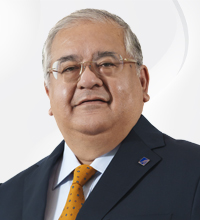
Speaker: Dato’ Mohammad Faiz Azmi, Chairman, Securities Commission Malaysia
Location: Securities Commission Malaysia, Kuala Lumpur
Delivered: 14 July 2026

Sahibus Samahah Mufti Pahang, Professor Dato’ Dr. Asmadi Mohamed Naim,
Sahibus Samahah Mufti Wilayah Persekutuan, Tuan Ahmad Fauwaz Fadzil,
Prof. Sheikh Dr. Bashir Aliyu Omar, AAOIFI Shariah Board Member,
Esteemed members of the SC’s Shariah Advisory Council,
Members of the SC Executive Team,
Shariah Advisers,
Distinguished guests, ladies and gentlemen.

Assalamualaikum warahmatullahi wabarakatuh and good morning.

  1. That was a beautiful recitation and for us to reflect on, as we gather here today for the 4th SC Nadwah of Shariah Advisers. The true spirit of Nadwah is where leaders, scholars and practitioners come together to listen, learn and strengthen our collective wealth of knowledge, for a better future.
  2. This is deeply rooted in Islamic history. Before the Battle of the Trench (Khandaq) where those in Madinah faced a much larger army, Prophet Muhammad (peace be upon him) brought his companions together, to consult them. This is the act of Shura. Among the many suggestions put forward was one from Salman al-Farisi, a Persian. He proposed digging a trench around the exposed northern side of the city - a defensive strategy unheard of at the time. It was embraced and proved instrumental to the city’s defence1.
  3. What this shows is that wisdom is rarely confined to a single individual and leaders do not necessarily have all the answers. Rather, effective leadership means creating avenues to seek advice, valuing diverse perspectives and having the conviction to act on bold and good ideas. A true leader needs to listen to others.
  4. Before I proceed further, and on behalf of the SC, I would like to thank Bursa Malaysia for their participation. Their partnership in this Nadwah reflects their strong commitment to facilitating productive dialogue on Shariah resolutions and regulatory developments impacting Malaysia.
  5. As we advance the strategic priorities of the Capital Market Masterplan 2026–2030 (CMP) and chart the Islamic Capital Market's (ICM) next growth phase, it is important that the industry also continues to innovate in order to remain resilient and globally competitive.
  6. The CMP sets out four priorities for the Malaysian capital market and by extension, the ICM. These are Vibrancy, Inclusivity, Sustainability and Regional Opportunities. These four key themes has a strong bearing on the work we do.
  7. Collectively, these priorities call for better quality companies and wider adoption of market-based instruments including products that can serve and benefit all, not just sophisticated investors. They also require the mobilisation of capital towards environmental and social outcomes as well as regional opportunities.
  8. In addition, the CMP recognises Malaysia's leadership in Islamic finance as one of the key differentiators to carry these priorities forward. This is where Maqasid al-Shariah is important. It provides a basis to ensure that innovation and market development remain firmly anchored to the higher objectives of Shariah. It also serves to remind market participants to act in the best interest of all.

Responsibilities of Shariah Advisers

  1. Let me now turn to you, the Shariah Advisors. Why does it matter that we, as practitioners, conduct ourselves appropriately?
  2. The answer lies in the significance of the market we collectively steward. Malaysia has been seen as a leader in global Islamic finance for thirteen consecutive years2. The Malaysian Islamic capital market is valued at RM2.7 trillion, around 64% of the overall capital market3.
  3. As a country, we hold about 36% share of sukuk outstanding globally. Sukuk issuances remain strong. Last year, they accounted for 79% of total corporate bonds and sukuk4.
  4. These figures remind us that decisions made by the people in this room influence our ICM’s prospects as well as the credibility of Islamic finance globally.
  5. It also brings me to a point I consider central to today's Nadwah. Islamic finance was not just meant to be just a set of legal boxes to tick. It is an ethical system, built on principles of justice (adl), transparency (bayan), and trust (amanah). Financial transactions, in this tradition, are not separate from religious accountability, they are very much a part of it.
  6. For that reason, compliance, while necessary, is no longer sufficient. We need Shariah advisers who go further and actively solve problems by developing solutions, championing ethical innovation and lending their expertise to emerging issues. The ICM consistently needs fresh ideas and new products to meet investors’ evolving needs.
  7. Critically, we need advisers capable of looking beyond just the product structures. Some structures may appear to be Shariah-compliant on paper, yet fall short ethically.
  8. This is why the fit and proper requirements for Shariah advisers are more than just about academic credentials. Ethics, integrity, reputation, experience, knowledge and also the soundness of your judgment are also critical ingredients.
  9. In that spirit, a set of guiding questions for our Registered Shariah Advisers (RSAs) is being introduced today. These key considerations are not meant to be prescriptive but are intended to start conversations. The objective is for Registered Shariah Advisers to assess and deliberate these considerations before advising on any ICM product. This ensures governance becomes an integral part in the decision-making process, rather than being assessed only after the fact.
  10. Some of you may be asking, why should I look further at all these matters when considering my opinion. The answer is that as you all give credibility to the product through your opinion, so it is imperative you know how the product will be priced, sold and marketed to ensure there are no surprises.
  11. This brings me to my next point. As a fraternity, we must avoid bringing reputational harm to the Islamic finance industry. Whether through inadequate due diligence, undisclosed conflicts of interest or opinions rendered without sufficient basis, the consequences can be far-reaching.
  12. The SC’s position on this is unequivocal. We will not hesitate to take regulatory action against any Shariah adviser who breaches the duties entrusted to them. And if the facts warrant it, even criminal prosecution. Everyone will be treated the same under the rule of law.
  13. Ultimately, investor confidence rests on the credibility of your advice that you provide. The fiduciary duty of this profession must be discharged with diligence and unwavering adherence to the highest standards of care and integrity.

Regulatory and Developmental Updates

Ladies and gentlemen,

  1. Demand for Shariah-compliant and ethical investment products is expected to expand. To solidify Malaysia’s ICM leadership, we will need a sustainable Shariah talent pipeline. The current SC initiatives introduced spans different stages of talent development, including our flagship Shariah Mentorship Programme (SMP). The objective is to nurture and strengthen applied knowledge as well as market readiness of Shariah professionals.
  2. However, one perennial concern over the years is that the existing pathways seems to stop short of producing leaders; those ready to serve on Shariah Advisory Councils and lead Shariah governance at the highest levels.
  3. With this in mind, the Super Scholar Programme is being established by the SC to deepen the pool of specialised, globally recognised scholars with multidisciplinary expertise.
  4. It builds on the foundation laid by our senior scholars. The credibility and rigour that exists within Malaysia's Shariah governance landscape did not happen by accident. It is the result of decades of dedication and we want to ensure that this legacy is preserved and passed on to the next generation.
  5. The immediate aim is to develop at least five Super Scholars by 2030, with expertise spanning Islamic jurisprudence, financial management intelligence, sustainability and innovation. This is not a standalone initiative. It is a key step towards enhancing the Shariah Governance Framework and aligned with the CMP’s aim to embed Maqasid al-Shariah as a defining feature of the ICM. We are also working closely with Bank Negara as they too are invested in this initiative.
  6. Another key CMP initiative is to encourage innovative, ethical and value-driven ICM products. For example, we recently issued the SC’s Guidance Note on Sukuk: An Alignment with Maqasid Al-Shariah Guidance for the Islamic Capital Market Malaysia5 last month.
  7. The Guidance Note is aimed at sukuk issuers, Shariah advisers as well as other ecosystem participants. The objective is to align sukuk proposals with the six aspirations and 15 principles of the Maqasid Al-Shariah Guidance.
  8. Equally important, it encourages sukuk issuances and practices that concurrently comply with Shariah requirements and also demonstrate the attainment of Maqasid al-Shariah through ethical, inclusive and value-based outcomes. We also envisage it to help strengthen the integration of Shariah principles throughout the sukuk origination and structuring process.
  9. This new guidance also marks a change in approach for Shariah advisers within the sukuk space. You are no longer there simply to validate a structure. Increasingly, you are also expected to shape it from the very beginning.
  10. This shift matters for three reasons. First, it brings greater consistency to sukuk structuring and assessment across the market. Second, it builds market confidence because investors know an adviser is involved from the very start. Lastly, it opens the door to genuine innovation.
  11. Furthermore, the Guidance Note forms a reference point for Shariah advisers in assessing value creation, for example, how well an issuance aligns with the issuer's strategic objectives or the economic and societal outcomes it delivers. This complements issuer obligations as prescribed under the Guidelines on Islamic Capital Market Products and Services.
  12. The SC intends to extend this approach for future guidance notes covering collective investment schemes, equities, digital assets and other asset classes. This will ensure that the same objectives we adopt for sukuk will be incorporated across the full breadth of the market.

Closing

Ladies and gentlemen,

  1. Last year, we initiated two publications under the 40 Hadiths series, on Sustainability and Ethical Sales Transactions. Today, two new compilations centred on Islamic Social Finance and Governance will be launched as well. These compilations draw on the tradition of Imam al-Nawawi, who compiled forty authentic hadiths on the encouragement of Prophet Muhammad (peace be upon him).
  2. We hope that these continuing series, grounded in the teachings of the Quran and hadith, will serve as a lasting reference for industry players and participants to deepen their understanding of the roots and underlying principles of Maqasid al-Shariah across market practices.
  3. In closing, I would like to record the SC’s appreciation to the speakers, panellists, scholars and participants who have given their time to contribute to this event.
  4. May today's Nadwah inspire meaningful reflection, fruitful discourse and renewed resolve to uphold the highest standards of Shariah governance for the advancement of our society and finance with purpose. As Prophet Muhammad (peace be upon him) said, “The most beloved people are those who are most beneficial to people.” This is a reminder that our collective efforts must ultimately serve the community and contribute to the common good6.

Thank you. 


  1. Surah Al-Ahzab (33:9–27).
  2. ICD-LSEG Islamic Finance Development Indicator (IFDI) 2025
  3. SC AR2025
  4. SC AR2025
  5. Guidance Note on Sukuk: An Alignment with Maqasid Al-Shariah Guidance for the Islamic Capital Market Malaysia was issued on 29 June 2026.
  6. Narrator: Jabir ibn Abdullah. Source: al-Tabarani, al-Mu‘jam al-Awsat (5787), from Dorar.net

SC AFFILIATES
RELATED SITES
about the SC
The Securities Commission Malaysia (SC) was established on 1 March 1993 under the Securities Commission Act 1993 (SCA). We are a self-funded statutory body entrusted with the responsibility to regulate and develop the Malaysian capital market.

General Line: +603-6204 8000
General Email: [email protected]
© Copyright Securities Commission Malaysia.  Contact Us   |    Disclaimer   |   The site is best viewed using Microsoft Edge and Google Chrome with minimum resolution of 1280x1024
Ooops!
Generic Popup