Opening Remarks at the ASEAN Annual Regulatory Sustainability Summit
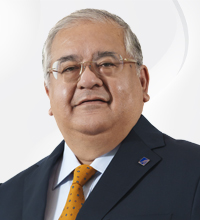
Speaker: Dato’ Mohammad Faiz Azmi, Chairman, Securities Commission Malaysia
Location: Durham University Business School, United Kingdom
Delivered: 9 September 2026

Professor Petra Minnerop, Associate-Pro-Vice-Chancellor for Sustainability and Founding Director of the Durham Centre for Sustainable Development Law and Policy, Durham University,
Tan Sri Andrew Sheng, Distinguished Fellow, Asia Global Institute, University of Hong Kong,
Esteemed fellow ASEAN securities regulators,
Durham Faculty Members,
Ladies and gentlemen.


Good morning and welcome to the ASEAN Regulatory Sustainability Summit.
  1. I would like to extend my appreciation to the Centre for Sustainable Development Law and Policy, Durham University for hosting us as well as sharing your institutional expertise. Thank you also to the ASEAN Capital Markets Forum (ACMF) and the Asian Development Bank (ADB) for their generous support and assistance in facilitating regional participation and dialogue.
  2. As policymakers, our days are often shaped by urgency and decisions that cannot wait. Thankfully, today’s Summit is not that typical day. The topic of sustainability regulation, however, continues to be a source of intense debates and conversations for all of us.
  3. By convening ASEAN securities regulators, leading academics, practitioners and international experts, we instead have the opportunity today to listen and learn from speakers and panellists at the frontier of new ideas and market practices. The value for each of us will be different. It may be a fresh perspective of a familiar problem, an enlightening jurisdictional experience, or simply, a new contact for advice.
  4. In addition, your schedules reflect the strong and growing interest in sustainability from different corners of the world. I understand that many of you are staying to attend the third ‘Just Transitions to a Net Zero World’ conference that follows this event. At last year’s conference, I had the opportunity to learn about the ICJ Advisory Opinion on the obligations of States with regards to climate change. It was riveting and I hope that you find this year’s programme equally inspiring.

Forging Ahead with Sustainability

Ladies and gentlemen,

  1. Unfortunately, tensions in West Asia continue to weigh on global markets. With the Middle East accounting for more than half of ASEAN’s crude oil imports1, Southeast Asian countries have felt the brunt of oil price shocks and its inflationary costs. Worryingly, the region is set to become a net gas importer next year2.
  2. In moments like these, there is an understandable impulse to set our climate commitments aside. To treat them as something we return to once conditions improve.
  3. I would argue the opposite. The volatility we face is the price of dependence. Our climate as well as energy agenda is, at its heart, an undertaking to reduce that dependence. This is not a commitment reserved for good times, but one that can even sustain us in difficult circumstances.
  4. ASEAN recognises this. That is why we are investing in regional efforts like the ASEAN Power Grid, renewable energy and low carbon technologies. These will require capital at scale and we believe that capital markets are critical to mobilising such amounts.

Achieving Resilience

  1. However, the challenge of long-term sustainability or resilience is that it is multi-layered.
  2. At the country level, resilience is the national capacity to anticipate, absorb and recover from disruption in a timely, efficient, and fair manner. At another level, market resilience is the capacity of the ecosystem to withstand competitive, financial and environmental pressures. For businesses, a company’s resilience is its ability to absorb shocks, adapt and marshal resources in the face of disruption or change. With so many levers and factors, it appears daunting.
  3. In such instances, I usually find it useful to look at the work of others. The Notre Dame Global Adaptation Initiative or specifically its ND-GAIN Country Index Scores is one such measure. It ranks about 190 countries across two dimensions: vulnerability and readiness.
  4. Seven3  of ASEAN's 11 Member States sit in the bottom half. While our vulnerability scores have improved slightly over the past year, readiness has declined. Apart from Singapore, every other ASEAN country is outside the top 50 in terms of readiness.
  5. In simple terms, resilience is the balance between the risks we are exposed to and our preparedness for them. This gap is precisely where the capital market and regulators can and must act on.
  6. For Malaysia, we recognise the urgency of this. Under the Securities Commission Malaysia’s (SC) Capital Market Masterplan 2026-2030, sustainability forms one of the four key pillars. We have set ourselves an ambitious, quantitative target of mobilising US$22.2 billion to US$24.6 billion4  by 2030 to finance sustainability.
  7. Beyond this headline number, we have also identified several building blocks necessary for building resilience.

Building Resilience

  1. Firstly, we cannot prepare for risks that we have not yet identified. This is why disclosures matter. Malaysia, alongside the Philippines, Singapore, Thailand and Indonesia, has implemented or are working towards adopting the ISSB Standards as the baseline for corporate sustainability reporting.
  2. The core focus here is on financial materiality, that is, requiring companies to link climate-related risks to current and anticipated financial impact. Our observations from the first cohort of reports by Malaysian PLCs demonstrate that financial quantification is where disclosures remain most nascent, and yet it is often where disclosures matter the most.
  3. The second part is how do we mobilise capital for sustainability. For the region, we have made progress on investor clarity through the ASEAN Taxonomy, with the fourth version issued last year.
  4. The Taxonomy gives investors a guide of what constitutes sustainable investment in ASEAN using evidence-based criteria, which is valuable to institutions with sustainability mandates. We are extending the work through the mitigation co-benefit, Adaptation for Resilience (mARs) Guide. This is aligned to the second Environmental Objective of the Taxonomy on Climate Adaptation.
  5. But clarity alone is not sufficient. Many sustainability solutions, especially adaptation related, have limited commercial viability and marginal bankability. Take for instance, the protection of mangroves or the reinforcement of a coastline. How do we capture on a balance sheet the value of avoided losses, land enhancement, and the social and economic benefits that follow to provide the financing?
  6. At the SC, these questions have taken us to ports and islands exposed to coastal erosion, and to low-income communities exposed to riverine and flash flooding. We have also engaged students through innovation challenges – an initiative that I am pleased has scaled into regional efforts. But the question remains – how do we deliver capital market financing for these solutions? I hope the panel later this morning can offer us valuable insights into what has been done elsewhere.
  7. Finally, there is also the ASEAN Voluntary Carbon Market plan which seeks to strengthen the VCM ecosystem across the region. In Malaysia, we are considering regulating carbon credits as securities. Concurrently, we are working with the Government on standards of disclosure, governance, accounting and taxation. Infrastructure challenges still remain though. I am therefore curious to know how this afternoon’s panellists address issues such as limited capacity and mismatches in supply and demand.

Closing

Ladies and gentlemen,

  1. The scale of the challenge before us may be significant, but having worked alongside many of you, I am equally convinced of the strength of our collective resolve.
  2. Today, you will hear from experts who have been involved in difficult conversations covering geopolitics, sustainability disclosures, taxonomies and carbon markets, to name a few. I encourage you to draw upon their expertise and use it for the betterment of your respective jurisdictions.
  3. With that, thank you for being here and I hope this Summit translates into meaningful action across our capital markets.

Thank you.


  1. Source: ASEAN Centre for Energy, Energy Efficiency as the First Fuel: A Strategic Response to Geopolitical Oil Supply Disruptions Across ASEAN (7 April 2026).
  2. ibid
  3. The seven ASEAN Member States are Philippines (98), Vietnam (103), Thailand (106), Cambodia (127), Laos (127), Timor Leste (159), and Myanmar (162)
  4. Figure in ringgit is RM90-RM100 billion. Conversion based on US$/MYR rate of 1:4.06 as at 31 December 2025.


SC AFFILIATES
RELATED SITES
about the SC
The Securities Commission Malaysia (SC) was established on 1 March 1993 under the Securities Commission Act 1993 (SCA). We are a self-funded statutory body entrusted with the responsibility to regulate and develop the Malaysian capital market.

General Line: +603-6204 8000
General Email: [email protected]
© Copyright Securities Commission Malaysia.  Contact Us   |    Disclaimer   |   The site is best viewed using Microsoft Edge and Google Chrome with minimum resolution of 1280x1024
Ooops!
Generic Popup