
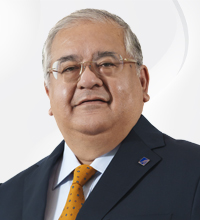
Opening Remarks at the RIFAR Showcase
Speaker: Dato’ Mohammad Faiz Azmi, Chairman, Securities Commission Malaysia
Location: Securities Commission Malaysia, Kuala Lumpur
Delivered: 30 July 2026

Yang Amat Mulia Tengku Zatashah Sultan Sharafuddin Idris Shah, Princess of Selangor and Environmental Advocate,

His Excellency the Netherlands Ambassador to Malaysia, Mr Jacques Werner,

Distinguished guests,

Ladies and gentlemen.

Assalamualaikum warahmatullahi wabarakatuh, and good afternoon.

  1. Welcome to the River Flooding Adaptation and Resilience or RIFAR Showcase hosted by the Securities Commission Malaysia (SC).
  2. For many of you, this is probably the first time you have visited us at the SC here in Bukit Kiara. This building is unique in many ways. It is home to over 800 staff of the SC, was designed by an architect who was only in her 30’s back in the 1990’s and won many prizes for its design and features. The architect did explain to me that she designed it based on a malay headdress or ‘tanjak’ in keeping with our Malaysian heritage. And in the context of climate change, it was perhaps one of the first buildings of its kind that used only half the electricity that a building this size would need. So it is a fitting place to have this showcase at the SC.
  3. Turning to the issue we are here to discuss, you might be wondering why the SC is hosting the RIFAR challenge. One reason is that famous saying, that it takes a village to raise a child. A similar whole-of-nation approach must be employed in managing our waterways. I am therefore encouraged to see a diverse turnout today comprising representatives from Federal and State Governments, capital market participants, industry, to academia and civil society. Each of us has an important part to play in addressing this issue.
  4. For policymakers and regulators such as the SC, who look after the capital markets, our role is to help facilitate the funding of the various initiatives we need to both reduce emissions and at the same time, adapt and mitigate the effects of climate change.
  5. This is important as Malaysia is in a climate vulnerable part of the world and our economy is very sensitive to climate changes. We still have a very large agriculture sector and many of our other sectors rely on stable conditions.
  6. Our Meteorological Department has warned for example that temperatures could exceed the 28-year recordof 40.1 degrees Celsius next year due to El Niño effect. It will get hotter. At the other end of the spectrum, rainfall intensity across the country is expected to increase by 3.5 to 25.4 percent2 this century. This means that there is a high likelihood of more floods and also one estimate suggests that it could affect our GDP3  quite considerably.
  7. Unfortunately, as the frequency and intensity of climate events increase, so too does the economic toll. This brings us to the question at the heart of today’s gathering: are our people and economy well-prepared for what lies ahead?

RIFAR Challenge and Empowering Youth

  1. At the SC, we believe that the capital market must be part of the answer - a bridge that channels finance towards resilience for our nation, businesses, communities and people. That role starts with building awareness and encouraging solutions, which brings us to RIFAR.
  2. The RIFAR Challenge is based on a simple premise: ideas matter but implementation matters more. Meaningful impact requires solutions that are not only technically sound but financially viable - so that they are able to attract the capital needed to address the problems. One problem, beyond flooding, is the quality of our river water. In Selangor, some 95% of our drinking water is obtained from the rivers and today in SC, we have an exhibit, a tunnel, where some information on the rivers and the different classes of water quality is being shown to give you a sense of the problem.
  3. Last year's inaugural challenge - the Coastal Flooding Adaptation and Resilience or (COFAR Challenge) - demonstrated the potential of this technical and financial approach. Winning proposals from bright young minds brought up ideas like using geotextile barriers and oyster reefs and smart drainage systems to help slow down the impact to coastal walls as well as suggesting solutions with credible financial models, to solve the issue of Coastal Flooding.
  4. This year, the Challenge moves inland. It calls on students to address river flooding in Selangor which strikes at the very heart of our towns and cities.
  5. We widened the Challenge into two tracks - a Sprint and a Marathon. In the Sprint, participants had to utilise short social media videos to highlight the pressures our rivers face and to urge for public action. In the Marathon, the challenge was to design a flood mitigation intervention for Taman Sri Muda, a densely populated township in the Klang River Basin with a history of recurring floods. We had 21 entries for the Sprint and 37 for the Marathon.
  6. Earlier this week, I had the privilege of meeting the top five teams from the Marathon track, as they pitched their solutions to a panel of judges. I was impressed by the teams’ ability to understand the problem and all articulated the concerns very well. Many ideas were then suggested from wetlands to sponge areas and retention ponds. However, the teams who did better, were the ones who were able to articulate how their solutions could actually address the problems with some degree of analysis tying the expected volume of water to the solution provided.
  7. All the teams had financial models that were thought through and one team even had submitted mathematical proofs to their calculations. Some teams relied on solar power and services in order to generate revenue but many relied on government money to complete the project. What finally decided the winner was actually the presentation. The better ones used the whole team to present, had rehearsed doing it in the allotted time and were able to bring some drama into their presentation.
  8. We also tested their ability to deal with difficult questions. In the final analysis, there wasn’t much difference in the final scores and that shows how close a competition it was. As for the Sprint winners, we decided this through a shortlisting process and then allowing the judges to decide the winners from the presentations.
  9. To the winners, congratulations and to the others, thank you for giving it your best. But win or lose, I hope you all came away with a better understanding of the river flooding issues we all will face. Just to make it interesting, last year one of our sponsors SD Guthrie met with some of the winners after the competition to explore their ideas and I believe one of our sponsors this year, Landasan Lumayan are proposing to do the same. This shows the relevance of your ideas in solving the problem.

Climate Resilience requires Financing

Ladies and gentlemen,

  1. The scale of investments for climate resilience is staggering. Malaysia’s adaptation financing needs by 2050 is estimated at close to RM3.5 trillion4  at the very minimum. This is in addition to a projected RM1.3 trillion5  required for energy transition.
  2. Public funds alone cannot bridge a gap of this magnitude. This is where the capital market must step in. Under the SC’s Capital Market Masterplan 2026–2030 (CMP), sustainability is one of the key pillars to drive our efforts with the aim of facilitating the raising of private funding to help deliver these projects.
  3. The evidence shows that early-stage climate solutions remain difficult to finance due to marginal bankability and limited commercial viability. Our engagements with Federal and State Governments as well as project owners have highlighted the challenge of developing a pipeline of mature, investment-ready projects.
  4. Our conversations with financiers and intermediaries point to a similar conclusion. No single capital pool can meet these needs alone. Adaptation financing will likely require a blended finance approach. This is because the viability of projects depend on public sector involvement and patient capital or credit enhancements, to de-risk projects before private capital can follow.
  5. The difficulty lies in structuring such deals. Our efforts are therefore will be focused on unlocking new pools of concessional and philanthropic capital to help crowd in private sector financing to deliver these projects.

Building the Sustainability Ecosystem

  1. Mobilising capital, though, is only part of the task. It also requires an enabling ecosystem; one that prioritises data and information as well as talent and credible markets.
  2. A critical part of this is corporate resilience. Companies cannot manage material risks they cannot identify. In fact, climate change could reduce corporate earnings by as much as a quarter by 20506, with firms in the Asia-Pacific region being the most vulnerable7.
  3. In an effort to help our companies identify material climate risk, the National Sustainability Reporting Framework or NSRF was introduced in 2024 based on the International Sustainability Standards. It provides a baseline for companies and investors alike with comparable, decision-useful corporate sustainability reporting towards building resilience and long-term value.
  4. Equally important is developing professional capabilities and capacity. To support this, the SC is targeting the establishment of an Association for Sustainability Professionals this year. The objective is to develop a talent pipeline as well as accredit much-needed sustainability competencies for Malaysia. University students looking to explore a career pathway that intersects with sustainability are welcome to join this new Association.
  5. At the regional level, efforts are ongoing to advance regional voluntary carbon markets (VCM) through the ASEAN Capital Markets Forum’s (ACMF) VCM Development Plan and ASEAN VCM Guidance. For Malaysia, we hope that this will pave the way for local trading of high quality carbon credits.

Closing

  1. In closing, let me reiterate the larger purpose that underpins the sustainability efforts that I have shared with you together. We, together with the whole of society, are working to secure a sustainable resilient future for all Malaysians.
  2. The challenge is significant, but so too is our collective capacity to solve problems when we work together.
  3. I would like to congratulate all the participants for the creativity and commitment shown throughout this year’s challenge. Thank you also to our RIFAR partners: ICAEW Malaysia especially the local office head Shenola Gonzales, Lembaga Urus Air Selangor, Landasan Lumayan led by Encik Saiful and the Jeffrey Sachs Center on Sustainable Development. Also thank you to the judges who spent their valuable time to choose the winners. And finally, a special thanks to my team led by the Chief Sustainability Officer Neetasha Rauf, for delivering this initiative.
  4. With that, I wish you all a productive and engaging afternoon.

Thank you.


  1. Record set in 1998 in Chuping, Perlis. Source: Malaysia Meteorological Department
  2. Source: Malaysia’s Fourth National Communication Report under the United Nations Framework Convention on Climate Change (April 2024)
  3. Major floods in 2021 caused RM6.1 billion in losses which was equivalent to 0.4 percent of GDP. Source: Department of Statistics Malaysia
  4. Converted from figure of US$852.4 billion at US$:RM rate of 4.09 as at 21 July 2026. Source: Malaysia Country Climate and Development Report 2026, World Bank
  5. Source: National Energy Transition Roadmap
  6. Source: The Cost of Inaction: A CEO Guide to Navigating Climate Risk, World Economic Forum (December 2024)
  7. Source: World Economic Forum

SC AFFILIATES
RELATED SITES
about the SC
The Securities Commission Malaysia (SC) was established on 1 March 1993 under the Securities Commission Act 1993 (SCA). We are a self-funded statutory body entrusted with the responsibility to regulate and develop the Malaysian capital market.

General Line: +603-6204 8000
General Email: [email protected]
© Copyright Securities Commission Malaysia.  Contact Us   |    Disclaimer   |   The site is best viewed using Microsoft Edge and Google Chrome with minimum resolution of 1280x1024
Ooops!
Generic Popup