Opening Remarks at the Securities Commission Malaysia – AlBaraka Forum Strategic Dialogue
Aligning Ethical Investment for Climate Adaptation and Transition
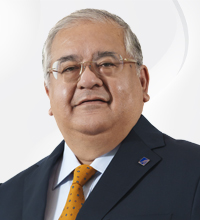
Speaker: Dato’ Mohammad Faiz Azmi, Chairman, Securities Commission Malaysia
Location: Inner Temple Theatre, United Kingdom Delivered: 14 September 2026
His Excellency Yousef Hassan Khalawi,
His Excellency Dr. Mahmoud Mohieldin,
Distinguished guests,
Colleagues,
Ladies and gentlemen.
Welcome to the Honourable Society of the Inner Temple. The choice of the venue is apt, as the Inner Temple looks after one of the oldest churches in the UK based on a church in Jerusalem. It was the home of the Knight Templars who made their headquarters here but extended their influence in the Middle East. They were indeed the first bankers in the world. So I can think of no better place in London for this conversation today.
My thanks to the AlBaraka Forum and to His Excellency Sheikh Yousef Hassan Khalawi for the shared vision in putting this dialogue together. We met briefly in Istanbul earlier this year and we are very happy for his support in getting this dialogue together.
Allow me to begin with some context for today’s discussion. Developing countries will require between US$310 billion and US$365 billion annually by 2035 to meet climate adaptation needs1. Yet international public adaptation finance amounted to only US$26 billion in 2023, leaving a gap 12 to 14 times greater than current funding flows.
The scale of investment required is significant and this challenge is particularly relevant for Malaysia as well. In the World Bank’s Country Climate and Development Report on Malaysia, it suggested that Malaysia's climate adaptation needs could range between US$852 billion and US$1.1 trillion by 2050. These figures underscore that adaptation is no longer merely an environmental consideration but a national economic and development imperative.
This points to a structural absence in our financial architecture, which has yet to fully recognise adaptation and resilience needs. The consequences are also distributed unevenly. More than half of OIC member countries are assessed as highly vulnerable to climate impacts2 with limited capacity to adapt.
This is not primarily a shortage of capital, but a return problem because many adaptation and resilience projects are unbankable. Adaptation projects have long tenors and limited standalone cashflows. A seawall generates no direct revenue. A flood-resilient drainage system may sit idle for years.
Another point of view is that during the inaugural ASEAN Regulatory Sustainability Summit in Durham last week, our SC capital market advisor Tan Sri Andrew Sheng made an interesting comment about the dominance of the GDP growth driven world over the Holistic Growth driven world which has different measures like Gross National Happiness Index and Planetary Health. This GDP focus looks at return as a key outcome which, in a way, may explain why the planet is in such a poor state as the rush to grow is not balanced by managing the impact to the planet from overuse of resources.
The Securities Commission Malaysia’s (SC) Maqasid Al-Shariah Guidance issued in 2023 postulates that we humans are not owners but guardians of the earth. There is a responsibility to use resources wisely and not to the detriment of the future generations. Clearly GDP growth does not have these expectations as a criteria. There is no benefit given to losses avoided or harm deferred, only returns.
Ladies and gentlemen,
With that as a context, what is it that we are positing for discussion today? The question, which we hope to discuss, is what are some of the ideas we can employ to raise financing for adaptation and resilience and also, how can we in the OIC help one another solve this need.
The scale of the challenge far exceeds what individual countries’ public resources can meet alone, so mobilising private capital is critical. Just to share one perspective and action plan: a key priority under the SC’s Capital Market Masterplan 2026-2030 is sustainability which is a central pillar to facilitate funding for climate and transition-related projects.
Through our engagements with the government and project sponsors, we have observed a shortage of bankable, investment-ready projects. Many solutions remain at the early-stage, with limited commercial viability and uncertain risk-return profiles.
The evidence bears this out. Private capital currently contributes around US$5 billion a year to adaptation, against an estimated potential of US$50 billion3 with the right policy support and blended structures. What is missing is the structure through which capital can be deployed.
No single source of capital can address this challenge alone. A blended finance approach will therefore be critical. Public sector participation, concessional funding, patient capital and risk-mitigation mechanisms can strengthen project viability, crowd in private investors and open a pathway for larger pools of commercial capital.
This is where the Maqasid al-Shariah or the higher objectives of Shariah play a crucial role. The Maqasid asks what an economic activity preserves - life, intellect, lineage, property and faith. Its principles, including risk-sharing, asset-backing, and the prohibition against displacing harm onto others, speak directly to the central challenge of climate adaptation; that costs are absorbed by those who did not create them.
Over the weekend at the SC-OCIS Roundtable in Oxford, we explored the concept of Sukuk Prisma SDG to be issued in Malaysia. An idea that focuses on achieving sustainability and impact outcomes from sukuk raised through any recognised Shariah standards, guided by the UN SDGs, aligned with the ASEAN Taxonomy and importantly, it encourages funding projects that deal with adaptation. Could this be replicated in other OIC countries? That is one idea up for discussion.
Ladies and gentlemen,
Today, our panel line-up brings together the perspectives this problem requires - the regulator’s view from the FCA, a view from the lens of a sustainability practitioner, and the multilateral financing view from His Excellency Dr. Mahmoud Mohieldin, whose work as UN Special Envoy sits at the intersection of climate action, sustainable development and finance.
Ultimately, this is not a question of whether the resources exist, but whether we can build the structures to deploy them where they are needed the most and are applied in a just way. I look forward to hearing their perspectives and learning from their insights on how we can collectively advance this agenda.
Another area I hope the panel can consider is what we as OIC countries can do more together and what should we be working on after we leave the Inner Temple.
I hope today’s dialogue moves us closer to new partnerships in this room and commitments that outlast this afternoon. The challenge before us is significant, and the time to act is now.
On that note, I would like to extend my appreciation to the organising committee from the SC and the AlBaraka Forum for making today’s dialogue possible.
Thank you.
Source: United Nations Environment Programme, 2025 Adaptation Gap Report: Running on Empty (October 2025)
Source: World Bank Group, Islamic Finance and Climate Agenda: From Green Sukuk Innovation to Greener Halal Value Chains (November 2025)
Source: United Nations Environment Programme, 2025 Adaptation Gap Report: Running on Empty (October 2025)
The Securities Commission Malaysia (SC) was established on 1 March 1993 under the Securities Commission Act 1993 (SCA). We are a self-funded statutory body entrusted with the responsibility to regulate and develop the Malaysian capital market.