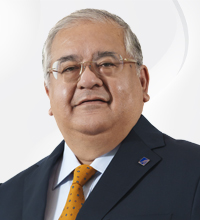
Special Address at Sabah Asia-Pacific Impact Investing for Sustainable Development Summit 2026
Speaker: Dato’ Mohammad Faiz Azmi, Chairman, Securities Commission Malaysia
Location: The Magellan Sutera, Sabah
Delivered: 13 July 2026

Yang Amat Berhormat Datuk Seri Panglima Haji Masidi Manjun, Deputy Chief
Minister 2 of Sabah,
Yang Berhormat Datuk Jafry Bin Haji Ariffin, Minister of Tourism,
Culture and Environment Sabah,
Yang Berbahagia Tan Sri Andrew Sheng, Chairman, George Town Institute of Open and Advanced Studies (GIOAS) and member of the Capital Markets Advisory Committee,
Distinguished guests, ladies and gentlemen.

Assalamualaikum warahmatullahi wabarakatuh, dan salam sejahtera.

  1. I would like to start by thanking the organisers for inviting me to speak and it is a pleasure to be part of the Sabah Asia-Pacific Impact Investing for Sustainable Development Summit 2026.
  2. Today’s diverse audience reflects an important reality - that sustainable development is a shared responsibility requiring the collective efforts of all stakeholders, including government, private institutions and civil society. Or in other words, it needs a whole-of-nation approach.
  3. Throughout history, the greatest innovations and societal transformations have rarely been driven by ideas alone. Ideas and passion inspire possibilities, but it is capital that enables these propositions to scale up. As an example, the early European expeditions into Asia in the 15th century was made possible by financial contributions from monarchs, the nobility and rich merchants.
  4. Today, artificial intelligence (AI) is driving possibilities and also attracting capital. In the first half of this year alone, a record US$2.8 trillion in global M&A deals1  and mega IPOs were announced, mostly involving AI and technology firms. The impact in terms of headlines, amounts and even innovation is staggering but their potential to solve societal problems is also profound.
  5. However, beyond these numbers, the underlying question remains: can all these translate into real and meaningful returns to communities and nations?
  6. This has been impact investing’s raison d’être. Based on estimates, about 3% of total assets managed2  by asset managers and owners, including foundations and family offices, fall into this category of impact investing.

The Challenge for Impact Investing

  1. In Asia, demand for impact investing is on the rise. In fact, 49% of global investors surveyed indicated that they plan to increase their impact allocations in Southeast Asia . This is hardly surprising given that ASEAN is in a climate vulnerable part of the world. Therefore, even as efforts to grow the size and reach of impact investing in this region continue, it bears reminding that market participants should not lose sight of its underlying ethos.
  2. This is particularly pertinent given that nearly eight in ten Asia-focused impact investors surveyed targeted market-rate returns.
  3. This means the challenge is not simply just about attracting and mobilising more capital, but these investments to deliver outcomes which meet both financial and impact expectations. In our view, no one will give up capital for free.
  4. We must also remember that as one of the world's fastest-growing regions, Asia-Pacific’s economic and social needs will be immense. The region alone is expected to account for more than half of the US$151 trillion5  in global infrastructure investment needs required over the next 25 years.
  5. Increasingly, economic growth ambitions must extend beyond what we build to how we strengthen the resilience and well-being of the businesses, communities and citizens that these investments are intended to serve.
  6. This is where I believe impact investing can deliver the most innovative and meaningful solutions which are still sound commercial investments.

Malaysia’s Islamic Capital Market Solutions

  1. Allow me now to share Malaysia’s experience in this area, particularly through the lens of our Islamic capital market which has very similar underlying outcomes or intentions as impact investing. Concurrently, I will also highlight the Sabah connection in these Shariah-compliant solutions covering social, green infrastructure and climate mitigation.
  2. As you may be aware, socially beneficial outcomes have long been an inherent feature of Islamic finance. This includes the emphasis on social responsibility, inclusiveness and equitable sharing of risks; all of them sounds familiar in the impact investing world.
  3. Since the release of the Securities Commission Malaysia’s (SC) Sustainable and Responsible Investment (SRI) Sukuk Framework in 2014 to encourage sustainable investments, there have been a few notable sukuk or Islamic bond issuances.
  4. First is the pioneering sukuk issued under this framework in 2015, the Sukuk Ihsan. Proceeds raised were used for the Yayasan Amir’s Trust Schools Programme to improve education quality, student engagement and academic outcomes in Malaysian government schools.
  5. The sukuk itself had a set of predetermined key performance indicators encompassing the positive social impact generated by the programme. This allowed sukukholders to forego some of their returns as part of their social obligation.
  6. A total of 106,000 Malaysian students across 11 states benefitted from the programme. Out of the 94 schools participating, five were in Sabah6.
  7. In addition, the sukuk’s second tranche, which was issued in 2017, included a retail portion. This provided ordinary Malaysians an opportunity to participate in and support these educational goals.
  8. The second offering that I will touch on is the world’s first green SRI sukuk7  issued in the same year as Sukuk Ihsan’s second tranche. It was the first to formally integrate Shariah and green principles.
  9. The sukuk raised RM250 million with proceeds utilised to finance the construction of large-scale solar photovoltaic power plants in Kudat, which is a town north of here, I believe. The objective is to provide an environmentally friendly, clean and sustainable power supply for the state, and build a lasting legacy for generations of Sabahans.
  10. Last year, the Malaysian capital market also welcomed one of the largest sustainability-linked sukuk so far. It was a RM2.1 billion offering by a leading Malaysian plantation conglomerate8  with estates here in Sabah, Peninsula Malaysia as well as throughout the region.
  11. Importantly, the sukuk had measurable environmental and sustainability performance benchmarks. This includes reducing greenhouse gas emissions by 30 percent across the firm’s oil palm estates and mills.
  12. Adoption of specific impact-related metrics and reporting mechanisms will be crucial to the long-term prospects of these types of investment offerings. They not only enhance overall transparency of the issuance but also provide verifiable proof of success for potential investors and issuers alike.

Moving forward with CMP

Ladies and gentlemen,

  1. Let me now move to other segments prioritised in the SC’s Capital Market Masterplan 2026–2030 (CMP) which was released earlier this year. Two important areas with relevance for impact investing are social finance and sustainability.
  2. As Malaysia advances its transition towards a low-carbon and socially resilient economy, the SC sees the capital market playing an increasingly important role in mobilising financing towards a better future for all.
  3. We firmly believe that social finance offers significant opportunities to expand the reach of impact investing. Islamic social finance instruments such as waqf, together with zakat and sadaqah, employ principles of shared prosperity, stewardship and community well-being that have guided societies for centuries.
  4. They have also demonstrated positive and tangible outcomes for local communities. For example, close to a decade ago, a public offering of waqf shares9  gave individual investors an opportunity to participate in the upgrading and maintenance of transport and parking facilities as well as a public market for the benefit of local residents and travellers.
  5. Under the CMP, we intend to strengthen this pathway by fostering innovative Islamic solutions under the ICM Innovation Lab. This will include investment structures that channel philanthropic capital to underserved sectors and communities.
  6. Apart from facilitating Islamic social finance instruments, another key CMP initiative is the Social Exchange Platform, an innovative philanthropic fundraising platform connecting individuals, corporate donors and approved non-profit organisations. The goal is to increase transparency and visibility of social projects in delivering measurable social and environmental outcomes.
  7. The platform already started operations earlier this year under Phase 1 to support charities. The intention is for social impact to participate in Phase 2 and later expand to Phase 3 where communities can participate.
  8. More importantly, it represents a shift in mindset - that philanthropic capital, when mobilised effectively, can be a catalyst for broader societal transformation. To support this, the Government has, just last year, provided a grant for charities to participate, as they see the important role the Social Exchange plays.
  9. Another priority is to translate ambition into investable opportunities. CMP envisages that the Malaysian capital market can mobilise between RM90 billion and RM100 billion in sustainability-focused financing over the next five years. This entails massive effort and closer collaboration among stakeholders. To do this, we are adopting the ASEAN Taxonomy for Sustainable Finance in Malaysia to guide funding needs in this area.
  10. While climate adaptation is increasingly recognised as an urgent priority, many adaptation initiatives struggle to attract financing because they are either unbankable or lack structures that meet diverse investor expectations. Public financing for this is also insufficient.
  11. Bridging this gap requires solutions that are at once impactful and investment-ready.
  12. From the SC’s perspective, we are already working with project owners to facilitate practical capital market solutions for adaptation and transition projects. This includes supporting pilot projects and scalable co-investment models that address pressing climate risks, as well as engaging state governments and the investment community to better align project pipelines with investor expectations.
  13. At the regional level, there is also ongoing work by the ASEAN Capital Markets Forum (ACMF), a regional grouping of securities regulators, to develop the mitigation co-benefit, Adaptation for Resilience or “mARs” Guide. The aim is to have a common framework for identifying ASEAN-centric adaptation projects that are not bankable and identifying financing options using blended finance.
  14. Looking ahead, our ambition is to take this even further. Steps are being taken to develop a mobilisation framework to position Islamic social finance as a source of catalytic and concessional capital, supporting areas such as climate adaptation, social protection and community resilience. For example, to determine whether Zakat money can be repurposed for infrastructure projects that protect the poor.
  15. These combined efforts will reinforce Malaysia’s position as a global leader in Islamic finance and impact-driven capital.
  16. Finally, we also have an ASEAN Voluntary Carbon Market or VCM plan to strengthen the VCM ecosystem in ASEAN countries by regulating carbon credits as securities and working with the government on standards of disclosure and governance as well as accounting and taxes. We also need a central registry, run by the government, to help track carbon credits projects and improve the use of Bursa Carbon exchange.

Closing

Ladies and gentlemen,

  1. As I bring my remarks to a close, allow me to reflect on a more personal level. Every time I have the opportunity to visit Sabah, I am reminded that sustainable development is ultimately about people and place.
  2. Beyond its abundant natural capital and extraordinary biodiversity, what has always impressed me is the warmth and resilience of its communities, and the richness of its indigenous heritage. In many ways, Sabah reflects the future that much of our region seeks to build.
  3. On that note, in closing, I would like to thank you all for listening and I hope you have a productive Summit.

Thank you.


  1. 49% increase compared to same period in 2025. Source: London Stock Exchange Group (LSEG)
  2. Source: State of the Market 2025 report, Global Impact Investing Network (GIIN)
  3. Source: Impact Investing in Asia in 2024 report, Global Impact Investing Network (GIIN)
  4. Actual proportion is 76%. Source: Global Impact Investing Network (GIIN) 2024 Impact Investor Survey
  5. Source: PwC; Global Infrastructure Outlook 2025–50; Investing in infrastructure, the platform for accelerating human progress
  6. SK Kimanis, SK Mandahan, SK Pekan Kimanis, SMK Kimanis, SMKA Limauan. Source: Yayasan Amir website
  7. Sukuk issued by Tadau Energy
  8. SD Guthrie
  9. Waqaf Saham Larkin Sentral in 2017

SC AFFILIATES
RELATED SITES
about the SC
The Securities Commission Malaysia (SC) was established on 1 March 1993 under the Securities Commission Act 1993 (SCA). We are a self-funded statutory body entrusted with the responsibility to regulate and develop the Malaysian capital market.

General Line: +603-6204 8000
General Email: [email protected]
© Copyright Securities Commission Malaysia.  Contact Us   |    Disclaimer   |   The site is best viewed using Microsoft Edge and Google Chrome with minimum resolution of 1280x1024
Ooops!
Generic Popup