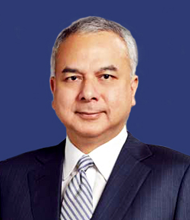
Special Address at the 17th SC-OCIS Roundtable 'Building Resilience: The Intersection Between Capital, Climate and Innovation'
Speaker: His Royal Royal Highness Sultan Nazrin Muizuddin Shah, The Sultan of Perak, Malaysia
Location: Malaysia Auditorium, Oxford Centre for Islamic Studies, United Kingdom Delivered: 12 September 2026
Whenever I walk beneath this building’s dome, I am reminded that this Centre did not attain its grandeur easily or immediately. The Oxford Centre for Islamic Studies, which celebrated its 40th anniversary last year, began, as many of you know, in a wooden hut on St Cross Road,1 funded by a donation that today would not cover the cost of a black cab from the airport. Yet from these humble beginnings back in 1985, a trust was slowly built between scholars from West to East, from Rabat to Mecca to Kuala Lumpur, and a bridge of understanding developed between the intellectual traditions of Oxford and the Muslim world.
The beautiful structure around us stands as testament to that vision – a physical tribute to the joining of these two great traditions. A minaret, among the dreaming spires of Oxford, rising beside a quadrangle. Stone drawn from the English villages of Ketton and Clipsham, alongside Malaysian timber for the great auditorium. Every quadrangle here carries a name, and every name carries a debt of gratitude – the King Fahd Quad, the Oman Hall, the Istanbul Courtyard. This is not decoration. It is a physical shukr – a gratitude rendered in stone by many hands and many nations, in acknowledgment of the gift of knowledge that Allah subhanahu wa ta‘ala has placed within reach of anyone bold enough to seek it.
Indeed, I could hardly imagine a more apt setting for the conversation we are here to have today. We have gathered to talk about resilience – how we build it, and how we maintain it – and this building is resilience embodied, raised up from something small and humble: a vision achieved through hard work and persistence. What’s more, this building is, as I have mentioned already, a space for bringing together traditions that have not always been in conversation. That is what today is all about.
This year’s Roundtable is convened around a theme of real consequence for our shared future, the building of resilience at the meeting point of capital, climate, and innovation. These three words are often spoken separately, as though they belong to different conversations held in different rooms. The premise of this Roundtable – and I believe it to be the correct one – is that they belong together, and that our future depends upon our ability to unite these three priorities in pursuit of a shared goal.
Our world today is replete with dire warnings of the consequences of treating capital and the climate as unrelated concerns. The danger was foretold in an immensely thoughtful work by the late Dr Umer Chapra (d. 2026), titled The Islamic Vision of Development in the Light of Maqasid al-Shariah, published nearly two decades ago.2
Chapra’s argument, distilled, is this. Imam al-Ghazali (d. 1111), the great scholar of the Islamic Golden Age, identified five objectives that the Shariah exists to safeguard. These maqasid are faith, the human self, intellect, posterity, and wealth. Chapra insisted that wealth was never meant to stand alone. It is, in his words, “a trust from God” – an amanah.3 He warned that a civilization which pursues economic growth while neglecting the other four objectives may enjoy “relatively higher rates of growth” in the short term, but will pay for it in the long run, through inequity, family breakdown, and social unrest.4
Chapra was writing about human development. He was not, primarily, writing about the state of the planet. And yet his framework naturally extends to it. He reminds us that the environment – “including animals, birds and insects” – is itself a trust, and must be protected, “so that no harm is done to the present or the future generations.”5 Posterity, nasl, was one of his five pillars precisely because no generation is entitled to consume the inheritance of the next.
These observations acquire new significance when considered alongside recent events. Here in Oxford, and across Southern and Central Europe this summer, heatwaves have broken temperature records, governments have issued warnings to the elderly to stay indoors, and rivers have run low enough to strand barges. Almost three quarters of the United Kingdom – a country, if you’ll permit me, notorious for its rain – found itself in drought.6 And, looking beyond Europe, extreme weather events have claimed far too many lives, with the tragic floods in Nepal coming as the most recent and most devastating episode in a pattern of climate disasters. The environment, that sacred trust, has not been protected; and now Chapra’s warning has moved from foresight into lived reality.
This escalating emergency is, without question, a consequence of human greed and thoughtlessness. For too long, humanity’s purpose, on a global scale, has been growth for growth’s sake. Shareholder profits, stock market performance, and GDP: these are what we measure, what we report on, how we judge success and progress. The Qur’an reminds us that “corruption has flourished on land and sea as a result of people’s actions.”7 We were placed upon this earth as its custodians, not its plunderers, and the account now falling due is one that our own conduct has written.
Now, I’m not here to pretend that growth isn’t important. For a country such as Malaysia, on the path to high-income status, growth is hugely important, for the increased opportunities and broader horizons it brings to our people. But growth as an end in itself – growth driven by greed – this is a problem. Growth alone cannot be our purpose, our driving force as a human race.
Instead, we urgently need to bring growth into conversation with the climate emergency. The historic destruction of the environment in pursuit of wealth: that is what has landed us in this crisis. And capital, investment, must now get us out of it. The transition to a resilient and sustainable future cannot be financed by public treasuries alone. The sums required are vast, beyond the reach of any government acting by itself. Private capital, patiently and wisely deployed, must carry a substantial part of this burden. Yet capital, left entirely to its own instincts, tends toward the immediate and the certain. The task before the financial community is therefore to extend its horizons, to learn to price risks that unfold across decades rather than quarters, and to recognize that the returns which matter most in the end are those that endure.
This is where, I believe, the principles of Islamic finance can lead the way. A tradition that binds finance to the real economy, insists that capital serve productive and beneficial ends, shares risk rather than shifting it onto others, and forbids the reckless and the harmful – this is most well suited to the demands of sustainable investment. We need sukuk structures, waqf-based mechanisms, and green and blue financing instruments that position impact ahead of commercial convenience. We need the courage to challenge attitudes and priorities, rather than fitting our solutions to the status quo: a financial industry that innovates boldly, and prices climate risk honestly – modelled on Islamic finance. Indeed, what much of the world has lately begun to call responsible finance, our own tradition has long regarded simply as finance conducted properly.
In the context of our conversation today, a key role of responsible investment is, of course, to fund innovation – the third of our three forces. Human ingenuity has repeatedly confounded those who declared a problem to be unsolvable. The technologies of clean energy, efficient agriculture, water management and resilient construction are advancing at a pace that would have seemed improbable only a generation ago. In 2025, wind, solar and other renewables overtook coal as the world’s leading source of electricity. For me, this is a sign of progress; and a cause for optimism.
Indeed, I firmly believe that research, discovery, and invention have the potential to navigate us through the climate crisis. But intent and motivation matter. According to our tradition, good innovation, bid‘ah hasanah, is a tool, and a tool takes its worth from the hand that wields it and the purpose to which it is turned. Consider the story of DDT (Dichloro-Diphenyl-Trichloroethane)8 – hailed in the mid-twentieth century as the miracle solution to insect-borne disease and crop loss, deployed at extraordinary scale until we discovered it was silently destroying the very ecosystems that sustained the crops it was meant to protect.9 Take also the more recent temptation of geoengineering – proposals to dim the sun itself with sulphate particles, to buy time, rather than to change course. Each of these innovations is technically ingenious. They also share the same flaw: they treat the symptoms of a mistreated planet, while leaving the disease of unrestrained appetite and growth for growth’s sake entirely undisturbed.
Instead, what we need is targeted innovation, which is guided by and geared towards behavioural change, as well as technical fixes. Innovation must be underpinned, moreover, by thorough knowledge, hailed in our tradition as a sacred gift – as the Qur’an says, "And He taught Adam the names of all things".10 When innovation is driven by the right purpose, and founded upon deep understanding, we see real change for the better. Scientific proof that chlorofluorocarbons (CFCs) were responsible for the hole in the ozone layer led to global policy change, and as a result, the hole is shrinking. In 2025, the Antarctic ozone hole was the smallest and shortestlived it had been in five years, confirming for scientists that policies aimed at phasing out ozone-depleting chemicals are having a real and positive impact.
Another, similar example is the reduction in acid rain across Europe and North America, which began towards the end of the twentieth century. Once scientists were able to prove that the acidity was caused by emissions of gases like sulphur dioxide and nitrogen oxides, a combination of policy change and technical innovation helped reduce the emissions, which in turn helped reduce acid rainfall. As a result, the affected ecosystems – for instance, freshwater lakes – are beginning to recover, though acid rain of course remains a pressing issue across much of Asia.
From this last example, in particular, I believe there is much we can learn. Firstly, it is a sobering truth that scientific research into the causes of acid rain was initially curbed, and almost prevented altogether, by business interests that viewed the potential impact on their operations as a threat to profits. Influential voices with ulterior motives, protecting their own financial interests over the interests of the natural world: this remains a risk today. I say once again that we must not, we cannot, allow the pursuit of profit to get in the way of the protection of the planet – not least because, in the end, it is a false distinction. Only in the very short term can profit and the planet be considered opposing goals or values. If we fail to reverse the harm we have done to our planet, we will be worse off in all senses of the phrase. The near miss in the case of acid rain research, therefore, stands as a cautionary tale: a reminder to pursue what we know is right for the planet, even in the face of obstruction.
The second lesson I would draw from the successful reduction of acid rain is that, sometimes, the true innovation is for us, as humans, to do less. The temptation, in a crisis, is to throw more and more elaborate solutions into the mix – and these can have a valuable impact. But with acid rain, as with the hole in the ozone layer, what we really needed to do, above all else, was reduce our carbon footprint, put less into the environment, not more. With emissions lowered, the lakes whose ecosystems were wiped out by acid rain are gradually recovering on their own. Indeed, our planet’s own resilience is nothing short of miraculous.
The process of climate recovery will take time. The impact of humanity’s mistreatment of the planet did not reveal itself straight away, and the impact of our attempts to undo this damage will take even longer to materialize. We must be patient. We must respect the planet’s own healing process. The positive changes we make today could take decades to manifest: and far from being a reason to delay those changes, this is, absolutely, the best reason we have to act now.
The Qur’an describes how, when people are tested – for instance, by a storm at sea – they turn to God with a sincerity that seems unshakeable. We saw this, I think, during the pandemic – a brief, global moment of humility, of reflection, of neighbourliness. And we have watched it evaporate just as quickly. A test that is passed and then forgotten has taught us nothing. The measure of a community’s faith is not what it does in the storm, but what it does once it reaches the shore.
When it comes to the climate emergency, we are, absolutely, in the middle of the storm. And I think there is global – though not unanimous – recognition that we need to act decisively, and act fast. But if we make it to the shore this time, it will not do to simply slip back into old habits, old motivations, and forget this lesson. We need to embed a change of purpose, attitude and behaviour for good. We need to unite the forces of capital and innovation in service of the climate, for a lasting impact and a truly resilient future.
Before closing, I want to add a word on justice, for it cannot be absent from this conversation. Those who have contributed least to the warming of our planet are very often those who suffer its consequences most acutely. The nations of the developing world, many of them young, populous, and rich in promise, did not create the greater part of this crisis, yet they stand the most exposed to it. True resilience cannot be built for some while it is denied to others. The capital and the innovation of which we speak must reach those who need them most, and not only those with the means to bear the financial cost.
To the young, in particular, I would say this. You will inherit the consequences of the choices made in rooms such as this one, and you are right to hold my generation to account for them. But I urge you to meet this inheritance not with despair, which only paralyses, but with resolve, which builds. Our Prophet sallallahu ‘alayhi wassalam taught that even if the Final Hour itself were upon you, and you held a seedling in your hand, you should plant it even then.11 There is scarcely a wiser counsel from the Prophet for our age. We act, we build, and we plant, because the act itself is right, whatever the outcome may prove to be.
My hope for this Roundtable is therefore a practical one. That we leave it resolved to bring the capital we command, the innovation we pursue, and the responsibility we bear into a single and coherent effort. Let us build with the coming generations in mind, and not merely with an eye to the returns of the coming year. And let us remember that the Mother Earth we enjoy is a trust, to be handed on to those who follow us in no worse a condition than we ourselves received it.
May Allah grant us wisdom in the stewardship that has been entrusted to us, and make of our efforts a benefit that continues long after we are gone, amin!
Prince Turki Al-Faisal, ‘Celebrating 40 Years of the Oxford Centre for Islamic Studies,’ Arab News (16 July 2025).
M. Umer Chapra, The Islamic Vision of Development in the Light of Maqasid al-Shari'ah, IIIT Occasional Papers Series no. 15 (London: International Institute of Islamic Thought, 2008).
Ibid., 36.
Ibid., back cover.
Ibid., 7.
Mark Poynting, ‘More Hosepipe Bans in Force as Drought Declared: Is Your Area Affected?’ BBC News (1 September 2026).
Surah al-Rum, 30:41.
8 DDT (dichloro-diphenyl-trichloroethane) is a synthetic insecticide developed in the 1940s. It was hailed as a miracle chemical - it killed mosquitoes and other crop pests cheaply and effectively, and played a major role in reducing malaria and typhus during and after World War II.
Rachel Carson, Silent Spring (Boston: Houghton Mifflin, 1962).
Surah al-Baqarah, 2:31.
Related by Ahmad and al-Bukhari in Adab al-Mufrad.
The Securities Commission Malaysia (SC) was established on 1 March 1993 under the Securities Commission Act 1993 (SCA). We are a self-funded statutory body entrusted with the responsibility to regulate and develop the Malaysian capital market.