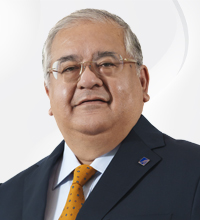
Speaker: Dato’ Mohammad Faiz Azmi, Chairman, Securities Commission Malaysia
Location: The Honourable Society of the Inner Temple, United Kingdom Delivered: 14 September 2026
Fellow regulators of the ASEAN Capital Markets Forum (ACMF),
Distinguished speakers and industry captains,
Ladies and gentlemen.
A very good morning to all.
Welcome to the ASEAN Investment Roadshow.
I would like to extend a particularly warm welcome to our guests from the United Kingdom’s investment community. We are pleased to have with us institutional investors, asset managers and market participants whose decisions help shape capital allocation globally.
I also wish to acknowledge my colleagues from ACMF – a grouping of Southeast Asian securities regulators - who have travelled far to be here. In addition, I would like to thank our collaborators FTSE Russell for co-hosting this Roadshow.
Why ASEAN, and Why Now?
Ladies and gentlemen,
The purpose of today’s Roadshow is straightforward. We want to bring ASEAN’s investment proposition directly to the global investment community.
In combined terms, ASEAN has a population of about 700 million1 and an aggregate GDP of about US$4 trillion. The region is home to a rising middle class with a relatively youthful profile as almost half of the population is below the age of 302. This gives us a powerful combination of productive capacity and rising consumer demand.
Additionally, ASEAN attracted about US$250 billion3 in foreign direct investment last year, even as international investment flows became more selective.
ASEAN’s digital agenda adds another layer to its long-term prospects. With an estimated 125,000 new internet users each day, the region will offer one of the world’s most dynamic digital market. In fact, digitalisation is projected to contribute an additional US$1 trillion to regional GDP in this decade4.
Within one region, investors also have access to developed and emerging market opportunities. FTSE Russell’s ASEAN indices bring together companies across Malaysia, Singapore, Thailand, Indonesia, the Philippines and Vietnam, offering a diverse range of large, mid and small-cap businesses5.
Unfortunately, despite these positive indicators, ASEAN’s economic significance is not yet fully reflected in many global portfolios.
It is therefore not sufficient for us to just share that ASEAN is growing well. Our task as a region is to make that growth easier to understand and enhance overall investability to investors from other regions.
Capitalising on Regional Opportunities
Today’s programme is intended to advance that conversation from several perspectives.
We will first hear from FTSE Russell on why ASEAN warrants greater attention from global investors. An institutional and index perspective is important because benchmarks influence how markets are classified, compared and ultimately incorporated into portfolios.
This will then be followed by a discussion highlighting ASEAN as an asset class. I look forward to joining my fellow regulators in discussing the steps taken across our markets to enhance competitiveness, connectivity and investor access.
We will also hear where ASEAN fits within the changing geography of global growth, before concluding with a panel on Malaysia’s role as a gateway to regional opportunities.
We are keen to hear directly from investors because investability will increasingly be determined by those deploying capital rather than the strength of our regulatory infrastructure.
Such considerations may likely rest on the breadth and depth of our capital markets as well as our ability to connect global capital with regional investment opportunities.
Ladies and gentlemen,
This ambition to improve both the Malaysian and ASEAN markets’ investability is embedded both in the Securities Commission Malaysia’s (SC) Capital Market Masterplan 2026–2030 (CMP) and also the ACMF Action Plan 2026-2030.
For Malaysia, we are in a better position than we were a decade ago with a government that has taken difficult fiscal decisions such as reducing subsidies and focusing more on the economy - thanks to a more stable coalition government. Our recent US Dollar Government Sukuk issuance pricing reflects this better financial position and recognition internationally.
We believe Malaysia already offers a deep and diversified capital market which is bigger than banking assets, recognised leadership in Islamic finance, sound regulatory and governance foundations, as well as having a firm commitment to strengthening cross-border connectivity.
Under the CMP, we are taking steps to improve our market vibrancy and growth using initiatives like MY Value Up with Bursa Malaysia on our top 88 Public Limited Companies. We also recently signed a Memorandum of Understanding (MoU) with the Hong Kong Securities and Futures Commission. This MoU establishes a framework to facilitate single prospectus dual-listed IPOs and a cross-listing of eligible REITs and ETFs. Its purpose is to widen market access, provide more options for issuers and investors and deepen cross-border participation.
Today’s roadshow fits with that strategy and allows us to explain our proposition better, but more importantly, to listen to investors on what we could do better.
In the case of ASEAN, last year we agreed to 5 key initiatives including pursuing voluntary carbon market standards consistently, implementing the ASEAN Taxonomy version 4, issuing a Simplified ESG disclosure guide for SMEs in ASEAN and also a project guide called mARs to help identify pilot projects to apply blended finance for adaptation and resilience funding. All these are within a renewed effort by the ASEAN regulators to work better together in a fifth initiative called the ACMF Action Plan 2026-2030.
This Action Plan has five strategic thrusts, 11 key priorities and 18 initiatives. Four key initiatives in the ACMF Action Plan related to strengthening regional integration and global positioning are to promote ASEAN Diamonds, facilitate the creation of ASEAN indices, to create a renewed focus on Islamic Finance, which is a differentiator for our markets, with a better Shariah screening tool and to facilitate intra ASEAN activities, products and connectivity. The key priority is to have a committee to promote ASEAN as an asset class which is currently led by the Philippines and Singapore.
It is to explain this key priority that we have assembled representatives from the current chair, SEC Philippines Commissioner JP Francisco, Singapore’s MAS Executive Director Ian Chung, Lao Chairperson Madam Phengsy Phengmuong, H.E. Sou Socheat DG of SER Cambodia and from Indonesia Martina Nagasia. I would like to thank them for their presence today to help support the “ASEAN as an asset class” view.
Their presence shows the spirit in which we approach ASEAN integration. Progress will not be defined by a single initiative. It will be built through an enabling environment that makes it easier to mobilise capital regionally.
Closing
Ladies and gentlemen,
ASEAN’s next phase of growth will depend not only on strong fundamentals, but also on greater regional connectivity and international participation.
I would like to encourage you all to reconsider ASEAN, if you have not already, as a strategic long-term investment destination.
May today, mark the beginning of a mutually beneficial partnership for regional growth and prosperity.
With that, I wish everyone a productive and engaging dialogue.
Thank you.
Source: ASEAN stats, based on 2025 figures (693 million).
Source: ASEAN Statistical Highlights 2025
Source: ASEAN stats, based on 2025 figures (US$245.7 billion).
Source: World Economic Forum
Source: London Stock Exchange Group (LSEG); FTSE Russell
The Securities Commission Malaysia (SC) was established on 1 March 1993 under the Securities Commission Act 1993 (SCA). We are a self-funded statutory body entrusted with the responsibility to regulate and develop the Malaysian capital market.