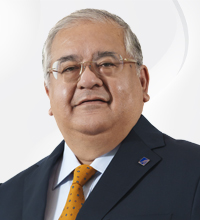
Speaker: Dato’ Mohammad Faiz Azmi, Chairman, Securities Commission Malaysia
Location: Securities Commission Malaysia, Kuala Lumpur Delivered: 16 March 2026
Yang Berhormat Datuk Seri Amir Hamzah Azizan, Minister of Finance II, Senior members of SC, Distinguished guests, ladies and gentlemen.
Assalamualaikum warahmatullahi wabarakatuh and a very good morning.
It is a pleasure to welcome you to the Securities Commission Malaysia (SC) for the Malaysia Co-Investment Fund (MyCIF) Engagement Day.
Today, we would like to showcase MyCIF as a proven example of a public policy initiative with real-world impact. The value of MyCIF is in unlocking private capital for Micro, Small and Medium Enterprises (MSMEs). It is one such initiative to reduce the funding gap that MSMEs face, currently estimated about RM268 billion.
Today’s engagement with ministries, state governments and other relevant stakeholders will centre on expanding several strategic themes including environmental and social impact, food security, the silver economy, as well as ‘Made by Malaysia’ artificial intelligence (AI).
Ladies and gentlemen,
Equity Crowdfunding (ECF) and Peer-to-Peer (P2P) financing serve as vital alternative fundraising channels. They represent the early rungs of the MSME funding escalator, with P2P leveraging alternative credit data and valuation scoring to provide capital to businesses and entrepreneurs underserved by traditional banks.
In fact, Malaysia is one of the earliest jurisdictions globally to provide a regulatory framework for these platforms. Today, they have grown to 30 authorised platforms that have collectively facilitated about RM11.9 billion in financing since introduction, benefiting over 20,000 MSMEs.
The MyCIF Journey
In 2019, MyCIF was set up by MOF to “crowd in” private capital through ECF and P2P platforms. The concept is simple - it invests RM1 for every RM4 raised from crowd investors. For strategic schemes, the ratio can be increased to RM1 for every RM2 raised.
It is not a grant. MyCIF invests with the crowd. Hence, returns from its portfolio are recycled to benefit other MSMEs on ECF and P2P platforms. To date, MyCIF has received RM290 million from MOF. For every RM1 allocated from the government, the monies have been reinvested 5.2 times, and over 10 times through P2P platforms alone.
By co-investing alongside the crowd, MyCIF enhances investor confidence. It has co-invested RM1.5 billion and “crowded-in” RM6.2 billion from private investors. This means every ringgit MyCIF co-invests brings in on average RM4.13 from private investors. In total, more than RM7 billion was mobilised to fund over 11,500 MSMEs since 2019.
MyCIF is a proven and effective policy tool. Through a temporary 1:2 co-investment ratio adjustment in 2020, it catalysed a year-on-year increase for fundraising during the COVID-19 pandemic. This much-needed liquidity enabled MSMEs to pivot towards digitising their operations and scale inventory to meet shifting demand.
Beyond this, MyCIF has created endearing growth stories of our entrepreneurs. For example, a homegrown technology company specialising in F&B solutions fundraised about RM3 million through ECF in 2020. The company recorded revenue of RM1.4 million in 2019 . This grew to over RM45 million in revenue prior to their listing on NASDAQ in 2025.
We have also seen MyCIF investees gain exposure to institutional investors and progress to their next phase of growth. A digital procurement platform serving 10,000 SMEs raised over RM7 million through several ECF rounds. This funding enabled it to scale up and subsequently secure a RM31 million funding round involving several VC and institutional partners.
Importantly, MyCIF facilitates social impact. For example, an accredited social enterprise focused on workplace inclusion and ensuring livelihoods for the blind raised about half a million ringgit via ECF.
Another example, a biotechnology investee specialising in bio-waste treatment and upcycling successfully secured additional investment from the AgriFoodTech Sustainability Impact Fund and gained significant global recognition, notably as a finalist at SusHi Tech Tokyo 2024. Furthermore, they have established key strategic partnerships both locally and within the region to scale their circular economy solutions.
When we look at the health of our startup ecosystem, the question of risk is always at the forefront. While national statistics show approximately 30% of companies fail after 5 years , the MyCIF experience tells a much more resilient story. Currently, the failure rate for MyCIF-backed issuers stands at around 3.0% based on the total funding amount. Now, to be clear, we are not comparing 'apples to apples' here - one measures the number of companies, while ours measures the capital at risk. However, using the national average as a proxy, you can see that MyCIF has a better track record.
This success is no accident. It is the result of a rigorous vetting process. First, the ECF and P2P platforms act as professional gatekeepers, conducting due diligence before a deal goes live on platform. Second, we lean on the 'wisdom of the crowd' - where the market itself votes with its capital. While we can never eliminate risk entirely, this combination of professional screening and collective market validation ensures that we are building an ecosystem that is not just fast-growing, but fundamentally robust.
Enhancing options and awareness
These success stories have created momentum. Following discussions with MITI, the NIMP Strategic Co-Investment Fund or CoSIF was launched in early 2025. It is designed to bridge funding gaps in the New Industrial Master Plan 2030, specifically for high-growth sectors like aerospace, electric vehicles and renewable energy.
That said, supporting MSMEs is not just about enabling their access to capital. It is about working closely with stakeholders to build a pipeline of deals.
We recognise that there are still gaps in terms of entrepreneur awareness of funding options outside the banking space. Many also need support in refining their pitch to investors. To address this, the SC introduced programmes such as Elevate and GROWMatch to build capacity and bring entrepreneurs to investors and explain their proposition.
We are also running a procurement financing pilot called SARANA with MOF. It is a financing programme that enables MSME government contractors to raise capital through P2P platforms. This enables them to raise funds for capital expenditure or working capital to manage their cashflows.
Taken together, these initiatives complement MyCIF and CoSIF in helping entrepreneurs access capital they need to grow.
Closing
Ladies and gentlemen,
MyCIF together with the ECF and P2P platforms have made a real difference to many MSMEs. As a public intervention, its impact in crowding-in capital speaks for itself. The model is interesting and not many jurisdictions have introduced similar programmes leveraging the power of crowdfunding.
The SC is happy to engage with ministries and state governments that wish to explore this co-investment model. I truly believe that this model has significant potential to scale up, particularly in addressing funding needs towards realising our nation’s growth potential.
Thank you.
1 Source: Ata plus 2 Source: SEC 3 Source: Department of Statistics Malaysia (DOSM)
The Securities Commission Malaysia (SC) was established on 1 March 1993 under the Securities Commission Act 1993 (SCA). We are a self-funded statutory body entrusted with the responsibility to regulate and develop the Malaysian capital market.