Welcome Remarks at the Kembara Borneo 2026 – Sabah Edition ‘Enterprise to Expansion: Connecting Sabah Businesses with Growth Opportunities’
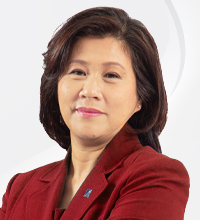
Speaker: Datin Paduka Azalina Adham, Managing Director, Securities Commission Malaysia
Location: The Magellan Sutera Resort, Kota Kinabalu, Sabah
Delivered: 14 October 2026

Yang Berbahagia Tan Sri Andrew Sheng, Member of the SC’s Capital Market Advisory Committee (CMAC),
Mr. Joseph Benjamin, Director of MIDA Sabah,
Chairs and Heads of Sabah SME Associations and Business Councils,
Industry representatives,
Members of the media,
Distinguished guests,
Ladies and gentlemen.

Assalamualaikum and good morning.
  1. Welcome to Kembara Borneo 2026, the Sabah Edition.
  2. On behalf of the Securities Commission Malaysia (SC), I would like to record my appreciation, first and foremost, to the Sabah State Government for their support of this event. I would also like to thank our 12 supporting partners from across Sabah, including business chambers, SME and entrepreneur associations, as well as investment and economic development agencies, for the collaboration in making this event possible – thank you very much for your support.
  3. From an economic standpoint, Sabah has considerable strengths typically in agriculture, food production, resource-based activities, tourism, logistics and manufacturing.
  4. More importantly, these strengths must be leveraged to create greater value and dynamism both locally and regionally. This means enabling more businesses and entrepreneurs to move beyond basic production and services that you have today into higher-end processing, manufacturing and technology-enabled activities to allow for more imperative regional transition.
  5. This transition requires investments in technology, talent, innovation and market development.
  6. With the theme ‘Enterprise to Expansion’, Kembara Borneo aims to mobilise capital for such purposes. It brings together Sabah businesses, investors, intermediaries, agencies and ecosystem partners; raising awareness and exploring the benefits of banking services and financing such as term loan or revolving credit. Having the right capital and partners can be a competitive advantage for companies looking to modernise, move into value-added activities or even expand into new markets.
  7. At the SC, we have mandates beyond regulating capital market players. We also develop the capital market in support of Malaysia's broader growth priorities. This developmental agenda is also a key component of the SC’s Capital Market Masterplan 2026–2030 in March and is complemented by our specific five-year MSME and MTC Roadmap. This reflects a whole-of-nation approach, with both the state and federal governments working together to support the growth of these segments. From a fundraising perspective, the aim is to build a capital market that is more inclusive, accessible and responsive to the needs of entrepreneurs and businesses.
  8. Recognising the importance of ensuring businesses in every state are able to access growth opportunities and financing solutions, the SC has progressively intensified its outreach efforts beyond the Klang Valley through a series of nationwide engagements and roadshows.
  9. The SC team has also conducted a post-COVID analysis of businesses. We found that the recovery of companies, particularly MSMEs and MTCs, are lagging behind the nation’s broader recovery.
  10. Like our ASEAN neighbours, Malaysia is a business-driven economy, with MSMEs and MTCs collectively accounting for about 70-80% of national GDP. Thus, the SC has devised plans that go beyond issuing guidelines, including outreach programmes such as today’s event, to ensure that everyone has access to these facilities.
  11. Over the past year, these engagements have brought the SC to Perak, Penang, Johor, Kuala Lumpur and Sarawak, bringing together over 700 businesses and capital market stakeholders.
  12. Sabah has also been an important part of this journey. The MyCIF Nationwide Roadshow and GROWMatch 2025, held in Kota Kinabalu in July last year, attracted around 300 representatives from business associations and MSMEs. They had the opportunity to engage directly with equity crowdfunding (ECF) and peer-to-peer (P2P) financing platform operators and also hear first-hand from companies that had successfully raised funds with MyCIF's support.
  13. Beyond MyCIF, the SC has also expanded its co-investment initiatives in collaboration with various Ministries to catalyse private-sector funding for businesses across different growth segments. This includes NIMP CoSIF, established with the Ministry of Investment, Trade and Industry (MITI), to mobilise private capital into businesses aligned with Malaysia's industrial development priorities, as well as the forthcoming KE-CIF with the Ministry of Economy to support high-growth, high-value sectors in line with the Thirteenth Malaysia Plan.
  14. Reflecting the Government's continued commitment to broadening access to alternative financing, Budget 2027 has allocated RM270 million for MSMEs, MTCs and social enterprises through equity crowdfunding (ECF) and peer-to-peer (P2P) financing platforms. Collectively, these initiatives reflect our efforts to broaden access to financing and strengthen the pipeline of investable Malaysian businesses.
  15. Kembara Borneo builds on this momentum by bringing the full breadth of the capital market ecosystem closer to Sabah's businesses, where the event allows for businesses to potentially make new friends and connections.
  16. Such sustained engagement is important considering the financing gap faced by our domestic MSMEs. While traditional financing remains an important avenue for business growth, it may not always be suitable. In particular, companies with limited collateral, significant capital requirements or expansion plans could actually benefit from more risk-tolerant capital.
  17. This is where we believe that the capital market can complement traditional sources of financing. It offers a diverse range of pathways that can support businesses through different stages of development.
  18. An early-stage firm may consider ECF, P2P financing or venture capital to develop and commercialise a product. An established business requires private equity or growth capital to improve capacity, acquire technology or enter a new market. As companies becomes more mature, they can even use corporate bonds and sukuk or the stock market exchanges to support its regional and global expansion plans.
  19. We typically describe these pathways as the funding escalator. It recognises that companies at different growth stages have different financing needs. Businesses should therefore explore each available option, the obligations involved and identify the type of capital that can best support the business.
  20. Access to the right capital, however, also depends on business readiness. Potential investors will typically assess whether a business has capable management, a credible growth strategy, reliable financial information and a clear plan for how the funds will be used. Businesses must therefore understand the considerations and expectations that guide the decisions of investors and lenders.
  21. Some businesses may therefore need to strengthen their financial records and governance arrangements while others may need to refine their business plans or investor propositions.
  22. In addition, sustainability is also increasingly relevant to how investors assess a business, particularly in the areas of Environment, Social and Governance. It should not be viewed solely as a reporting or compliance requirement. Stronger sustainability practices can improve operational resilience, manage risks, enhance your value across local and global supply chains amongst public-listed and multinational companies, and strengthen the overall attractiveness of your businesses.
  23. This is important for Sabah, where economic opportunities are closely connected to agriculture, natural resources and tourism. Turning these opportunities into investable businesses requires commercial discipline and an understanding of sustainability considerations.
  24. Our aim is for today's programme to better equip businesses like yourself in accessing the Malaysian capital market and understanding investor expectations. At the other end of the equation, it should also provide investors and capital market intermediaries with deeper insight into sectoral opportunities and financing requirements in Sabah. This will facilitate more effective matching between companies, investors and financing solutions.
  25. Once again, thank you to everyone involved in this event. It would not have been possible without the support of the Sabah State Government, Capital Markets Malaysia, Bursa Malaysia, platform operators, investors, intermediaries, advisers, business associations, speakers and industry partners.
  26. In closing, let me reiterate the SC’s commitment to developing a capital market that is inclusive, innovative and responsive to the needs of domestic businesses.
  27. We hope that this platform will provide the momentum for Sabah businesses to move from enterprise to expansion and contribute to Malaysia’s growth story.

Thank you.
SC AFFILIATES
RELATED SITES
about the SC
The Securities Commission Malaysia (SC) was established on 1 March 1993 under the Securities Commission Act 1993 (SCA). We are a self-funded statutory body entrusted with the responsibility to regulate and develop the Malaysian capital market.

General Line: +603-6204 8000
General Email: [email protected]
© Copyright Securities Commission Malaysia.  Contact Us   |    Disclaimer   |   The site is best viewed using Microsoft Edge and Google Chrome with minimum resolution of 1280x1024
Ooops!
Generic Popup