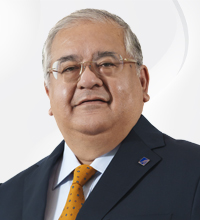
Welcome Remarks at the Malaysian Accounting Standards Board (MASB) Book Launch
Speaker: Dato’ Mohammad Faiz Azmi, Chairman, Securities Commission Malaysia
Location: Securities Commission Malaysia, Kuala Lumpur
Delivered: 3 September 2026

Yang Berhormat Liew Chin Tong, Deputy Minister of Finance,
Yang Mulia Raja Tan Sri Dato’ Seri Arshad Raja Tun Uda, Founding Chairman of the Malaysian Accounting Standards Board (MASB) and Chairman of PNB,
Yang Berbahagia Dato’ Zainal Abidin Putih, Chairman of the Financial Reporting Foundation (FRF),
Yang Berbahagia Tan Sri Mohd Nasir Ahmad, Present Chair of the Malaysian Accounting Standards Board (MASB),
Tan Sri Tan Sri, Datuk Datuk,
Distinguished guests,
Members of the media,
Ladies and gentlemen.

Assalamualaikum warahmatullahi wabarakatuh and good morning.

  1. On behalf of the Securities Commission Malaysia (SC), it is my pleasure to welcome our guests and stakeholders to the commemoration of an almost 30-year journey of a statutory body that has literally and figuratively set standards. I am happy to see many familiar faces today especially former Chairmans of the SC like Datuk Ali Kadir, Tan Sri Zarinah Anwar and Tan Sri Ranjit Singh. Also, my former boss Tan Sri Raja Arshad, the first MASB chairman, as well as other alumni such as Dato’ ZAP and Tan Sri Nasir.
  2. As former and current practitioners, we have one time or another impressed upon our clients that accounting is the language of business. It helps us to translate transactions into stories to report and it helps us explain to stakeholders what our managers have done with their money. However, a language is only useful when people understand, trust and apply it consistently. This has become more important of late given recent scandals where standards have been misrepresented, misinterpreted and misused to hide the truth.
  3. The need for accounting frameworks encapsulates the defining role that the FRF and MASB have played in ensuring that this lingua franca or business language remains credible and relevant to Malaysian businesses and the economy.
  4. My own association with MASB is rather personal. As a line audit partner, I had attended many MASB briefings and sat on many of its committees. I was appointed the Chair of MASB in 2009, which I accepted with a number of reservations. After all, previous chairs of the MASB were distinguished senior figures of the accounting profession who had retired or were approaching retirement. And then there was me – a relatively junior partner running an active Financial Services practice with all kinds of KPIs to meet from my firm.
  5. As it turned out, this practical exposure as an audit partner proved invaluable. Many skills were needed as a standard-setter, which is being able to discuss, listen, interpret, persuade and cajole – all these skills were honed much earlier when dealing with tough clients who did not understand accounting standards. It also requires understanding industries, balancing differing stakeholder views, and occasionally, dealing with conflicts.
  6. But I was very conscious of the fact that I was standing on the shoulders of much more senior accountants before me and that actually helped build up MASB, and at that time I was just the latest version of the MASB Chair. I know from the early days that it all started when a committee was set up - Tan Sri Ranjit who was representing the SC at the time and Tan Sri Raja Arshad who was from PwC were part of this committee that decided to create FRF and MASB.
  7. So why does MASB exist? Frankly, because accounting standards are too important for businesses to be left to the accounting profession. MASB was created to be a professional funded body to represent all stakeholders and ensure the standards would be applied consistently and fairly so that all stakeholders accepted.
  8. Once MASB was set up and contributing well with the IASB, the objective was to adopt the IFRS standards in Malaysia. That was the task of Datuk Seri Johan Raslan and also Datuk Zainal - to get the endorsement of the government to adopt IFRS and to manage the preparers, auditors and users of accounts. And to set a deadline for adoption.
  9. During my tenure, the ball was passed to Datuk Ali Kadir and myself to adopt IAS139 and then to all the IFRSs. I remember at the time referring to the ball being passed as a “suicide pass” as our job then was to make the convergence happen with the hostility that came with it.
  10. This then brings me to a second objective of MASB, which is how to adopt these standards and make it relevant to our country? At that time, IFRS did not seem to address the existing needs of property developers, oil palm and rubber estates and reconcile it with Islamic Finance.
  11. That was our work then. It required us to up our game with IASB; in order to get those changes, and that is no small feat for a small country to get international standards to address our issues. But we had a secret weapon, Ms. Tan Bee Leng.
  12. Bee Leng over the years has been quite instrumental in terms of raising our prominence with the IASB and the standards worldwide – essentially by being a valuable contributor as well as championing practical application of the standards in a developing economy. These contributions and engagements around the world were investments that we took in order to be acknowledged by IASB. And during my tenure, we created a lot of goodwill by helping IASB solve problems.
  13. So for example, we were the first Chair of the Asian-Oceanian Standard-Setters Group or AOSSG. Datuk Zainal started the ball rolling on this. The reason it was so important was that all the large countries in the region wanted to chair it. There were delegations from India, China lobbying for the role. IASB were grateful to us for stepping up to the role despite being a small and independent standard setter. Not only were we chosen for being non-aligned but we showed that even a small country could manage the expectations of the region effectively and diplomatically.
  14. Another role we played was to help IASB apply IFRS to Islamic Finance, which culminated in not only managing a Malaysian issue but also in my chairing the IASB advisory group for six years on applying IFRS to Islamic Finance. This was also the case regarding IFRS for SMEs, where we played a large role in getting amendments made to the standard.
  15. So, all these goodwill points we earned from IASB were used to find solutions to the recognition of profit by property developers as they developed property, limit the fair valuation of plantations to the fruits and also reconcile the use of IFRS on Islamic Finance transactions. This required many hours of research, engagement with the industry and testing out our views with IASB.
  16. All these efforts eventually meant we could converge with the International Financial Reporting Standards in 2012. This convergence helped reinforce the country’s standing within the international community as a small but important player that could contribute back where possible. And when we interviewed the chairs of IASB and the technical staff, they all confirmed that we as a country are held in the highest regards. It is important to note that we converged with IFRS even before Singapore did.
  17.  What we also achieved is to make our young accountants marketable. We have Malaysian accountants now in every financial centre in the world and you might have seen recently that we have an MoU with Hong Kong, and quite a number of our people in Hong Kong are accountants.
  18. The work however goes on. Under successive chairmanships, we have sorted out our position on new standards and I feel, many years on, that we have achieved convergence with International Standards, made sure that the standards reflect how we do business here and that we now have a lot of goodwill and respect from the IASB. Of course, many people in this room have contributed to this outcome.
  19. In particular those of you who have struggled through meetings trying to figure out how to make things work for Malaysia - without all your good work we would not have been able to apply the standards. On behalf of former Chairmans, thank you to all of you for contributing because we would have not got to this point without all your help.
  20. Now let me turn to this book. When the idea of commemorating MASB’s journey through a book emerged, I readily volunteered the SC’s Datuk Seri Jalil to take on the project. Titled Echoes of the Boardroom: The Untold Stories of the MASB, I believe this was the right time to write the book and in time for Bee Leng’s eventual retirement.

Ladies and gentlemen,

  1. This book, I believe, is both a lasting record and historical reference. It preserves what MASB has accomplished while reminding future generations of what we must protect.
  2. I must thank Datuk Seri Jalil and the team for making it happen and also my team at the SC for organising this event. I particularly would like to thank Tan Sri Ranjit Singh for being one of the drivers of this institution.
  3. To wrap it all up, I believe that this is a good time to remind ourselves why we adopted these international standards, what the benefits were for the country, why we are benefiting from IFRS adoption and more importantly, why we remain insistent on high-quality standards.

So with that, thank you very much for listening.


SC AFFILIATES
RELATED SITES
about the SC
The Securities Commission Malaysia (SC) was established on 1 March 1993 under the Securities Commission Act 1993 (SCA). We are a self-funded statutory body entrusted with the responsibility to regulate and develop the Malaysian capital market.

General Line: +603-6204 8000
General Email: [email protected]
© Copyright Securities Commission Malaysia.  Contact Us   |    Disclaimer   |   The site is best viewed using Microsoft Edge and Google Chrome with minimum resolution of 1280x1024
Ooops!
Generic Popup